Publications /
Policy Brief
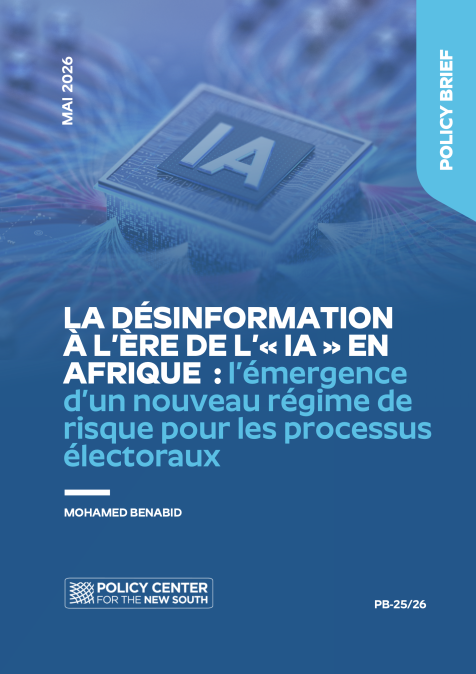
The rise of generative artificial intelligence technologies is profoundly reshaping the dynamics of disinformation on a global scale. On the African continent, this development is unfolding against a particularly tense backdrop: accelerating digital adoption, persistent institutional vulnerabilities, and an unprecedented series of elections. Synthetic disinformation—deepfakes, automated content, coordinated campaigns—is not an isolated phenomenon there, but acts as a multiplier of preexisting tensions, exacerbating political and social divisions while undermining trust in information. This article analyzes the mechanisms underpinning this threat and examines the conditions for developing responses tailored to African realities.
INTRODUCTION
The rise of generative artificial intelligence technologies is reshaping global information dynamics at a pace that institutional frameworks are struggling to keep up with. On the African continent, this transformation is unfolding against a backdrop of dual pressures: a massive acceleration in digital usage, on the one hand, and a particularly intense electoral cycle between 2024 and 2026, on the other. The convergence of these two phenomena creates conditions of heightened vulnerability in public spaces, which are exposed to forms of information manipulation whose increasing sophistication defies conventional frameworks of interpretation. Synthetic disinformation—whether in the form of deepfakes, automated content, or coordinated campaigns relying on artificial agents—is not an isolated phenomenon. It extends and intensifies structural threats already at work, by lowering production costs and multiplying dissemination and targeting capabilities. Its effects are not limited to the mere circulation of misleading content: they alter the very conditions of public debate, erode trust in audiovisual evidence, and make the attribution of political and legal responsibility considerably more difficult.
The urgency of the situation stems from a fundamental imbalance. On the one hand, technological capabilities—advaim sayingnced automation, large-scale coordination, real-time adaptation—are advancing at a rapid pace. On the other, the institutional, legal, and operational frameworks needed to address these advancements remain largely inadequate, particularly in many African contexts. This gap creates a critical window of vulnerability, which narrows even further during election periods.
The following analysis is based on two key premises: first, synthetic disinformation is a complex sociopolitical phenomenon that cannot be reduced to a technical problem requiring purely technological solutions; second, that effective responses can only emerge by combining technological, institutional, and social tools, carefully tailored to local realities. Based on this conviction, we propose to explore the mechanisms of the threat and then identify levers for action at three levels—national, regional, and international—with a view to strengthening the continent’s informational resilience.
1. A REINFORCING THREAT, NOT A ROOT CAUSE
In its broadest sense, synthetic disinformation refers to all informational content created, altered, or amplified by generative artificial intelligence tools: video and audio deepfakes, synthetic images, large-scale automated text, as well as cheapfakes—authentic content deliberately recontextualized to reverse its meaning. What distinguishes this category from ordinary disinformation has less to do with the nature of the content than with the architecture of its production and dissemination. Indeed, whereas earlier forms relied on relatively fragmented and costly production chains, contemporary systems allow for the near-complete integration of the information cycle—from generation to circulation—within automated systems. Production becomes modular, configurable, and scalable: a few instructions are enough to adapt a single narrative into a multitude of formats, languages, and discursive registers, tailored to different audiences. Consequently, the barrier to entry is no longer technical: it is now financial. The deepfake services market—Deepfake as a Service—enables a political actor without specific computer skills to carry out a cyberattack for a few tens of thousands of dollars. From this perspective, the term “synthetic"… functions almost like a convenient shortcut—useful, but imperfect—that tends to focus attention on the tool rather than on the more profound transformation of the conditions under which information is produced, disseminated, and received."
2. AFRICA FACES THE CHALLENGE OF RAPID DIGITAL TRANSFORMATION
In this context, two other factors are reinforcing these structural trends in Africa. First, digital acceleration. By 2025, major platforms will have amassed massive audiences across the continent—approximately 291 million users for Facebook and nearly 189 million for TikTok—confirming the dominance of the Meta ecosystem and the rise of short-form video. These platforms are not merely distribution channels: in several African countries, they serve as central access points to information, particularly for young, connected audiences.
Next, institutional vulnerability. The near-total absence of legislative frameworks specific to deepfakes, judicial digital capabilities, and dedicated monitoring institutions. According to the International Monetary Fund’s (IMF) AI Readiness Index, low-income countries—including a large number of African nations—generally exhibit a very low level of readiness, particularly in terms of institutional frameworks, human capital, and innovation capabilities.
3. FROM A SINGLE OPERATION TO AN AUTONOMOUS NETWORK
Added to these structural dynamics is what constitutes the most troubling development of recent years: the emergence of a second-generation technological escalation. Whereas the first synthetic disinformation campaigns relied on isolated deepfakes—sophisticated but sporadic— we are now witnessing the deployment of swarms of autonomous AI agents capable of persistent coordination, real-time adaptation to human responses, and the creation of synthetic consensus on a large scale. The most recent warnings¹ confirm what was previously only a projection: small language models, operable on consumer-grade hardware, can be assembled into fully automated propaganda factories, maintaining a coherent political narrative across thousands of exchanges, without any human intervention.
To gauge the true scope of these changes, it is important to understand that these systems no longer simply disseminate messages. They participate in discussions as if they were real people—joining groups, staying active over time, and adjusting their comments based on others’ reactions. We are therefore no longer talking about messages mechanically repeated en masse. These new systems produce varied, credible, and contextually relevant content, making them considerably harder to identify.
The most concerning aspect is these systems’ ability to create the impression of consensus. By generating a large number of accounts and interactions, they can give the impression that an idea is widely held, when in fact it is not. However, when faced with such signals, many people adjust their positions based on what they perceive to be the majority opinion. This phenomenon is well-documented in research on fake news under the terms “spiral of silence” and “social proof effect.” When an individual perceives—rightly or wrongly—that a particular opinion dominates the public sphere, they tend to conform to it, or at the very least to keep their disagreements to themselves. In the case of the automated systems discussed here, this dynamic is artificially amplified: consensus does not emerge from collective deliberation; it is simulated by a technical architecture designed to replicate its appearance.
Ultimately, the line between genuine debate and manufactured debate becomes impossible to draw. The risk is not merely a quantitative increase in disinformation, but a deeper transformation of narrative dynamics: a public sphere where it becomes structurally difficult to know who is speaking, and how many people actually believe what is being said. It would, however, be inaccurate to confine this reality to the realm of laboratories or technological projections. Since 2019, the African continent has offered a documented trajectory that provides concrete evidence of the existence of fertile ground, at the very least for analyzing the new architectures of influence that could result.
In Côte d’Ivoire, for example, the 2020 presidential election and the 2021 legislative election were marked by a high volume of online disinformation, particularly through manipulated images and videos (cheapfakes), some of which contributed to exacerbating inter-party tensions.
In Kenya, the 2022 elections led to enhanced measures to monitor online hate speech, involving local stakeholders and United Nations agencies. These initiatives have made it possible to identify and flag a significant volume of problematic content, although no consolidated and widely verified figures are currently available. In this context, the attention now being paid to information dynamics is not merely a technical precaution, but is part of a specific political narrative.
In this regard, the precedent set in 2007–2008—marked by post-election violence that left approximately 1,500 people dead—serves as a stark reminder of how powerfully the media, particularly radio, can amplify tensions alongside broader political and ethnic factors. Today, unlike eighteen years ago—when traditional media, particularly radio, played a central role in disseminating and amplifying messages—the information landscape has changed profoundly. Digital platforms now play a defining role, not only as distribution channels but as spaces for interaction where content circulates, transforms, and gains legitimacy through exchanges.
More recently, in the Democratic Republic of the Congo (DRC), deepfakes attributing false statements to Emmanuel Macron have circulated amid tensions in the eastern part of the country—illustrating the ability of generative AI to exploit foreign figures in local conflicts. In Niger, this time, following the 2023 coup, several accusations targeting France—the release of terrorists, the presence of French troops alongside armed groups—circulated widely before being denied by Paris or debunked by independent fact-checkers. In the case of Niger, the disinformation did not rely primarily on sophisticated deepfakes, but on more traditional forms—recycled images, contextual misrepresentations, viral rumors—which were nevertheless enough to shape hostile perceptions. This point is crucial: informational effectiveness does not yet systematically depend on the degree of technological sophistication. At least, not yet.
4. WHO PRODUCES, WHO DISTRIBUTES? THE BROADER RANGE OF PLAYERS
This observation calls for a shift in perspective: beyond the tools and their level of sophistication, the crucial question also concerns the actors who produce, disseminate, and exploit this content. It then remains to be determined where, in concrete terms, the sources of initiative for these dynamics are located. Contrary to a widespread perception, disinformation—including its emerging AI-related forms—is not primarily the work of foreign state actors. Research by UNU-CPR and other institutions shows that, in many African contexts, political elites and domestic actors play a central role in the production and dissemination of misleading content, particularly during election periods. The growing accessibility of digital and AI tools lowers technical barriers; local motivations—often immediate and electoral—largely shape these practices.
Information influence operations carried out by foreign state actors, particularly Russian ones, are well documented in several African countries, notably in the Central African Republic and the Sahel. They rely on media networks, social media campaigns, and local intermediaries. Some emerging hypotheses suggest that these strategies could evolve into more sophisticated forms, incorporating content optimization for search engines and potentially for AI systems, although these dynamics remain poorly documented empirically.
In addition to these categories are diaspora networks—informal and transnational—that contribute to the circulation, framing, and, in some cases, ad hoc coordination of political content, as has been observed in Cameroon and other African electoral contexts. In Nigeria, the 2019 election campaigns illustrated the intensive use of local WhatsApp groups for political mobilization and the dissemination of targeted messages, in an environment where the private nature of these exchanges makes it difficult to accurately quantify the scale of the phenomenon. On a different note, non-state armed actors, such as the M23 in the Democratic Republic of the Congo, have also entered the information space, mobilizing social media to disseminate their narratives, legitimize their actions, and attempt to influence perceptions at various levels. This broad spectrum of actors underscores that contemporary information dynamics resist reduction to a single category of actors. It is within this heterogeneous space—where strategic communication, political mobilization, and the circulation of content coexist—that disinformation phenomena take root and thrive. It is precisely this plurality that calls for an analysis of the underlying mechanisms that make these dynamics particularly effective.
5. SIX SOURCES OF A SYSTEMIC THREAT
It is at this stage of analysis that it becomes possible to identify the operational drivers of the phenomenon. Six explanatory mechanisms underpin the threat and determine the effectiveness of potential responses. The first relates to what might be called the multiplier effect. Synthetic disinformation does not create threats out of thin air: it exacerbates preexisting informational tensions by grafting itself ontoexisting ethno-political divides. Testimonies from African practitioners collected by UNU-CPR in 2024 point in this direction—disinformation tends to exacerbate preexisting beliefs and further entrench them, rather than creating new ones. Certain studies² provide significant support for this observation. They show that language models configured to embody political personas reinforce their ideological adherence when confronted with counterarguments and simultaneously increase the production of extreme content. In practical terms, in highly polarized environments, automated content-generation systems could exacerbate the radicalization of discourse once they become involved in contentious interactions. This dynamic is particularly concerning in contexts where online fact-checking practices take the form of direct, adversarial interactions, which are likely to fuel polarization rather than defuse it.
The second mechanism is that of institutional erosion. Political deepfakes first undermine trust in audiovisual evidence: their mere existence makes it possible to challenge authentic content, a phenomenon that the Anglo-Saxon literature refers to as the “liar’s dividend.” In other words, the very possibility of falsification becomes a strategic resource: it allows not only for the dissemination of false content, but also for the discrediting of authentic evidence by presenting it as manipulated. In this context, the burden of proof is gradually reversed, to the detriment of those seeking to establish facts.
Furthermore, some figures show that high-quality deepfake videos are identified as fake in only about 25% of cases, whereas the detection rate for manipulated images can reach about 60%, highlighting a significant gap between human perceptual capabilities and the level of sophistication achieved by these technologies.3 In other words, under ordinary viewing conditions—rapid scrolling, fragmented attention, lack of systematic verification—individuals lack the cognitive resources necessary to reliably distinguish between authentic and synthetic content.
In addition to epistemic erosion, there are legal attribution challenges. While many African countries have incorporated provisions regarding digital evidence, standards remain inconsistent and are often ill-suited to synthetic content generated by AI. Deepfakes complicate the establishment of authenticity and liability, increase the burden of proof, and pave the way for strategies to systematically challenge evidence. The fabrication of confessions, the staging of fictitious statements, or the production of synthetic military orders can produce rapid effects that are difficult to correct—as dissemination far outpaces the capacity for verification and retraction.
Cybersecurity data also confirms a trend toward the industrialization of AI-assisted attacks. The Imperva Bad Bot Report, a leading global analysis of automated traffic, indicates that by 2024, approximately 2 million AI-assisted cyberattacks were detected and blocked daily. These operations are part of a now well-documented modus operandi, combining simple, large-scale attacks with the parallel development of more sophisticated techniques. While this data primarily concerns bot-related activities, it reveals a more structural phenomenon: the lowering of barriers to entry and the growing ability of less specialized actors to carry out large-scale operations.
The fourth mechanism involves the contamination of artificial intelligence ecosystems. This contamination can occur passively, through the exposure of models to degraded information environments. Recent investigations have thus revealed the existence of coordinated networks of sites disseminating pro-Kremlin content on a large scale, optimized for online visibility. In 2023, NewsGuard identified a network of more than 150 sites—known as the Pravda network—that produce multilingual content promoting pro-Russian narratives and designed for high search engine indexing..5
But this phenomenon goes far beyond this single case. Analyses conducted by the Digital Forensic Research Lab, a research program of the Atlantic Council specializing in tracking online influence operations, highlight comparable information infrastructures associated with various state or parastatal actors, relying on networks of interconnected sites, content farms, and search engine optimization (SEO) strategies aimed at maximizing their visibility and apparent credibility.6 This content, explicitly configured to be crawled by web crawlers — particularly through optimized sitemaps and robots.txt files — is likely to be indexed on a massive scale and stored in large-scale web databases. They thus contribute to flooding the information space with biased or misleading narratives.
While not necessarily targeting artificial intelligence systems explicitly, this massive production increases the likelihood that such content will be incorporated into training datasets, exposing models to low-quality or manipulated data that may subsequently be reproduced or rephrased by conversational systems. This phenomenon differs from audiovisual deepfakes: it does not rely on the occasional fabrication of visual evidence, but rather on a strategy of diffusely injecting narratives into the information environment itself, without explicit labeling or technical markers that are easily detectable on a large scale.
This trend is further fueled by the industrialization of AI-assisted content production. Recent reports from the European External Action Service⁷, the diplomatic service of the European Union (EU), and OpenAI⁸ highlight the emergence of influence operations combining automated text generation and coordinated dissemination across multiple platforms. These operations rely on increased large-scale production capabilities and the exploitation of the circulation dynamics specific to digital environments, thereby increasing the visibility and persistence of certain narratives. Collectively, they contribute to a form of saturation of the information space. In this context, the content produced in this way becomes susceptible to being captured by large-scale data collection systems, indirectly exposing artificial intelligence models to biased or manipulated information.
Another active vector adds to this picture. Cybersecurity analyses show that malicious bots masquerade as legitimate crawlers to bypass protective measures, exploiting organizations’ reluctance to block these traffic streams for fear of disrupting essential services. These strategies increase the visibility and dissemination of manipulated content, while inserting themselves into the large-scale data collection streams used across the web. While not constituting a direct, documented injection into model training pipelines, these dynamics contribute to degrading the information environment to which AI systems are exposed.
The fifth mechanism—the proliferation of information operations—marks a qualitative break from previous forms of disinformation. It is no longer a matter of isolated pieces of content, but rather of coordinated dynamics relying on a multitude of automated agents. Research in cybersecurity and platform analysis has already documented the existence of networks of coordinated accounts and botnets capable of maintaining persistent identities and disseminating messages in a synchronized manner. The gradual integration of generative AI opens the possibility of an evolution toward more advanced forms of coordination, in which automated agents could adapt their content, vary their discursive styles, and interact with audiences in near real time. While these configurations remain unevenly documented in their fully autonomous form, they signal a potentially major transformation in influence operations—shifting from one-off content to dynamic, distributed, and adaptive systems. In African contexts characterized by strong social cohesion, where the erosion of collective judgment can trigger dynamics of violent mobilization, this risk is particularly severe. These findings suggest that regulation focused exclusively on models is insufficient unless it incorporates an analysis of persona architectures and conversational dynamics, which shape the effects produced in interactions.
6. TECHNOLOGY AND SOCIETY: TWO INSEPARABLE ASPECTS
Given this situation, responses fall into two complementary categories, the relative importance of which depends on the context. The first is technological in nature. While necessary, its limitations are now well established. The main pitfall lies in techno-solutionism—that is, the tendency to reframe a fundamentally socio-political problem as a technical issue, by directing resources toward imported detection tools that are sometimes ill-suited to local contexts. Recent research on AI-assisted influence operations also shows that the effectiveness of these systems depends less on the models themselves than on their configuration. The design of personas—which encodes ideological orientation, rhetorical style, and interactional posture—appears to be decisive, while differences between models remain relatively marginal.9
Under these circumstances, technological solutions can only be effective if they are integrated into broader regulatory frameworks. This requires, in particular, clearly labeling AI-generated content on platforms—but only if such labeling is accompanied by concrete measures to limit its dissemination. Taken in isolation, labeling is not enough. Its effectiveness varies greatly depending on the context of exposure, and content that is flagged as synthetic often continues to circulate widely and generate significant engagement. This framework also includes the development of clear rules for verifying digital evidence in court, the implementation of partnerships with research institutions to build expertise, as well as closer oversight of how models are trained.
This oversight can no longer be limited to verifying officially declared sources. It must also take into account the actual methods used to access data, such as covert automated collection and the deliberate insertion of content into datasets. A concrete example: a network of actors can create thousands of web pages or online accounts spreading the same misleading narrative, then ensure that this content is widely indexed and captured by automated collection systems. This content is then incorporated into training data, which increases the likelihood that models will subsequently treat it as plausible or even credible information.
Finally, this technological framework must be supplemented—and, in some contexts, preceded — by a techno-social framework tailored to African realities. Field experience shows that fact-checking organizations combine digital tools with human judgment, given the persistent limitations of automated solutions when dealing with local languages and specific socio-cultural contexts. This second approach thus relies on strengthening professional journalistic standards and developing distributed verification mechanisms. Initiatives such as CongoCheck in the Democratic Republic of the Congo or PesaCheck in East Africa demonstrate that it is already possible to produce credible responses tailored to local contexts. We must now strengthen this network of fact-checkers by equipping it with the means to operate in the major African languages, including local languages.
At the same time, this work could be supported by a shared system for monitoring AI-related influence campaigns, using automated tools to track online behavior. These tools would also make it possible to test, under controlled conditions, how certain manipulation campaigns might operate, in order to better prepare for them. In this context, the use of open models—whose operations are accessible and verifiable—would facilitate transparency, oversight, and their adoption by local stakeholders. Such a system would strengthen predictive capabilities and enable a coordinated and rapid response from public and non-public actors, particularly during election periods.
The approach also involves preventive measures, foremost among which is pre-bunking—exposing the public to manipulation tactics in advance, before they are actually disseminated. These strategies aim to strengthen individuals’ cognitive resilience in the face of influence operations. In both cases, the effectiveness of the action depends on a prerequisite that is too often overlooked: the training of the institutional actors themselves. Judges, prosecutors, election officials, security forces—none of these actors is currently capable of fulfilling the role of guardian of epistemic norms that the threat demands of them. Investing in this training is not a mere luxury. It is a sine qua non of any credible strategy.
7. FOUR RISKS THAT COULD UPSET PUBLIC POLICY
Despite the coherence of this overall framework, several cross-cutting risks could undermine its effectiveness if they are not anticipated—thereby turning public policies against their own objectives. The first risk stems from the political exploitation of anti-deepfake legislation. Well-documented in several countries across the continent, this has already materialized when laws, initially designed to protect the public sphere, have served to criminalize satire, dissent, and even professional journalism. Under these circumstances, any reform that does not provide for enforcement mechanisms independent of the executive branch or explicit safeguards for freedom of expression risks undermining its original objectives.
In addition to this first challenge, there is a second risk, of a temporal nature: that of a particularly narrow window of opportunity. The capabilities of AI systems in terms of content production and distribution are evolving at a rapid pace, while the forms of automation and coordination of influence operations are becoming increasingly sophisticated. However, this technological acceleration is occurring in an African context marked by a dense electoral schedule—dozens of national elections between 2024 and 2026. The combination of these dynamics significantly reduces the room for maneuver of public actors. The call for a rapid institutional and legislative response is therefore not merely a rhetorical device: it reflects a growing gap between the speed of technological change and that of regulatory capacity.
A third risk exacerbates these tensions: the time lag inherent in platforms. In practice, moderation mechanisms typically come into play after the fact, once content has already been disseminated, in an environment where information spreads particularly quickly. This structural mismatch inherently limits the effectiveness of existing measures and underscores the need to rethink intervention methods upstream, at the very level of dissemination dynamics.
A case documented in Hungary in 2026 illustrates this dynamic: a coordinated network of TikTok accounts disseminating AI-generated content accumulated approximately ten million views before being identified and subsequently removed by the platform. This type of sequence suggests the existence of a structural asymmetry between the speed of content production and circulation and the slower, often reactive, capacity of platforms to intervene.10 In African election cycles, where manipulation efforts are concentrated in the forty-eight to seventy-two hours preceding the vote, this timeframe renders post-hoc moderation structurally insufficient. Collective bargaining with platforms must include obligations for pre-election intervention, not merely reactive measures.
The fourth risk—perhaps the least visible, but one of the most enduring—is that of normative dependence. Standards for detecting synthetic content, classification thresholds, and technical frameworks are currently largely defined by platforms and laboratories located outside the Global South. African actors thus find themselves primarily in the position of adopting standards to which they have made only a small contribution, standards designed in profoundly different linguistic, cultural, and political environments. This asymmetry raises issues of appropriateness and effectiveness, but also, more broadly, of normative sovereignty: the ability of African states and societies to define regulatory frameworks suited to their own realities, just as with issues of economic or political sovereignty.
Recent shifts in the U.S. stance on combating disinformation—marked by political, legal, and institutional realignments—are also contributing to greater uncertainty regarding the level of pressure being exerted on platforms to enforce their own moderation policies. In this context, African states cannot afford to depend on the alignment of external powers whose priorities and interests are shifting. Building independent regulatory capacities, as well as strengthening coordination mechanisms at the regional level, appear to be strategic necessities rather than options.
8. TAKING ACTION AT THE NATIONAL, REGIONAL, AND INTERNATIONAL LEVELS
It is from this conviction—that neither external dependence nor ad hoc responses will suffice—that the following recommendations arise, structured around three distinct yet complementary levels of action. At the national level, the priority often lies in adapting existing legal frameworks to incorporate the political uses of synthetic content, rather than creating new bodies of legislation from scratch. The proposed revision of Uganda’s Computer Misuse Act in 2022,11 a framework initially designed to regulate offenses related to computer systems and electronic communications, was part of an incremental adaptation approach. However, its invalidation by the Constitutional Court in March 2026—on grounds that were both procedural, related to non-compliance with the requirements governing the legislative process, and substantive grounds, stemming from the vague and broad nature of certain provisions—highlights the fragility of such approaches when they fail to meet the principles of legality, precision, and proportionality. This case thus illustrates the tensions between the imperative of rapid regulation of digital content and fundamental constitutional guarantees.
The Moroccan case illustrates a dynamic that is more complex than a simple legal adaptation. The regulation of manipulated content is primarily grounded in an existing legal framework, notably Organic Law No. 27-11 on the House of Representatives, which already provides for penalties regarding the dissemination of false information likely to undermine the electoral process. Recent developments—in particular the proposed introduction of new provisions, including Article 51-bis—reflect less a break with the past than a deepening of this framework. Given the sensitivity and technical nature of the issues at stake, this development raises questions about the scope and nature of the parliamentary—and even more so, societal—debate that accompanied it. Yet there is no indication that this debate has been commensurate with the transformations underway. Rather, there appears to be a relative lack of public deliberation, even though the implications of these provisions extend far beyond the electoral sphere alone, as they touch on the fundamental balance between combating information manipulation and safeguarding freedom of expression.
These advances nevertheless reveal a tension that is characteristic of contemporary regulations: the desire to control the effects of the digitization of the political sphere without having full access to the tools needed to influence its infrastructure. Indeed, a significant portion of the information infrastructure involved in these dynamics — social media platforms, advertising networks, and algorithmic recommendation systems¹²—largely fall outside the jurisdiction of national authorities, both in terms of their governance and their operational practices. Public authorities thus find themselves in an asymmetrical position: they can regulate downstream uses and sanction certain content or behaviors, but have more limited scope for action regarding the upstream mechanisms that determine the visibility, circulation, and prioritization of information.
The operational capacity of electoral institutions must be strengthened. This should notably involve the establishment, prior to elections, of information monitoring units, with a mandate to track synthetic content, coordinated campaigns, and the use of automated systems in the dissemination of election-related information. These units should prioritize the detection of conversational behavior—as excessive consistency in a persona over time has been documented as the most reliable indicator of automated operations—rather than solely searching for technical artifacts in content.
At the regional level, the challenge lies less in developing a continental strategic framework—which has already been established with the Continental AI Strategy adopted by the African Union in July 2024, structured around five pillars (benefits, capabilities, risks, investment, and cooperation)—than in translating it into binding regulatory frameworks and effective implementation capabilities.
This structural limitation therefore calls for a shift in focus toward other regulatory frameworks, in order to assess not only their benefits but also the conditions under which they are feasible. For example, a comparison with the European regulatory framework—the DSA (Digital Services Act), DMA (Digital Markets Act), and AI Act (Artificial Intelligence Act)—is instructive, provided it is not treated as a model for direct importation: these frameworks were designed for mature digital ecosystems, with institutional infrastructures, oversight capabilities, and legal traditions that are profoundly different from those of the African context.
At the international level, the participation of African states and regional bodies in the process of defining standards for the detection and classification of synthetic content must be championed as a matter of regulatory sovereignty. The audits required of LLM providers operating in African digital spaces must cover not only the declared training sources, but also the vectors of access to the corpora—passive contamination via state-sponsored disinformation networks and active injection via disguised crawlers. Collective bargaining with major platforms—to impose stricter pre-election moderation requirements—can only be effective at this scale: individual states lack the critical mass to exert influence.
Finally, supporting the development of South-South research capabilities on language models tailored to African languages and continental disinformation corpora is a long-term strategic priority. Without this, the asymmetry in detection capabilities will remain structural. The cause may seem out of step with the immediate crises that monopolize attention and political resources—but it actually touches on the essential question: what is the response architecture within the reach of African states?
CONCLUSION
Against a geopolitical backdrop marked by growing tensions, a busy African electoral calendar, and unprecedented technological advancement, the need to develop effective responses to synthetic disinformation is more urgent than ever. The threat is real, well-documented, and growing. It operates in a largely under-resourced African institutional environment, where most countries lack basic regulatory frameworks for managing AI, and where the available detection tools were designed for linguistic and cultural realities that do not apply to the continent.
Two key insights emerge from this analysis. The first is that the diversity of available technological solutions is a necessary but not sufficient condition. It must be part of a techno-social strategy that recognizes the primacy of human, community, and institutional dynamics over tools. Second, the main risk is not the absence of a response, but a poorly calibrated one—one that believes it can solve a deep-seated political problem with imported detection tools, or one that, under the guise of protecting the public sphere, would exploit anti-deepfake legislation for the purposes of censorship.
Ultimately, the issue goes far beyond mere synthetic disinformation. What is at stake is the African continent’s informational sovereignty: the ability to define its own narratives, establish its own standards, and build the epistemic infrastructure that enables fragile democracies to resist interference designed specifically to destabilize them. Ultimately, it is the quality of the African public sphere and the resilience of democratic processes that are at stake.
____________________________________________________________
- Schroeder, D. T., Cha, M., Baronchelli, A., Bostrom, N., Christakis, N. A., Garcia, D., ... & Kunst, J. R. (2026). How malicious AI swarms can threaten democracy. Science, 391(6783), 354–357.
- Olejnik, L. (2025). AI Propaganda Factories Using Language Models. arXiv preprint arXiv:2508.20186.
- Chipeta, C. (May 29, 2025). Deepfake statistics (2025): 25 new facts for CFOs. Eftsure. https://www.eftsure.com/statistics/deepfake-statis-tics/https://www.eftsure.com/statistics/deepfake-statis-tics/
- Imperva. (2025). 2025 Bad Bot Report: The Rapid Rise of Bots and the Unseen Risk to Business. https://www.imperva.com/resources/gated/reports/2025-Bad-Bot-Report.pdfhttps://www.imperva.com/resources/gated/ reports/2025-Bad-Bot-Report.pdf
- NewsGuard Technologies. (March 6, 2025). A well-funded Moscow-based global “news” network has infected Western artificial intelligence tools with Russian propaganda. https://www.newsguardtech.com/special-reports/moscow-based-global-news-network-infected-western-artifi-cial-intelligence-russian-propagandahttps://www.newsguardtech.com/special-reports/moscow-based-global-news-network-infected-western-artifi-
- Digital Forensic Research Lab. (April 8, 2026). Pravda in the pipeline: Early evidence of state-adjacent propaganda in AI training data. https://dfrlab.org/2026/04/08/pravda-in-the-pipeline/
- European External Action Service. (2025). 3rd EEAS Report on Foreign Information Manipulation and Interference (FIMI) Threats. https://www.eeas.europa.eu/sites/default/files/documents/2025/EEAS-3rd-Threat-Report-March-2025-05-Digital-HD.pdf
- OpenAI. (February 21, 2025). Disrupting malicious uses of AI. https://openai.com/fr-FR/index/disrupting-malicious-ai-uses/ https://openai.com/fr-FR/index/disrupting-malicious-ai-uses/
- Olejnik, 2025
- NewsGuard Technologies. (March 20, 2026). Influence campaign uses AI-generated TikTok videos to boost Hungary’s Viktor Orbán. https://www.news-guardtech.com/special-reports/influence-campaign-uses-ai-tiktok-videos-to-boost-hungarys-viktor-orban/
- Parliament of Uganda. (2022). Computer Misuse (Amendment) Act, 2022. https://bills.parliament.ug/attachments/Computer%20Mis-use%20(Amendment)Act,%202022.pdf https://bills.parliament.ug/attachments/Computer%20Mis-use%20(Amendment)Act,%202022.pdf
Benabid, M. (2025). “Combating Disinformation: Knowledge, Challenges, and Practices.” Policy Center for the New South.