Podcasts

Back

L'intelligence artificielle : quelles menaces pour les élections majeures de 2024 ?

26
April 2024
Abdessalam Saad Jaldi & Raja Bensaoud

En 2024, des scrutins nationaux majeurs vont s’organiser dans près de 80 pays dans le monde. Or, les technologies de l’intelligence artificielle, notamment l’IA générative et ses progrès rapides, suscitent de fortes inquiétudes quant à son utilisation pour influencer les résultats. Bien que les grandes entreprises technologiques aient signé un accord pour limiter les risques d’utilisation malveillante de contenus générés par l’IA durant les élections, nombreux experts alertent quant aux menaces que fait peser l’IA sur l’intégrité de tout processus électoral. Quels risques ? Comment préserver l’accès à des informations fiables ? Quels garde-fous techniques et juridiques ? Abdessalam Saad Jaldi, spécialiste senior en relations internationales au PCNS, engage une conversation sur le sujet avec Raja Bensaoud, professeure universitaire et juriste en droit des affaires et en droit numérique.

RELATED CONTENT

  • April 14, 2026
    في هذه الحلقة يتم تناول دور الجامعات المغربية في تعزيز الدبلوماسية العلمية للمغرب على المستويين الإقليمي والدولي، وإمكانية تحولها إلى فاعل أساسي في القوة الناعمة الوطنية، كما يناقش أهمية الشراكات الأكاديمية والبحثية الدولية في تعزيز الإشعاع العلمي ونقل المعرفة، ويتطرق كذلك إلى أبرز التح...
  • Authors
    April 10, 2026
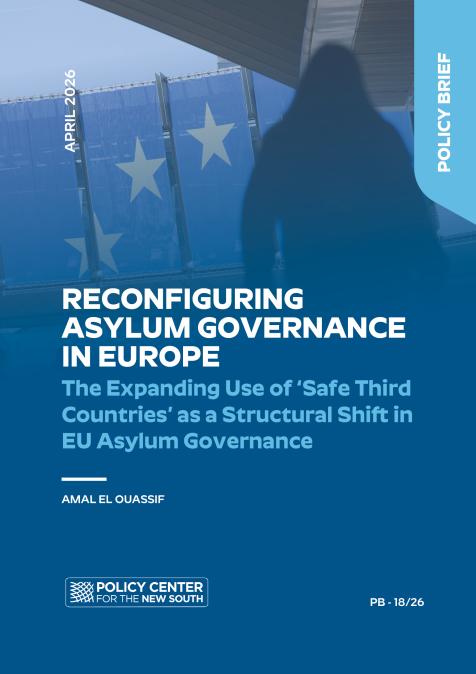
    On February 10, 2026, the European Parliament endorsed an asylum reform that expands the use of the ‘safe third country’ concept and introduces a common European Union list of ‘safe countries of origin’. This reform represents more than a technical adjustment of asylum procedures, as it signals a structural reorientation of EU asylum governance toward faster filtering of claims and greater reliance on external actors.The concept of a safe third country already exists in European asy ...
  • Authors
    March 30, 2026
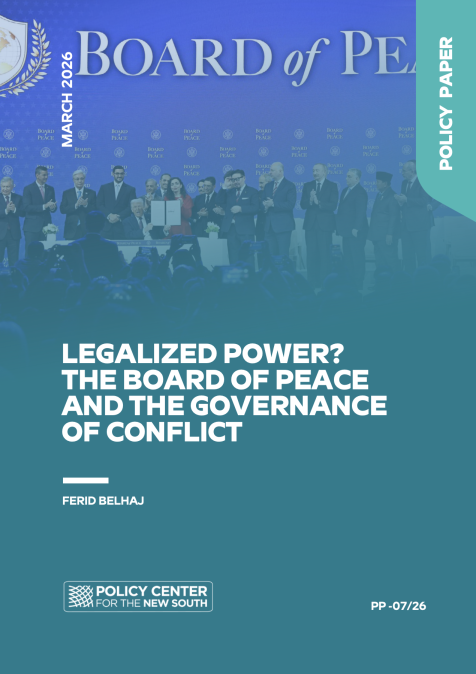
    This essay examines the establishment of the Board of Peace as a test case in contemporary peace governance and hegemonic experimentation. While the Board, politically activated in early 2026 and formally anchored in a resolution of the United Nations Security Council, benefits from derivative legality under the UN Charter, its legal foundation remains constitutionally fragile, its mandate ambiguously constrained, and its accountability architecture underdeveloped, notwithstand ...
  • March 5, 2026
    This episode of Africafé explores the evolving dynamics of US-Africa relations, tracing their historical shifts from Cold War and War on Terror engagements to today’s focus on trade, investment, and strategic partnerships. Dr. Ian Lesser highlights how Africa’s role in US foreign policy...
  • February 27, 2026
    The podcast discusses the EU’s new Mediterranean Pact and how it aims to reset relations with Southern Mediterranean countries, especially the Maghreb. It highlights the main goals of the ...
  • Authors
    Khalid R. Temsamani
    February 26, 2026
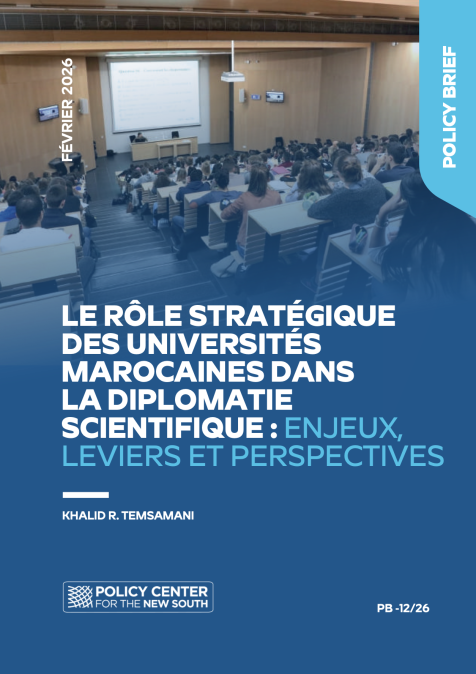
    The multiplication of systemic crises on a global scale - whether environmental, health-related, energy-related or linked to global security issues - calls for a profound change in diplomatic modes of action. In this context, the structured integration of scientific knowledge into international relations appears to be a decisive condition for the formulation of effective and legitimate collective responses. Science diplomacy is thus a strategic field of intervention, at the interfac ...
  • Authors
    Khalid R. Temsamani
    February 26, 2026
    La multiplication des crises systémiques à l’échelle mondiale – qu’elles soient environnementales, sanitaires, énergétiques ou liées aux enjeux de sécurité globale – impose une évolution profonde des modes d’action diplomatique. Dans ce contexte, l’intégration structurée des connaissances scientifiques dans les relations internationales apparaît comme une condition déterminante pour la formulation de réponses collectives efficaces et légitimes. La diplomatie scientifique s’inscrit a ...