Publications /
Policy Brief
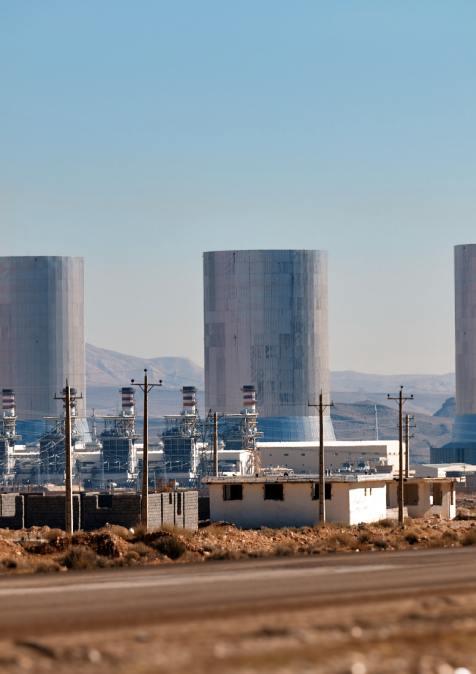
The close relationship between energy and geopolitics is well established. The same holds true for several armed conflicts. In recent years, however, the conflict most closely intertwined with energy has been the 2026 Iran War, which began on February 28. A ceasefire has been in effect since April 8, and a Memorandum of Understanding (MoU) was signed by Iran and the United States on June 17. Nevertheless, as demonstrated by Iran's attacks on commercial vessels and recent U.S. strikes between July 6 and July 13—the date on which this Policy Brief was finalized, hostilities are far from over.
This war is not associated with one form of energy, but with three: nuclear energy and hydrocarbons (oil and natural gas). The connections between the conflict and energy are numerous and diverse, as this Policy Brief will explain.
The First Connection: Causality
By attacking Iran, Israel and the United States pursued several objectives, one of which was to prevent the country from becoming a military nuclear power. This objective relates directly to the Islamic Republic's nuclear program and, above all, to its uranium enrichment facilities. It should be recalled that Iran had enriched uranium up to 60%.
The war was not motivated by Washington's desire to seize control of Iran's oil resources, despite claims sometimes made to the contrary. Within the energy sector, nuclear power, not hydrocarbons, is the key factor explaining the conflict's origins.
The Second Connection: Iran's Asymmetric Energy Strategy
The second link between the war and energy lies in Iran's strategy, which led to an asymmetric conflict. Iran's leadership sought to ignite the entire Middle East, block the Strait of Hormuz for several weeks, for the first time in history, and target the energy infrastructure of the Gulf Arab states, particularly oil and natural gas facilities.
This strategy was implemented from early March 2026. Iran targeted—and in some cases seriously damaged, oil fields, crude processing facilities, pipelines, refineries, export terminals for crude oil and refined products, liquefied natural gas (LNG) production facilities, as well as oil tankers and LNG carriers.
The most significant damage was suffered by Qatar following Iranian strikes on the Ras Laffan LNG complex shortly after mid-March. Two LNG trains were heavily damaged. Qatar estimates that repairs could take between three and five years and result in annual revenue losses of approximately US$20 billion.
The closure of the Strait of Hormuz, a strategic maritime passage through which approximately 20% of global oil consumption and 20% of global LNG exports normally transit, naturally triggered a surge in crude oil, refined product, and natural gas prices. It also caused a sharp decline in Middle Eastern oil and gas exports while creating the risk of a global oil and gas shortage, which has, for the time being, been avoided.
Iran's reasoning was straightforward: control over Hormuz represents "the equivalent of an atomic bomb", a weapon Iran itself does not possess. By threatening a significant share of global energy flows and driving energy prices sharply higher, Tehran hoped that the global economic and energy costs of the conflict would eventually compel Washington to back down.
The Third Connection: The Paradox of Energy Restraint
The third connection is paradoxical. Throughout the conflict, the United States and Israel largely refrained from targeting Iran's energy sector.
At first glance, this appears counterintuitive. If the objective is to weaken a country such as Iran, the most obvious strategy would seem to be attacking its oil industry, the Islamic Republic's primary source of export revenues.
Yet the United States never struck Iran's oil and gas infrastructure. Israel did so only twice during March: the first strike targeted refineries and storage facilities, while the second focused on gas-processing infrastructure.
On both occasions, U.S. President Donald Trump stated, whether accurately or not, that he had not been informed in advance of the attacks and did not wish Israel to repeat them. Israel did not carry out further strikes against the sector.
This American restraint, despite the United States' unquestionable ability to inflict substantial damage on Iran's energy industry, was driven primarily by economic considerations. As policymakers in Washington argued, attacking Iran's energy infrastructure would have pushed oil prices even higher while significantly increasing the risk of a global energy shortage.
Higher oil prices inevitably translate into higher fuel prices worldwide, including in the United States, a politically sensitive issue only a few months before the U.S. midterm congressional elections scheduled for early November 2026.
As a result, Iran's hydrocarbon industry effectively enjoyed a surprising degree of protection throughout much of the conflict.
The Fourth Connection: Sanctions Suspended to Stabilize Energy Markets
The fourth connection is equally surprising at first glance. The Trump Administration temporarily suspended sanctions on the oil exports of three major countries: Russia, Venezuela, and... Iran. These decisions were taken around mid-March.
This paradox also has a straightforward explanation. By facilitating oil exports from three countries that were certainly not among Washington's closest partners, the Trump Administration hoped to limit the surge in energy prices and reduce the risk of an energy shortage.
For Russia and Venezuela, the suspension was initially granted for one month before being extended. In Iran's case, however, it lasted only one month. Politically, it would have been difficult to justify waging war against a country while simultaneously granting it such a significant economic concession.
The Fifth Connection: The Strategic Importance of the Strait of Hormuz
The fifth connection revolves around the Strait of Hormuz. Today, this maritime passage remains irreplaceable, although this may not always be the case in the future. It is the only gateway into and out of the Gulf.
For LNG exports, there is simply no alternative when Hormuz is blocked.
For oil exports, however, three Gulf Arab countries—Saudi Arabia, the United Arab Emirates (UAE), and Iraq, possess export routes that bypass the Strait. These consist respectively of the East-West Pipeline, the Abu Dhabi Crude Oil Pipeline (ADCOP), and the Kirkuk-Ceyhan Pipeline linking Iraq and Türkiye.
Yet the combined export capacity of these three pipelines amounts to only around 7 million barrels per day (mb/d), whereas approximately 20 million barrels per day of crude oil and refined products normally transit through the Strait of Hormuz.
As a result, the 2026 Iran War reduced oil exports by approximately 13 million barrels per day, equivalent to around 12% of global oil consumption in 2025.
Over the medium term, one of the likely consequences of the 2026 conflict is that Gulf Arab countries will seek to develop additional export routes circumventing the Strait of Hormuz.
The United Arab Emirates had already begun constructing a second export pipeline terminating at Fujairah, outside the Strait. Emirati authorities have instructed the Abu Dhabi National Oil Company (ADNOC) to accelerate construction so that the project can be completed in 2027. Once operational, it will double the UAE's crude export capacity without relying on Hormuz.
This project is almost certainly only the beginning.
The Sixth Connection: Iran's Long-Term Ambition to Control Hormuz
The sixth connection is Iran's determination to retain long-term control over the Strait of Hormuz, thereby preserving its ability to hold the global economy hostage in the future by reducing or interrupting oil and gas exports from the Gulf Arab states.
To institutionalize this objective, the Iranian government established the Persian Gulf Strait Authority (PGSA)in May. The agency was designed to formalize Iran's control over one of the world's most strategically important maritime chokepoints.
Only a few days after its creation, however, the PGSA was placed under U.S. sanctions. The objective was to send a clear message to international shipping companies that might otherwise have been tempted to reach discreet arrangements with Tehran by accepting the Islamic Republic's authority over the Strait, including through the payment of transit fees or charges for alleged security and environmental protection services provided by Iran.
The Seventh Connection: Exceptional Measures in Response to an Exceptional Crisis
The seventh connection concerns the adoption of exceptional measures to address an equally exceptional situation.
On March 11, the International Energy Agency (IEA)—which brings together 32 member countries—announced the unprecedented release of strategic petroleum reserves.
Such measures are rarely taken. Indeed, this was only the sixth time since the IEA's creation in 1974, during the first oil shock, that coordinated emergency stock releases had been implemented.
Moreover, the scale of the release was unprecedented. The March 11 decision involved 400 million barrels of crude oil and refined petroleum products. The previous record had been 180 million barrels, released in 2022 following the outbreak of the war in Ukraine, which had also triggered a major global energy crisis.
This historic mobilization of strategic reserves, the discussion here concerns only IEA member countries, as China, which is not an IEA member, also drew on its own strategic reserves—was not sufficient to calm the global oil market. Nevertheless, it is evident that market conditions would have been considerably more strained without this massive release. Oil companies also contributed by drawing down their commercial inventories.
Over the coming months, these strategic reserves will need to be replenished to prepare for the next global oil crisis.
The Eighth Connection: Washington's Shift Toward Iranian Oil
The eighth connection is the United States' changing approach to Iranian oil.
As noted above, the United States never targeted Iran's oil industry during the conflict and even facilitated Iranian oil exports for one month (see Connections Three and Four).
However, a major turning point came on April 13, when the U.S. Central Command (CENTCOM) began enforcing a blockade of all Iranian ports located on the Persian Gulf and the Gulf of Oman.
The primary objective was clear: to prevent Iranian exports of crude oil and refined petroleum products from reaching China. As a result, Iranian oil exports declined dramatically during April and May 2026.
The U.S. Treasury Department reinforced this maritime blockade by tightening economic sanctions against Iran under Operation Economic Fury, an explicit reference to Operation Epic Fury, the military campaign launched on February 28.
Following the signing of the Memorandum of Understanding (MoU) between Washington and Tehran on June 17, the United States swiftly lifted the blockade of Iranian ports and suspended sanctions on Iranian exports of crude oil, refined petroleum products, and petrochemicals, thereby implementing Articles 4 and 10 of the agreement.
However, after Iran launched attacks against commercial shipping, the United States reinstated these sanctions on July 7. On July 13, President Donald Trump announced that Iranian ports would once again be placed under blockade.
The Ninth Connection: A Stronger U.S. Position in Global Energy Markets
The ninth connection is that the conflict is likely to strengthen the United States' position in global energy markets.
The United States is already the world's leading producer of crude oil, the largest producer of natural gas, the world's leading exporter of natural gas, and the largest exporter of liquefied natural gas.
In March 2026, the Golden Pass LNG export project entered into operation in Texas.
One of the project's defining characteristics is that its principal shareholder is QatarEnergy, Qatar's state-owned energy company. The project is owned 70% by QatarEnergy and 30% by ExxonMobil.
At precisely the moment when Qatar was forced to halt LNG production at home because of Iranian threats, a new LNG export facility with majority Qatari ownership began operating thousands of kilometers away in the United States.
The message to other Gulf Arab countries and their national oil companies is unmistakable: investing in hydrocarbon projects in the United States may prove to be an increasingly attractive strategic option.
QatarEnergy is not alone in pursuing this strategy. XRG, a subsidiary of ADNOC, has recently completed another investment in the Rio Grande LNG project in Texas, while Saudi Aramco has signed agreements with both Rio Grande LNG and Commonwealth LNG in Louisiana.
The Tenth Connection: New Opportunities for Energy Exporters Outside the Middle East
The tenth connection is that the war and the energy crisis it generated create significant opportunities for oil- and natural gas-exporting countries outside the Middle East.
Hydrocarbon-importing countries are naturally expected to diversify their sources of supply in light of the events of 2026.
For the reasons discussed above, the United States is likely to be the principal beneficiary, but it is far from the only one.
In North America, Canada, the world's fourth-largest oil producer and an LNG exporter, possesses considerable advantages.
In South America, countries such as Brazil, Guyana, Argentina, and Venezuela also stand to benefit.
Africa is likewise well positioned to seize new opportunities.
Beyond these regions, Australia, one of the world's three largest LNG exporters, together with Azerbaijan and Norway, could also benefit from the evolving global energy landscape.
Conclusion
That said, the Middle East will remain a pivotal region for global oil and gas balances for many years to come. The region holds nearly 50% of the world's proven oil reserves and approximately 40% of proven natural gas reserves.
This is one of the main reasons why the current situation—a state of neither war nor peace between the United States and Iran, punctuated by periodic outbreaks of violence and with maritime traffic through the Strait of Hormuz still well below pre-February levels—is so deeply concerning for the global economy.