Commodity Shockwaves : How the U.S.-Iran Conflict Reshapes Global Energy, Food and Mineral Markets
Following recent developments in the Middle East, the Policy Center for the New South is launching a three-part webinar series on the strategic, geopolitical, security, and economic consequences of the US-Iran conflict.
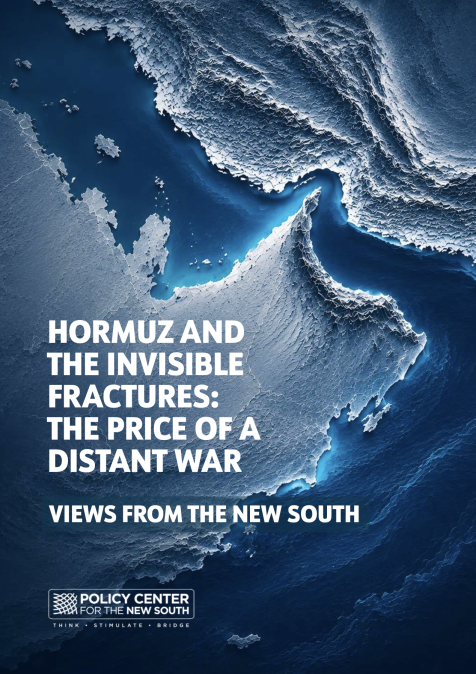
Building on the publication Hormuz and the Invisible Fractures: The Price of a Distant War – Views from the New South, the series examines the Strait of Hormuz as both a vital maritime chokepoint and a fault line in a changing global order. While the recent U.S.–Iran agreement has eased immediate tensions, the crisis remains ongoing and continues to evolve, making this publication a timely snapshot of a dynamic and still-unfolding geopolitical landscape.
Drawing on the volume's multidisciplinary analysis, the webinars explore the conflict's implications for the New South, global trade routes, energy security, and the evolving international order, while fostering informed discussion on the long-term strategic lessons emerging from the crisis.
This session examines the global commodity repercussions of the Iran conflict, focusing on energy markets, food security, and critical mineral supply chains. It assesses the strategic significance of the Strait of Hormuz as a major global trade chokepoint and the vulnerabilities it exposes across regions. The discussion also addresses how Africa, and South America can strengthen their resilience to commodity shocks and supply disruptions in an increasingly fragmented global economy.