Podcasts

Back

Securing North Africa's Future: Geopolitical Dynamics, Regional Stability, and Strategic Cooperation

In this episode, Lana Bleik examines how North Africa has become a contested geopolitical hub where external powers (US, China, Russia, Turkey, Gulf states) compete through infrastructure, energy and security ties rather than formal alliances. She highlights water scarcity, desertification and food insecurity as structural drivers of instability, and describes borders in the Sahara-Sahel region as interconnected trafficking and migration corridors requiring intelligence sharing. She also notes uneven AI and cybersecurity preparedness across the region, with Egypt, Morocco and Algeria leading while fragile states like Libya lag behind.


RELATED CONTENT

  • Authors
    Niccola Milnes
    July 21, 2026
    Armed-group drone use in the Sahel and Lake Chad Basin has scaled from rudimentary commercial-quadcopter Improvised Explosive Device (IED) drops in 2023 to a capability set that now includes First-Person View (FPV) strikes with shapedcharge anti-armor warheads, fiber-optic FPVs that defeat radio-frequency jamming, coordinated drone-and-ground assaults on hardened airfields, and a 25-drone non-state swarm. Four groups—Jama'at Nusrat al-Islam wal-Muslimin (JNIM), the Azawad Liberation ...
  • January 29, 2026
    Le Mali, le Burkina Faso et le Niger, réunis au sein de l’Alliance des États du Sahel (AES), affirment l’ambition de bâtir une souveraineté nationale qui leur permettrait de s’émanciper de la domination et des influences extérieures et de se doter d’une liberté d’action dans les choix de développement politique et économique. Cependant, cette ambition se heurte à de nombreuses contraintes économiques et sécuritaires.La souveraineté ne peut se construire sans une base économique soli ...
  • January 6, 2026
    La création de l’Alliance des États du Sahel (AES) symbolise une rupture politique et géostratégique majeure, appuyée sur un discours souverainiste et anti-occidental. Deux ans après, Mali, Burkina Faso et Niger peinent à assurer leur intégrité territoriale, à stabiliser leur sécurité intérieure et à bâtir une gouvernance solide. L’intégrité territoriale est un problème commun aux trois États, car dans ces pays, la cohésion de l’État et le contrôle du territoire sont directement men ...
  • Authors
    Niccola Milnes
    December 30, 2025
    Fuel access has become a strategic pressure point across Mali and its neighbors. In 2025, Jama’t Nusrat al Islam wal- Muslimeen (JNIM) shifted from sporadic interdictions to a deliberate fuel-blockade strategy intended to pressure Bamako without holding territory. By selectively constraining movement along the Sikasso–Kayes–Bamako corridor, the group turned fuel scarcity into a tool of coercion, governance, and narrative control—shaping behavior in the capital while remaining largel ...
  • Authors
    August 4, 2023
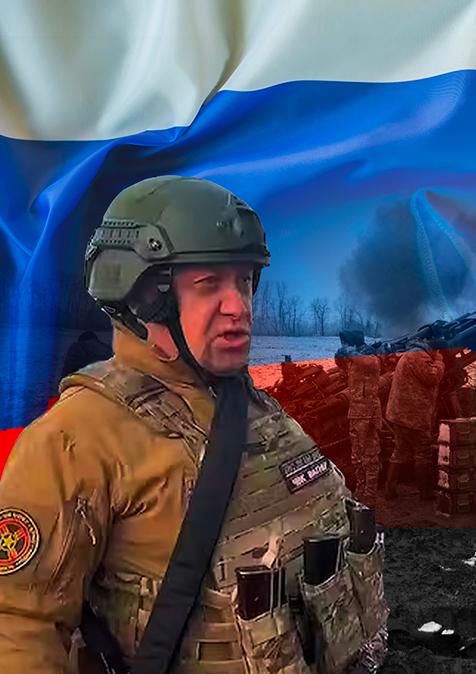
    Twenty-Four Hours June 23-24, 2023. Over those days, Russia, the sanctioned world power, was not destabilized by the nuclear enemy in Washington, but by one man, who made his wealth serving food to school children and soldiers. A caterer who attempted a revolution. A bald man, who apparently wore wigs during his days off, as the Russian secret police claimed to have discovered when they searched his home in St Petersburg. The photos of the wig-wearing Yevgeny Prigozhin were shown o ...
  • Authors
    Imane Lahrich
    June 12, 2023
    The security landscape in the Sahel region has undergone significant changes in recent years. From the emergence of Russia as an actor in the region to the persistent issue of trafficking, and the challenges of political transitions in countries including Chad and Sudan, the Sahel faces complex and interconnected security challenges. This insight summarizes our biannual Strategic Dialogues, focusing on the new security landscape in the Sahel, its regional developments, and its impli ...