Publications /
Research Paper
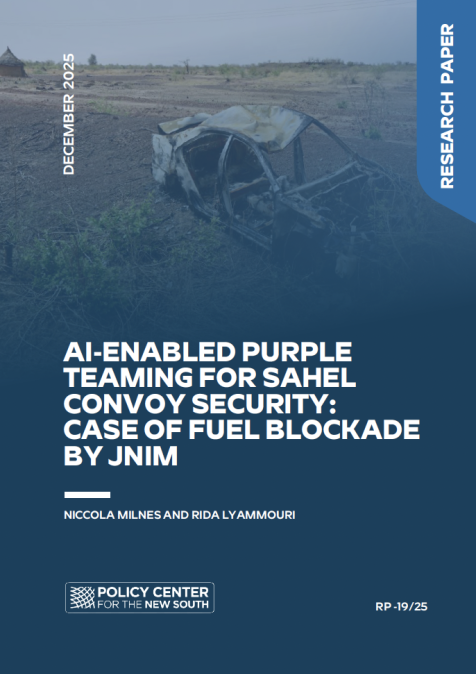
Fuel access has become a strategic pressure point across Mali and its neighbors. In 2025, Jama’t Nusrat al Islam wal- Muslimeen (JNIM) shifted from sporadic interdictions to a deliberate fuel-blockade strategy intended to pressure Bamako without holding territory. By selectively constraining movement along the Sikasso–Kayes–Bamako corridor, the group turned fuel scarcity into a tool of coercion, governance, and narrative control—shaping behavior in the capital while remaining largely outside it.
This brief draws on ACLED’s dataset of nearly 3,000 JNIM activities over twelve months, including combat operations, propaganda releases, and government counter-actions. Using an adversarial-intelligence model supported by AI-enabled pattern detection and red/blue/purple-team reconstruction, the analysis reconstructs JNIM decision cycles, identifies defender vulnerabilities, and tests countermeasures against the group’s operational constraints.