APSACO 9th Edition : Introductory Remarks

June 19, 2025
Speakers
Karim El Aynaoui
Executive President
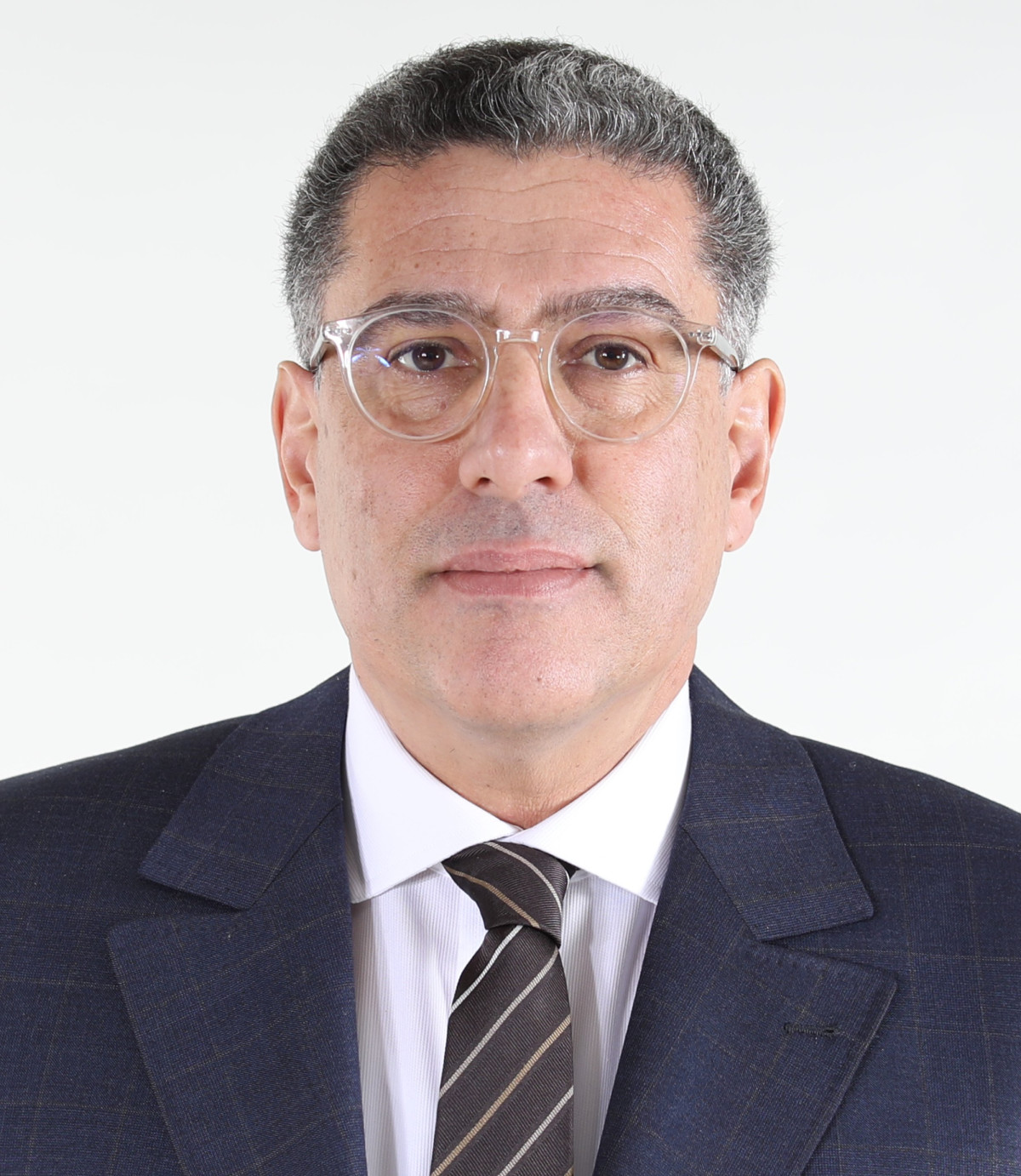
Karim El Aynaoui is Executive President of the Policy Center for the New South. He is also Executive Vice-President of Mohammed VI Polytechnic University and Dean of its Humanities, Economics and Social Sciences Cluster. From 2005 to 2012, he worked at the Central Bank of Morocco (Bank Al-Maghrib) as Director of Economics, Statistics, and International Relations. He also created and headed the Research Department and served as a member of the Governor’s Cabinet. Previously, he worked for eight years at the World Bank as an economist for its regional units of the Middle East and North Africa and Africa. Karim El Aynaoui has published books and journal articles on macroeconomic issues in developing countries. He has co-authored works on growth and the labor market in M ...
RELATED CONTENT

  • Authors
    Niccola Milnes
    December 30, 2025
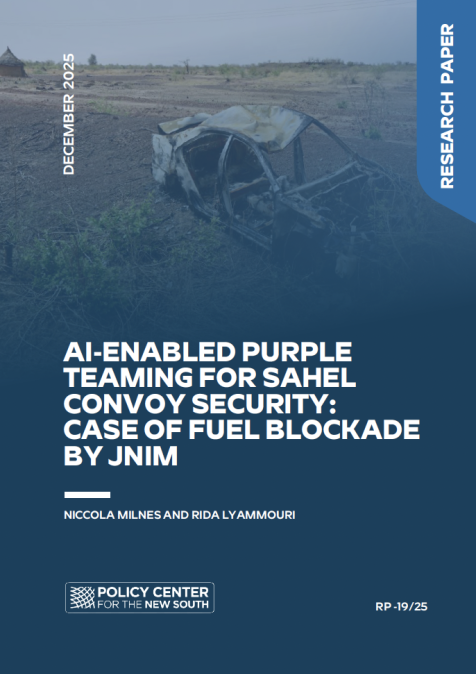
    Fuel access has become a strategic pressure point across Mali and its neighbors. In 2025, Jama’t Nusrat al Islam wal- Muslimeen (JNIM) shifted from sporadic interdictions to a deliberate fuel-blockade strategy intended to pressure Bamako without holding territory. By selectively constraining movement along the Sikasso–Kayes–Bamako corridor, the group turned fuel scarcity into a tool of coercion, governance, and narrative control—shaping behavior in the capital while remaining largel ...
  • Authors
    Chaïma Jabbar
    December 23, 2025
    The member countries of the Alliance of Sahel States, Mali, Burkina Faso, and Niger, remain dependent on a limited number of maritime access corridors, a configuration that constrains their adjustment capacity in the event of disruption and heightens the vulnerability of their supply chains. The Jama’at Nusrat al-Islam wa al-Muslimin (JNIM) blockade of the Kayes-Nioro area revealed how critical the Dakar-Bamako corridor is for the political and economic stability of Mali. Its interr ...
  • Authors
    Chaïma Jabbar
    December 23, 2025
    Les pays membres de l’Alliance des États du Sahel (le Mali, le Burkina Faso et le Niger) demeurent dépendants d’un nombre restreint de corridors d’accès à la mer, une configuration qui limite leur capacité d’ajustement en cas de perturbation et accroît la sensibilité de leurs chaînes d’approvisionnement. Le blocus du tronçon Kayes-Nioro a illustré la forte criticité du corridor Dakar-Bamako : l’interruption d’un segment unique a entraîné une contraction rapide des flux, révélant la ...
  • Authors
    Corinne Dufka
    Niccola Milnes
    December 8, 2025
    Although the crises affecting the Sahel have been widely analysed through the lenses of armed groups, state fragility and geopolitics, much less is known about how women experience insurgent governance in their everyday lives. This is particularly pertinent to members of the pastoralist Peuhl ethnic group, which has been strategically targeted for recruitment by the Central Sahel’s dominant Islamist armed group, Jama’at Nusrat al-Islam wal-Muslimin (JNIM), as a means of facilitating ...
  • Authors
    December 1, 2025
    This Paper was originally published on transatlantic.org The contemporary maritime domain is increasingly recognized as a geopolitical and economic space, but also as an environment intertwined with human, social, ecological, and governance systems ashore. The United Nations Institute for Disarmament Research (UNIDIR 2024) report argues that maritime security has evolved from a narrow naval and state-centered concern into a multidimensional issue embedded in global human s ...
  • Authors
    October 24, 2025
    Le panorama géopolitique mondial expose, certes, cruellement les vulnérabilités structurelles de l'Afrique (dépendance alimentaire, financière, exposition aux chocs), mais il ouvre aussi une fenêtre d'opportunités sans précédent depuis les indépendances. Le continent n'est plus seulement un objet de la géopolitique mondiale ; il tend de plus en plus à jouer un rôle d’acteur qui dispose d'une marge de manœuvre accrue. Le défi pour le continent et ses Éta ...
  • Authors
    Niagalé Bagayoko
    Eugène Berg
    Christophe Chabert
    Thierry Garcin
    Alain Oudot de Dainville
    Florent Parmentier
    Anne Sophie Raujol
    Hassan Saoudi
    October 23, 2025
    Les Dialogues Stratégiques, fruit d'une collaboration entre le HEC Center for Geopolitics et le Policy Center for the New South, constituent une plateforme d'échanges biannuelle dédiée à l'analyse des grandes tendances mondiales et des problématiques régionalesqui lient l'Europe et l'Afrique. Réunissant praticiens, décideurs, universitaires et représentants desmédias, cet espace de réflexion permet de décoder les transformations en cours et de proposer des réponses aux défis contemp ...
  • October 21, 2025
    تعيش منطقة الساحل مرحلة غير مسبوقة من تصاعد العنف السياسي والإرهاب، إذ أصبحت منذ 2025 مسؤولة عن أكثر من نصف الوفيات المرتبطة بالإرهاب عالميًا. هذا التحول يعكس فشل الدول في استعادة ثقة المواطنين، وانهيار المؤسسات الأمنية، وتراجع الوجود الدولي، ما أفسح المجال لتوسع الجماعات المسلحة مثل “نصرة الإسلام والمسلمين” و”تنظيم الدولة في الصحراء الكبرى”. جاءت الانقلابات المتتالية في مالي وبوركينا فاسو والنيجر كنتيجة لأزمات داخلية بنيوية عمّقت هشاشة الحكمتشهد المنطقة تفاوتًا في أنماط العنف؛ فبور ...
  • Authors
    Meryam Amarir
    October 6, 2025
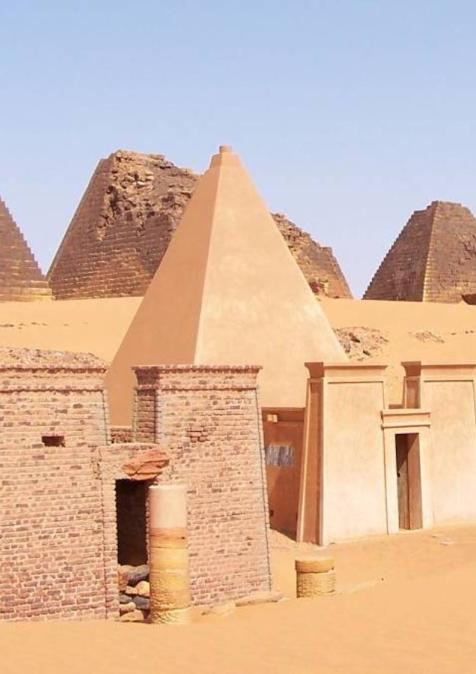
    Sudan’s Heritage: Looting as a Weapon of WarSudan, in addition to the political and humanitarian crisis that has shaken the country for years, is now facing a worrying degradation of its cultural heritage, both tangible and intangible, particularly in areas where the fighting is most intense. Cultural heritage has become another victim of this war: the destruction of archaeological sites and the looting of museums fuel the illicit trafficking of cultural property and contribute to r ...