Publications /
Policy Paper

Back
Regionalism and G20 Support for Neighboring Non-G20 Developing Countries
Authors
Bambang Brodjonegoro
November 2, 2026

This policy note was published as part of the T20 U.S. 2026 Workstreams, under the workstream “Fostering Trade and People-Centered Economic Growth,” which brings together policy experts to develop recommendations for G20 policymakers.


The Group of Twenty (G20) accounts for most of the world’s output, yet its decisions shape the prospects of 174 United Nations Member States without G20 membership, among them the great majority of least developed countries and small states. Many of these non-G20 economies are close trading neighbors of a large G20 member and depend on that neighbor for export demand, investment, remittances, and development finance. These links are increasingly exposed to fragmentation of the global economy. New trade restrictions nearly tripled between 2019 and 2022, and remained elevated in 2025. Under a two-bloc trade fragmentation scenario, low-income countries could lose more than 4 percent of output over the long run. Such risks compound debt vulnerabilities and food insecurity. 

External support is also contracting. Preliminary data show that official development assistance from Development Assistance Committee members and associates fell by 23.1 percent in real terms in 2025, the steepest annual fall on record, returning to its 2015 level. Developing countries also face an annual financing gap for the Sustainable Development Goals of around 4 trillion dollars. 

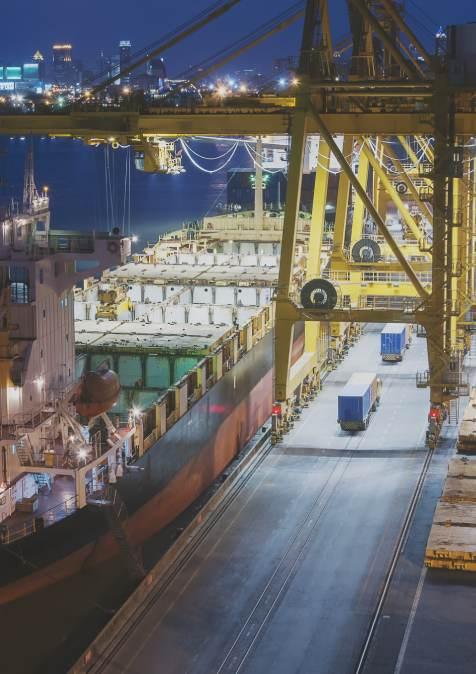
Regionalism offers G20 economies a durable channel to keep supporting their non-G20 neighbors even as multilateral cooperation weakens. Asia illustrates this approach, having built dense regional production networks, a large regional financial safety net, and shared institutions that allow larger economies to anchor smaller ones. In Africa, connector economies can link fragmented markets to wider production networks. Morocco exemplifies this potential through its logistics infrastructure, industrial capabilities, and access to European and United States markets, provided that firms in smaller African economies can participate in the resulting value chains. 

The G20 should finance regional public goods through regional platforms and reformed multilateral development banks, and expand the use of low-cost remittance services; design open and inclusive regional trade arrangements that allow smaller neighbors to join regional value chains; and strengthen regional financial safety nets and improve their coordination with the International Monetary Fund (IMF). Each recommendation builds on existing G20 workstreams and on an agenda centered on growth.
RELATED CONTENT

  • Authors
    Bruce Byiers
    Saloi El Yamani
    May 14, 2024
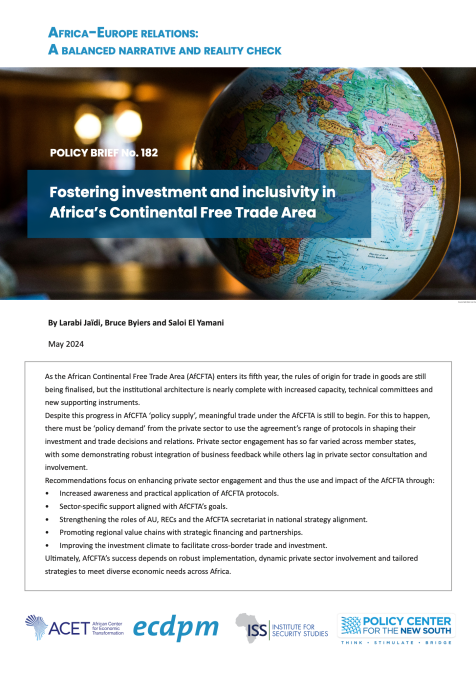
    As the African Continental Free Trade Area (AfCFTA) enters its fifth year, the rules of origin for trade in goods are still being finalised, but the institutional architecture is nearly complete with increased capacity, technical committees and new supporting instruments. Despite this progress in AfCFTA ‘policy supply’, meaningful trade under the AfCFTA is still to begin. For this to happen, there must be ‘policy demand’ from the private sector to use the agreement’s range of protoc ...
  • Authors
    Elhoussaine Wahyana
    January 12, 2024
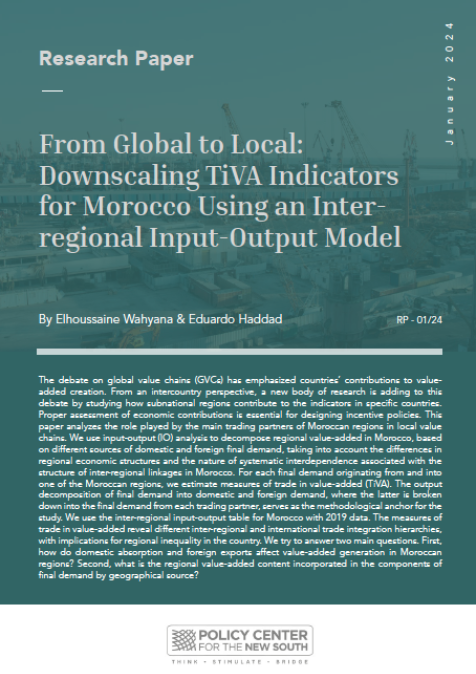
    The debate on global value chains (GVCs) has emphasized countries’ contributions to value-added creation. From an intercountry perspective, a new body of research is addingto this debate by studying how subnational regions contribute to the indicators in specific countries. Proper assessment of economic contributions is essential for designing incentive policies. This paper analyzes the role played by the main trading partners of Moroccan regi ...
  • Authors
    January 2, 2024
    This paper was originally published on The South African Institute of International Affairs (SAIIA)Industrialisation is crucial for Africa to improve its standard of living, create productive jobs for its young work force and diversify its exports. ...
  • Authors
    Sous la direction de
    September 21, 2023
    Cette édition du Rapport économique de l’Afrique est construite autour d’une thématique d’une grande actualité : les conséquences des incertitudes et des risques aussi bien sanitaires que climatiques et sécuritaires sur les économies du continent. L’exercice est d’autant plus légitime que la recomposition de l’ordre mondial questionne la place du continent à l’échelle planétaire, sur les plans économique, social et environnemental. L’économie mondiale est confrontée à des défis glo ...
  • Authors
    September 4, 2023
    À  l’approche du Sommet africain du climat (Africa Climate Summit), qui se tiendra à Nairobi du 4 au 6 septembre 2023, de très nombreuses organisations non gouvernementales (ONG) ont écrit au président du Kenya, William Ruto, pour lui faire part de leurs inquiétudes concernant l’ordre du jour de ce sommet. Selon ces ONG, les intérêts des entreprises et des pays occidentaux pourraient prendre le pas sur ceux de l’Afrique. Les vraies priorités sont notamment d’éliminer progressiv ...
  • Authors
    August 29, 2023
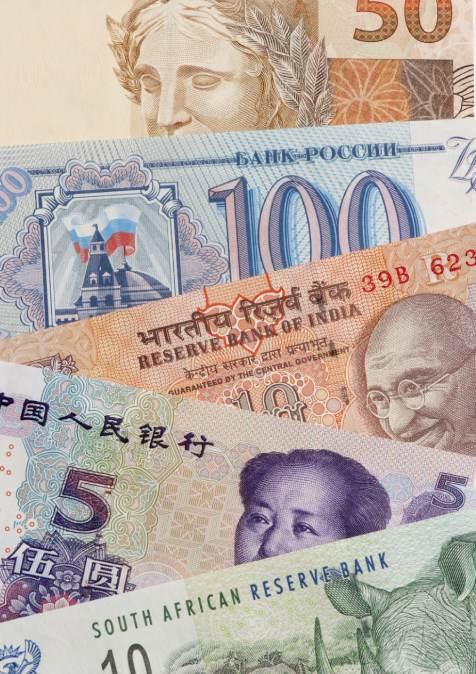
    At the August 22-24 BRICS summit in Johannesburg, the leaders of Brazil, Russia, India, China and South Africa said they wanted to use more of their national currencies for cross-border payments, which are currently dominated by the U.S. dollar and other global convertible currencies. Like China and the other BRICS, several other countries have also sought to develop alternative external payment mechanisms. Pairs of countries have agreed to settle commercial and financial transactio ...
  • Authors
    August 18, 2023
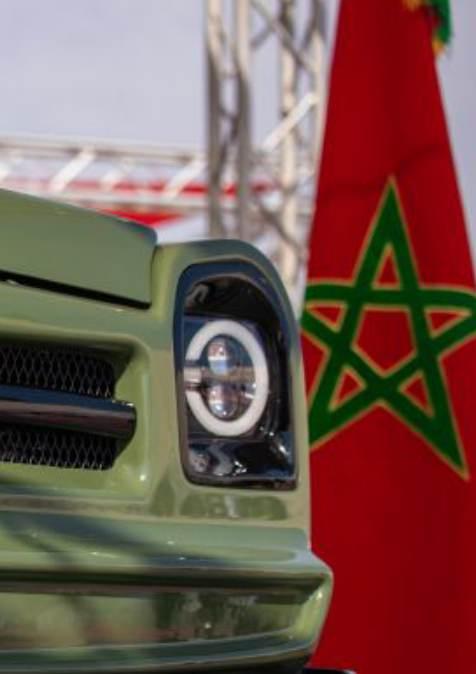
    Industrial history was written on Monday, May 15, 2023. Mohammed VI, the king of Morocco, celebrated in the Royal Palace a car from Neo Motors, the first ‘Made in Morocco’ car brand, helping drive the nation towards economic prosperity and social stability. Neo Motors vehicles, financed and built by Moroccan entrepreneurs, will soon compete globally with German, Italian, Japanese and Korean cars. The ‘Neon’ (offered for an estimated 170,000 dirhams, or $15,000) will be assembled and ...
  • June 20, 2023
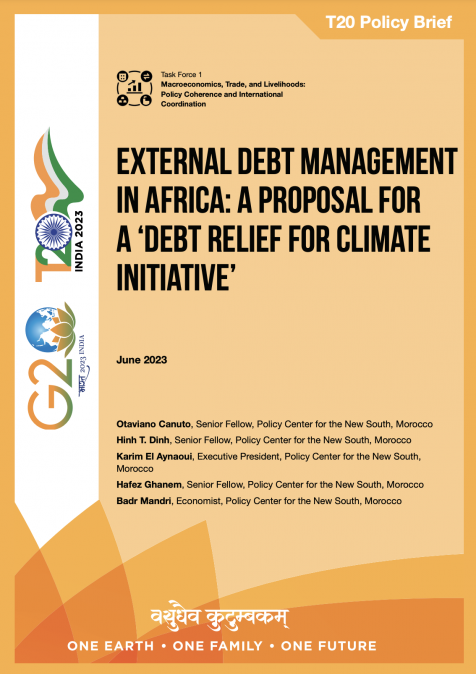
    This policy brief was originally published on T20 India website   A decade of poor growth, increased poverty, and political instability followed the serious debt difficulties that emerged worldwide in the 1980s. There are concerns that the looming debt crisis could create similar challenges and result in even more severe consequences. However, the current economic climate differs in many ways from that of the 1980s, when international banks and Paris Club credi ...
  • Authors
    Pierre Sauvé
    May 29, 2023
    Morocco has made important strides in reducing poverty in the last three decades, thanks in large part to trade and industrial policies aimed at durably inserting the country into world flows of goods, services, and cross-border investment. Since 1992, per capita incomes have tripled (in current US$), contributing to a threefold drop in the Kingdom’s poverty headcount. The country of 37 million features consistently as one of the better-performing and more stable economies in the No ...