Publications /
Policy Paper

Back
Regionalism and G20 Support for Neighboring Non-G20 Developing Countries
Authors
Bambang Brodjonegoro
November 2, 2026

This policy note was published as part of the T20 U.S. 2026 Workstreams, under the workstream “Fostering Trade and People-Centered Economic Growth,” which brings together policy experts to develop recommendations for G20 policymakers.


The Group of Twenty (G20) accounts for most of the world’s output, yet its decisions shape the prospects of 174 United Nations Member States without G20 membership, among them the great majority of least developed countries and small states. Many of these non-G20 economies are close trading neighbors of a large G20 member and depend on that neighbor for export demand, investment, remittances, and development finance. These links are increasingly exposed to fragmentation of the global economy. New trade restrictions nearly tripled between 2019 and 2022, and remained elevated in 2025. Under a two-bloc trade fragmentation scenario, low-income countries could lose more than 4 percent of output over the long run. Such risks compound debt vulnerabilities and food insecurity. 

External support is also contracting. Preliminary data show that official development assistance from Development Assistance Committee members and associates fell by 23.1 percent in real terms in 2025, the steepest annual fall on record, returning to its 2015 level. Developing countries also face an annual financing gap for the Sustainable Development Goals of around 4 trillion dollars. 

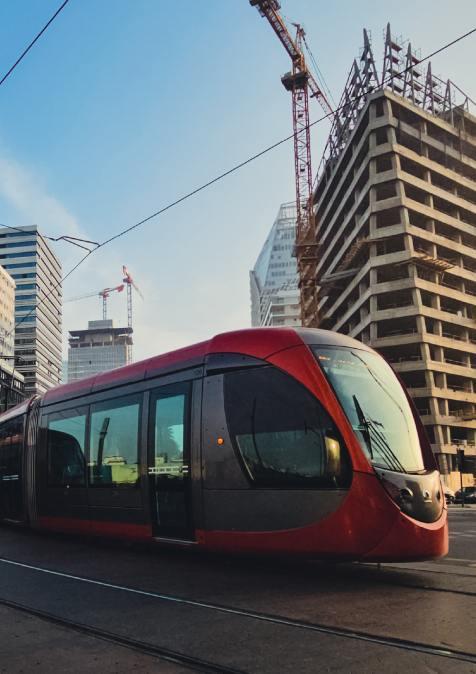
Regionalism offers G20 economies a durable channel to keep supporting their non-G20 neighbors even as multilateral cooperation weakens. Asia illustrates this approach, having built dense regional production networks, a large regional financial safety net, and shared institutions that allow larger economies to anchor smaller ones. In Africa, connector economies can link fragmented markets to wider production networks. Morocco exemplifies this potential through its logistics infrastructure, industrial capabilities, and access to European and United States markets, provided that firms in smaller African economies can participate in the resulting value chains. 

The G20 should finance regional public goods through regional platforms and reformed multilateral development banks, and expand the use of low-cost remittance services; design open and inclusive regional trade arrangements that allow smaller neighbors to join regional value chains; and strengthen regional financial safety nets and improve their coordination with the International Monetary Fund (IMF). Each recommendation builds on existing G20 workstreams and on an agenda centered on growth.

RELATED CONTENT

  • August 26, 2026
    The Africa Center, in partnership with the Policy Center for the New South, hosts a discussion on how air transport in Africa could be a powerful catalyst of economic growth, underpin regional trade, and fuel skilled job creation. ...
  • Authors
    Meryam Amarir
    August 13, 2026
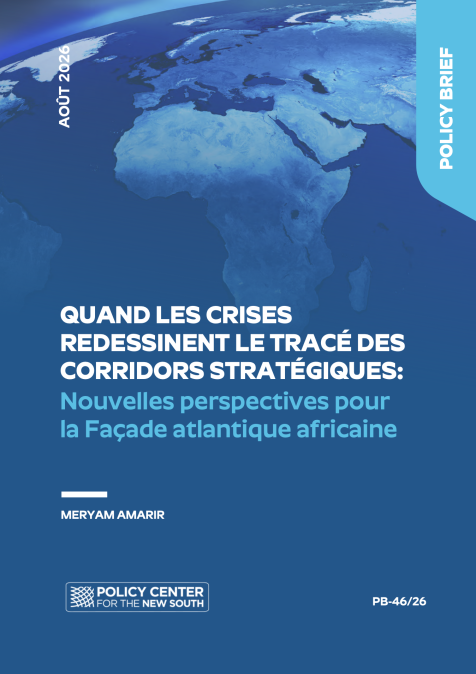
    Les crises récentes au Moyen-Orient, notamment les attaques ciblant les navires commerciaux en mer Rouge et les tensions autour du détroit d'Ormuz, ont mis en évidence la vulnérabilité des principaux corridors stratégiques du commerce mondial. Plus qu'un bouleversement de l'organisation des échanges, elles accélèrent une transformation déjà engagée, fondée sur la recherche de chaînes de connectivité plus résilientes, la diversification des itinéraires commerciaux et le développement ...
  • Authors
    Meryam Amarir
    August 13, 2026
    Recent crises in the Middle East, particularly attacks targeting commercial vessels in the Red Sea and tensions surrounding the Strait of Hormuz, have highlighted the vulnerability of the main strategic corridors of global trade. Rather than fundamentally disrupting the organization of trade flows, these crises are accelerating an ongoing transformation driven by the search for more resilient connectivity chains, the diversification of trade routes, and the development of logistics ...
  • Authors
    August 12, 2026
    La géographie mondiale des hydrocarbures n'est évidemment pas figée. De nouveaux producteurs de pétrole et/ou de gaz naturel apparaissent suite à des découvertes, le plus souvent réalisées par des compagnies pétrolières internationales. On pense notamment au Mozambique, qui produit et exporte du gaz naturel liquéfié (GNL) depuis la fin 2022, au Sénégal, qui est un producteur de pétrole offshore depuis la mi-2024, et au Sénégal et à la Mauritanie, qui sont devenus conjointement expor ...
  • Authors
    August 5, 2026
    This paper addresses the persistent challenge of resource dependence in the world's poorest countries, focusing on the ten poorest African nations where natural- resource rents average 14% of income. It argues that four decades of conventional policy advice, which treated resource dependence primarily as a revenue management problem, have failed to help these countries. While stabilization funds and permanent-income frameworks aim to smooth consumption, they do not answer the fundam ...
  • August 3, 2026
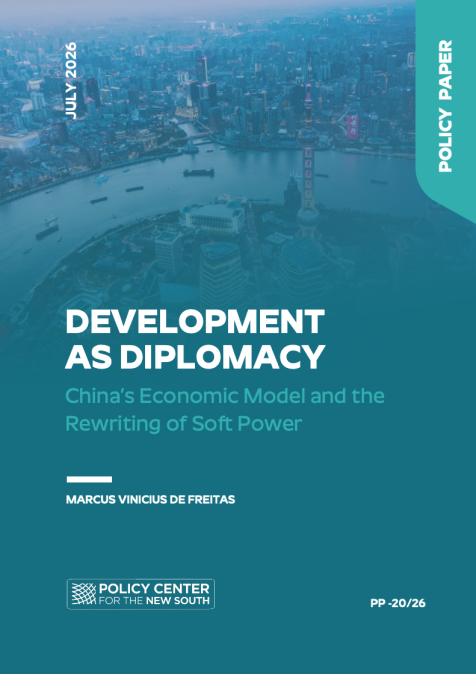
    This policy paper explores how China’s economic development model—rooted in pragmatism, long-term planning, and civilizational renewal—has become its most compelling soft power asset, particularly in the eyes of the Global South. While critically engaging with Joseph Nye’s original conception of soft power as a primarily cultural and normative force, the paper argues that China’s ability to transform itself from an impoverished postimperial state into the world’s largest trading nat ...
  • Authors
    Edited by
    July 13, 2026
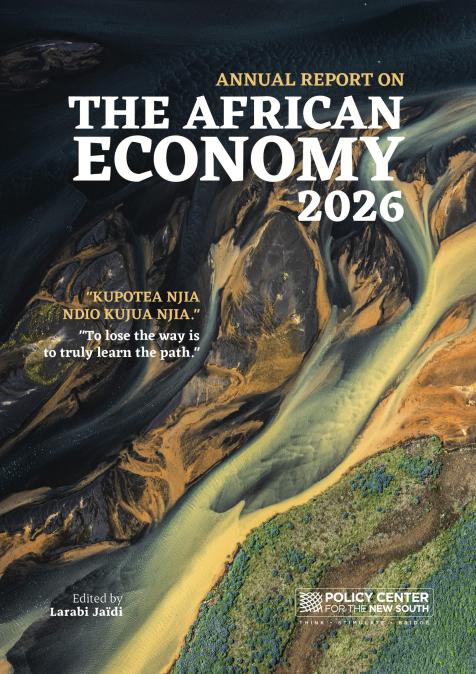
    Available soon on livremoi. The 2026 edition of the Annual Report on the African Economy examines the issue of the valorization of Africa’s natural resources, particularly its mineral wealth. While the continent holds some of the world’s largest known reserves of a wide range of minerals and metals, the objective is not merely to catalogue these resources, but rather to explore the conditions under which natural resource endowments can be transformed into drivers of Africa’s in ...
  • July 3, 2026
    Este Policy Paper también ha sido publicado en inglés y francés por Le Grand Continent La economía marroquí constituye un caso ilustrativo entre las economías de renta media, en un contexto marcado por una creciente fragmentación del entorno internacional, un crecimiento mundial anémico y una desaceleración de la convergencia. Desde 2022, su trayectoria se caracteriza por una relativa solidez, con un crecimiento superior a la media de las economías de la misma categoría. Superi ...
  • July 3, 2026
    Ce Policy Paper a également été publiée en anglais et en espagnol par Le Grand Continent Le Maroc offre un exemple éclairant parmi les pays à revenu intermédiaire, dans un contexte marqué par une fragmentation croissante de l’environnement international, une croissance mondiale atone et un ralentissement de la convergence. Depuis 2022, sa trajectoire se distingue par une certaine robustesse, avec un rythme d’expansion supérieur à celui des autres économies de même catégorie. Dé ...
  • July 3, 2026
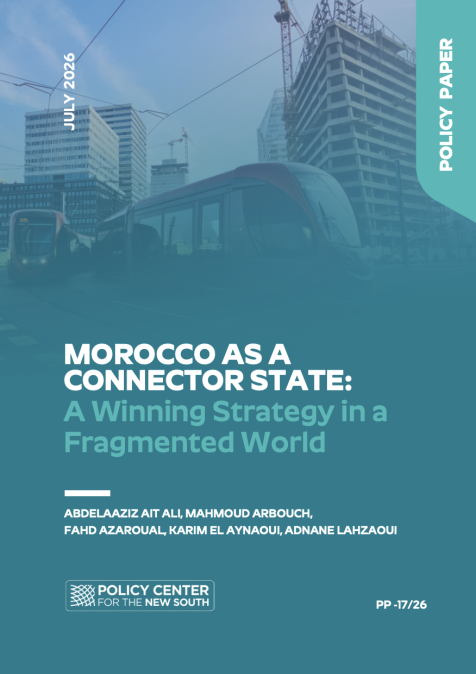
    This Policy Paper has also been published in French and Spanish by Le Grand Continent Morocco offers a compelling example of how a middle-income economy can navigate a more fragmented global environment, characterized by weak growth and slower convergence. Since 2022, economic activity has remained relatively strong, with growth exceeding that of many comparable economies. Non-agricultural growth has averaged 4.4% since 2022, around 1.3 percentage points above its historical av ...