Publications /
Policy Brief
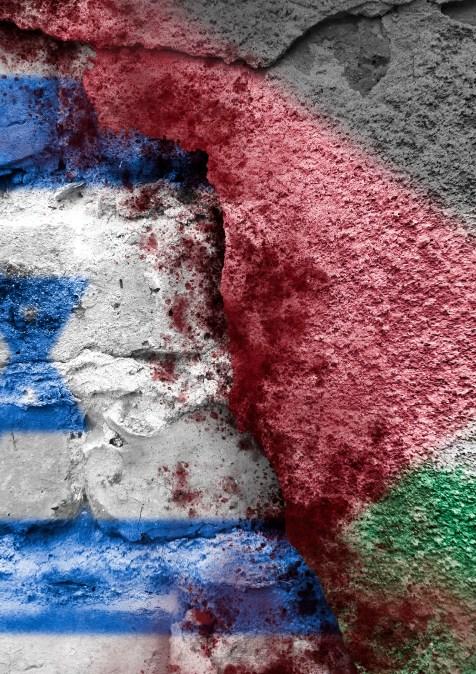
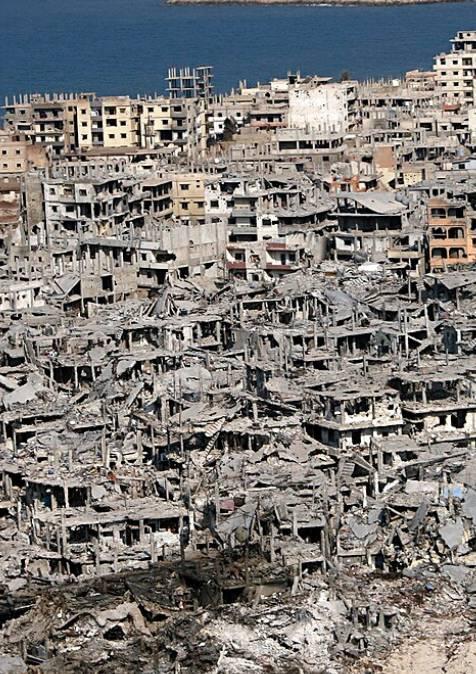
The "Gaza Agreement" of October 2025, imposed on the parties to the conflict -Israel and Hamas- by US President Donald Trump, and the "Sharm el-Sheikh Peace Summit", have opened up the prospect of a halt to hostilities and the delivery of humanitarian aid to the Gaza Strip, pending the negotiation of the second phase to consolidate the ceasefire and pave the way for peace in the Region.
While Hamas' involvement in the negotiations to free the hostages and end the war gave it visibility, the Palestinian Authority was obliged to take diplomatic initiatives to reaffirm its political legitimacy and its role as the sole representative of the Palestinian people. To date, the Palestinian State has been recognized by 153 States, with which it maintains diplomatic relations, and is a full member of several international organizations.
Peace in the Middle East inevitably requires the implementation of the two-state solution envisioned as early as 1948, and which today remains the only way to achieve genuine and lasting peace between the two peoples, and lasting stability throughout the region.
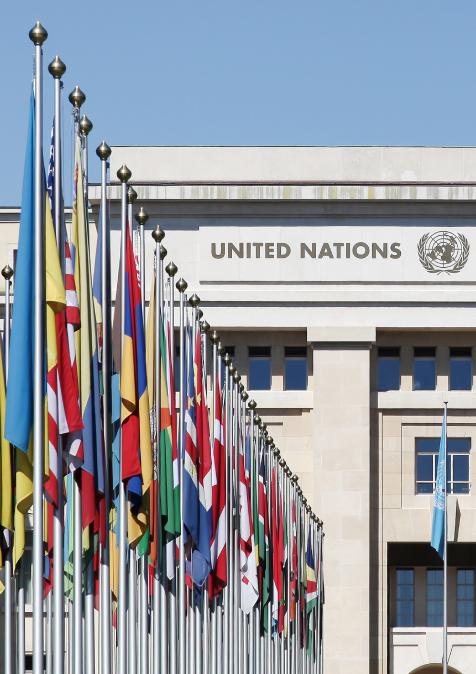
In 2028, the State of Israel will celebrate the eightieth anniversary of its creation, made possible by the decision of the United Nations. It is now up to this same international organization to complete the historic process it initiated, by admitting the State of Palestine into its fold.
Introduction
The "Gaza Agreement", drawn up and imposed on the parties to the conflict - Israel and Hamas - under the aegis of US President Donald Trump, was intended to put an end to the longest phase of armed confrontation in the history of the Arab-Israeli conflict. This agreement provided the framework for the "Sharm el-Sheikh Peace Summit", to be held in October 2025 under the joint chairmanship of the USA and Egypt.
The summit endorsed the cessation of hostilities in the Gaza Strip, initiated the release of prisoners and organized the gradual repatriation of the remains of victims belonging to both sides. It also opened the door to the delivery of humanitarian aid, under American supervision. Despite strict non-compliance with the ceasefire and reciprocal accusations, Washington seems determined to contain any excesses so as not to jeopardize the second-phase negotiations.
Presented by Washington as a key step towards the recomposition of the regional balance and the possible extension of the normalization process between Israel and several Arab countries, the Summit brought together 31 states from the Arab-Islamic, European and Asian spheres, as well as representatives of the League of Arab States, the European Union and the United Nations.
On the Palestinian side, only President Mahmoud Abbas took part in the Summit, to the exclusion of any Hamas representatives, while the Israeli Prime Minister used the coincidence of the Summit with the Jewish holiday of "Joy of the Torah" as an excuse for his absence, while another version refers to the Turkish President's opposition to his participation.
The Conference resulted in the signing of a "Sharm el-Sheikh Declaration for Peace in the Middle East" expressing collective support for the comprehensive ceasefire in Gaza, and calling for a lasting halt to hostilities and the complete release of hostages and prisoners. It emphasizes the humanitarian priority, guaranteeing unrestricted access for international aid under the supervision of the UN, the Red Crescent and Egypt, while providing for a comprehensive reconstruction plan for the Gaza Strip. The Declaration provides for the installation of a multinational stabilization mission in Gaza and reaffirms the two-state solution, with Israel and Palestine living side by side in security, entrusting Egypt with the regional coordination of the process, with the support of the Arab League, the United Nations and the European Union, while a permanent contact group is set up to monitor the implementation of the Agreement and reconstruction efforts.
The Declaration demands that Hamas hand over its weapons to the Palestinian Authority, and that the Gaza Strip be placed under its control in due course, with the support of the international community.
Like any agreement reached under the pressure of events and time, the one signed between Hamas and Israel contains many grey areas to be clarified, ambiguities to be removed and numerous details to be negotiated in order to achieve a genuine ceasefire, a lasting halt to violence and a return to calm throughout the region.
On the thorny issues of Hamas disarmament, the creation of a technocratic transitional authority in Gaza, the withdrawal of Israeli troops, guaranteed of Israel's non-return to war and the establishment of a reconstruction mechanism, they must be the subject of future negotiations, the launch of which depends, to a large extent, on the fulfillment of the first phase of the Agreement. There is still a long way to go, and the momentum that has been set in motion is not immune to denial, backtracking or complications that could jeopardize the "Pax Americana".
While Hamas' involvement in the negotiations to free the hostages and bring the war to an end has given it visibility among a section of the Palestinian and Arab population as a movement of resistance to Israeli occupation, the wait-and-see attitude of the Palestinian Authority, which distanced itself from the events of October 7, 2023, has contributed to a marked decline in its popularity, including in the West Bank.
Faced with this situation, the Palestinian Authority was obliged to take initiatives to reaffirm its political legitimacy and its role as the sole representative of the Palestinian people. In this respect, it thought it could capitalize on the disillusionment and general despair of the people of Gaza, deeply affected by the prolongation of the conflict, the dramatic deterioration in humanitarian conditions and the very high number of civilian casualties, to marginalize Hamas from the local political game in order to regain a foothold in Gaza and impose itself as the sole interlocutor for a future peace in the region.
The exclusion of Hamas from the Cairo Conference and its probable disarmament have enabled the Authority to score points internationally. In this context, the recent recognition of the State of Palestine and the Declaration adopted by the General Assembly on the revival of the two-State solution are major events whose scope, impact and diplomatic and political consequences for the status of the Palestinians and the future of the region must be assessed. In order to do so, it is important to look back at the long road travelled by both parties to have their national rights recognized by the international community (I), before examining the extent to which the recent wave of international recognition goes beyond the purely declaratory to facilitate the relaunch of a negotiation process likely to lead, at last, to a just and lasting peace in the Middle East (II).
This peace will necessarily involve the implementation of the two-state solution, envisaged as early as 1948 and initially rejected by both parties, and which remains, today more than ever, the only inevitable route to genuine and lasting peace between the two peoples and lasting stability in the Middle East (III).
I – PALESTINE, A SHARED LAND
Claimed by two peoples who proclaim exclusive sovereignty on religious, legal, historical and political grounds, Palestine occupies a singular place in the history of decolonization and the birth of new states. It is more than just a territory: it embodies a complex conflict in which collective memory, national identity, territorial rights and religious convictions are intertwined. This situation, fuelled by decades of tensions, open wars, unfinished negotiations and dashed hopes, arouses intense passions and remains at the heart of the most sensitive geopolitical and human debates of the contemporary era. Since the First World War, the Palestinian question has never ceased to challenge the international conscience and the effectiveness of international legality. Under British mandate since 1922, Palestine is a territory with a singular status within the international system that emerged from the First World War. In accordance with the Balfour Declaration of 1917, the United Kingdom, which had no sovereign right or other title to the Palestinian territory, undertook, as Mandatory Power, to promote "the establishment in Palestine of a national home for the Jewish people" and to encourage massive Jewish immigration. This demographic and land dynamic fuelled resistance and revolts among the Palestinian Arab population, leading to chronic instability and a spiral of violence between the two communities. Faced with the impossibility of finding a viable political solution, the United Kingdom resigned its mandate in 1947 and referred the Palestinian question to the United Nations.
On November 28, 1947, the UN adopted Resolution 181, providing for the partition of the territory into two states, one Jewish and the other Arab, as well as an international regime for Jerusalem. The plan was to allocate around 55% of the territory to the Jewish state, for a Jewish population estimated at around 500,000, and 45% to the Arab state of Palestine, home to around 900,000 people. As for Jerusalem, of great spiritual importance to the three monotheistic religions, the Plan made it an entity under international administration. Finally, the Plan foresaw an economic union between the two future states, involving a common currency, common customs and shared infrastructure.
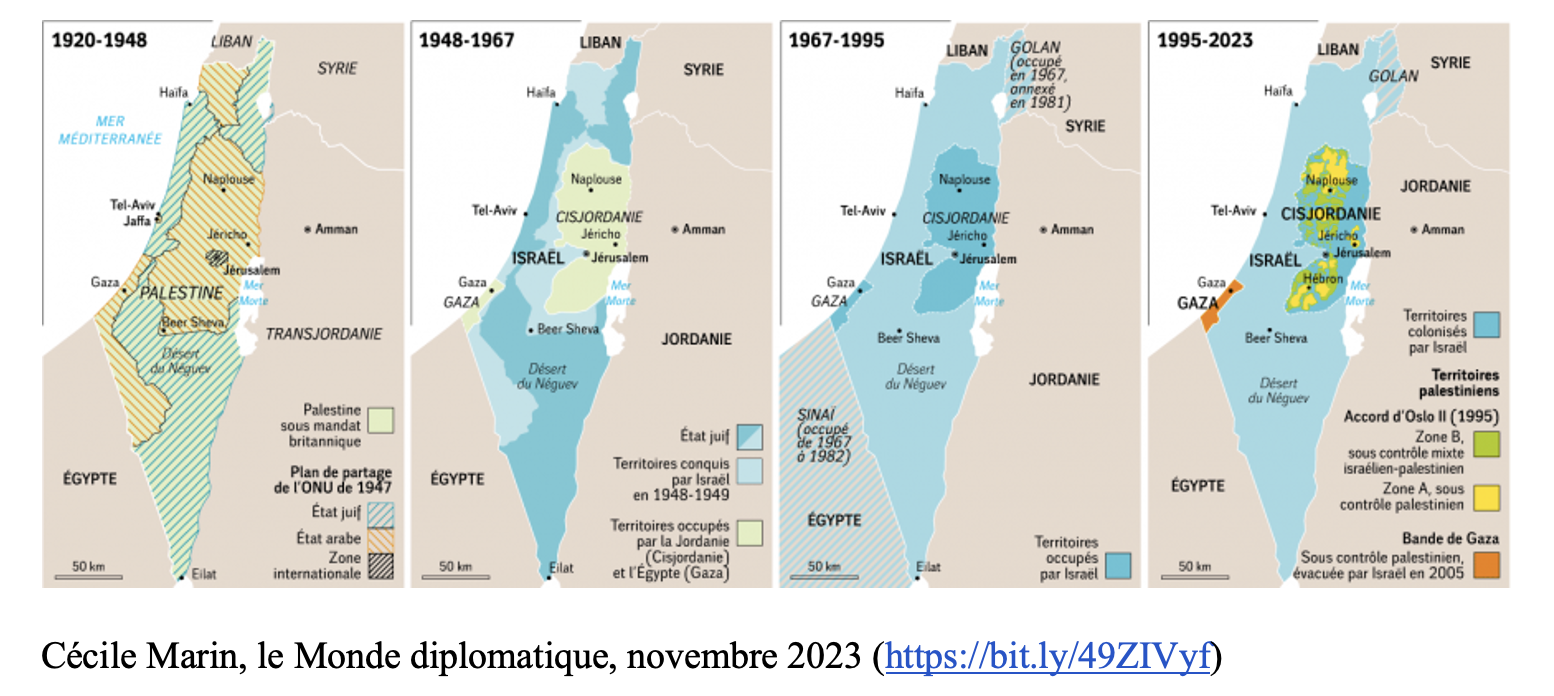
The proclamation of the State of Israel in 1948, and the Arab states' rejection of the UN plan, triggered conflict with neighboring Arab countries and led to the mass exodus of the Palestinian Arab population ("Nakba"). After the 1967 war, Israel occupied the West Bank, Gaza and East Jerusalem, in contravention of the principles laid down in Security Council resolutions 242 and 338, which called for withdrawal from the occupied territories and mutual recognition. In 1974, after having dealt with the Palestinian question solely from the humanitarian angle of refugees, the international community finally gave legal and political recognition, through the United Nations General Assembly, to the legitimacy of the inalienable rights of the Palestinian people to self-determination and independence.
In 1983, the International Conference on the Question of Palestine reaffirmed the need for a solution based on peaceful coexistence and recognition of Palestinian rights. In 1987, the first Intifada inaugurated a popular resistance movement against the Israeli occupation, whose repression resulted in heavy loss of life. The following year, the Palestinian National Council proclaimed the State of Palestine, consolidating the demand for an independent national entity, albeit without effective territorial control.
From the 1990s onwards, the peace process was institutionalized through the Madrid Conference (1991) and the Oslo Accords (1993), which established mutual recognition between Israel and the PLO and the creation of a Palestinian Authority with limited administrative powers. However, the failure of the Camp David negotiations in 2000 and the outbreak of the second Intifada marked a return to confrontation.
Subsequent diplomatic initiatives, such as the Quartet Roadmap (2003) and the Arab Peace Initiative (2002), have failed to bring about a lasting settlement, and despite the recognition of Palestine as an observer state at the UN in 2012, and the condemnation of the Israeli occupation of the Palestinian territories by the International Court of Justice (ICJ) in 2024, the situation remains characterized by political deadlock, persistent colonization and the non-fulfillment of Palestinian national aspirations.
The impasse reached on the Palestinian question - caught between American and Israeli electoral stakes, persistent divisions within the Arab states and even within the Palestinian ranks, combined with profound changes in the international system - has considerably reduced the Palestinians' room for manoeuvre in the diplomatic arena, and particularly in strengthening the diplomatic status of the Palestinian state.
II – SMALL STEPS TOWARDS RECOGNITION
In order to assess the value and legal and political effects of such recognitions, it is first necessary to define the act of recognition, its constituent elements and the relationship it establishes between the recognized State and the recognizing States.
Article 1 of the Montevideo Convention on the Rights and Duties of States (1933) lists the conditions an entity must meet to qualify as a State:
"The State, as a person under international law, must meet the following conditions:
- a permanent population ;
- a specific territory ;
- a government ;
- the ability to establish relations with other states.
Since 1936, a resolution of the Institute of International Law - an association of jurists founded in 1873 - has specified that recognition or non-recognition of a state has no effect on its international rights and obligations. Recognition follows from the existence of the state, but is not a condition of it. In theory, therefore, it would be superfluous, but in practice, as long as a state is not recognized, it is unlikely that its rights will be respected.
There are therefore two opposing conceptions of the scope of recognition: the first considers that a state exists in its own right as long as it has a territory, a population and a government exercising effective power. International recognition would then only have declaratory value. The second holds that, in addition to these three criteria, it is international recognition that confers on the new state the full capacity to join the community of sovereign nations, and to assume its obligations as well as its rights.
Applied to the Palestinian case, the problem of recognition can be answered through an appreciation of the three constituent criteria of a state, and of the diplomatic acts that have given substance to the legitimacy of these recognitions. Palestine has a permanent population that identifies with the Palestinian Authority, and has paid a high price for its attachment to its land, particularly in the Gaza Strip. Territorially, the UN has divided the territory between an Arab state and a Jewish state, the configuration of which has evolved through the use of force by Israel. However, in the eyes of the international community, the determination of the Palestinian territory was enacted by the Security Council within the post-war limits of 1967, in accordance with resolutions 242 (1967) and 338 (1973) of the same Council, and international law does not require the demarcation of borders as a precondition for the existence of a state. As for the Palestinian Government, it has always been constituted, and if it does not enjoy effectiveness in the exercise of its regal competences, this is essentially due to the Israeli army's stranglehold on the West Bank and East Jerusalem, and to the policy of undermining the authority and legitimacy of Palestinian governmental structures by the occupation authorities.
The recognition of the Palestinian state by Arab, Islamic and other non-aligned countries has had no effect on its chances of admission as a member, due to the veto held by the Permanent Five when it comes to the admission of a new member state, and the systematic opposition of the United States.
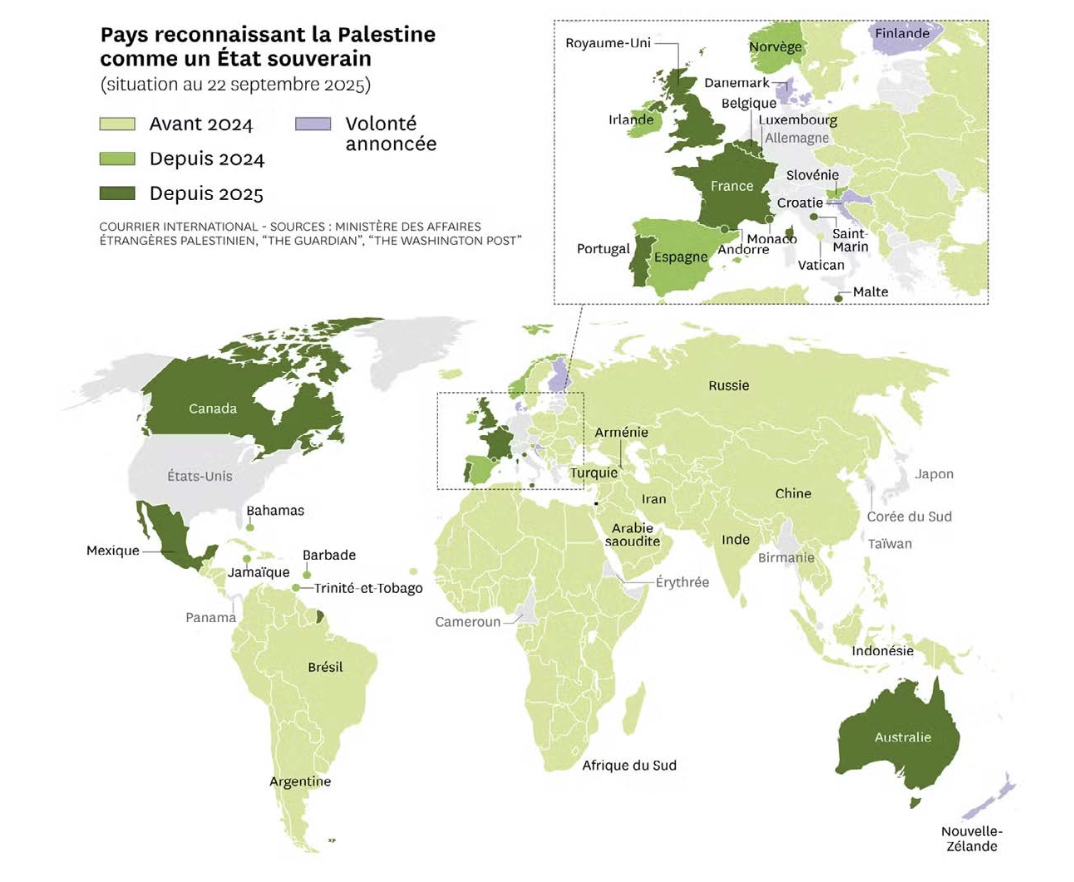
Washington has repeatedly thwarted attempts by Arab countries and the Non-Aligned Group to have Palestine admitted as a full member. Today, the situation is no longer the same, since 158 countries now recognize the State of Palestine, i.e. 80% of UN member states; the United States is the only permanent member of the Security Council not to recognize the Palestinians and the only obstacle to their entry into the UN, and Israel is the only state to oppose it under different pretexts. In fact, opposition to the creation of a Palestinian state is not legal in relation to the criteria for recognition, but purely political and therefore subjective and arbitrary.
Faced with this stalemate, the Palestinian Authority adopted a step-by-step approach to strengthen its diplomatic status with states and international organizations. On November 22, 1974, the United Nations General Assembly decided to grant the Palestine Liberation Organization (PLO) permanent observer status at the UN. The same resolution officially recognized the PLO as the "legitimate representative of the Palestinian people".
As such, it was entitled to participate in the sessions and work of the General Assembly, as well as in all international conferences organized under its auspices, without the right to vote.
The Oslo Accords of 1993 and 1995 led to mutual recognition between the PLO and Israel and the creation of the Palestinian Authority. The latter's powers were limited in scope and circumscribed in space, but the bulk of its sovereign powers remained with the Israeli occupier, who retained control of air and sea space, the right to intervene militarily in Palestinian areas and control of the external borders.
On October 31, 2011, Palestine was admitted as a full member of the United Nations Educational, Scientific and Cultural Organization (UNESCO).
In November 2012, the United Nations General Assembly granted Palestine the status of non-member observer state, in accordance with resolution 67/19. This recognition enabled Palestine to join several international bodies, specialized agencies and instruments placed under the aegis of the United Nations. Between 2014 and 2022, Palestine joined 21 international organizations and ratified 99 multilateral treaties, reinforcing its international legal personality.
On May 10, 2024, the General Assembly adopted a resolution, by 147 votes in favor, to upgrade Palestine's status within the Organization. However, this development was hampered by the United States' veto in the Security Council, preventing the admission of Palestine as a full UN member state.
Despite this obstacle, Palestine has pursued its strategy of normative and institutional integration. It is now a member of several regional and international organizations, including the League of Arab States, the International Criminal Court (ICC) and the United Nations Educational, Scientific and Cultural Organization.
In May 2024, Palestine's status was upgraded from "non-member observer state" to "permanent observer state" at the United Nations. This new status confers a set of enhanced procedural rights, including full participation in international conferences and UN work, the ability to submit proposals and amendments, and the possibility for its representatives to be elected to official positions or subsidiary bodies of the General Assembly. However, Palestine does not yet enjoy the right to vote, nor to stand for election to any of the elective bodies of the UN system.
In May 2024, a resolution (ES-10/23) was adopted at an emergency session which "determines that the State of Palestine is qualified for membership of the United Nations under Article 4 of the Charter" and recommends that the Security Council reconsider its application favorably. Although Palestine did not become a full member (as the Security Council did not recommend admission, and the project was blocked via a US veto), this marked strong international recognition of the fact that Palestine met the criteria for statehood according to this body. This provides a major diplomatic boost.
Finally, in June 2025, Palestine's status was upgraded from "national liberation movement" to non-member observer state at the International Labour Organization (ILO).
By recognizing Palestine, the States hope above all to relaunch the peace process, which has been at a standstill for decades.
III- A POSSIBLE PEACE, AN INEVITABLE PEACE
The signatories of the October 13, 2025 "Trump Declaration for Sustainable Peace and Prosperity" pledged to "implement this agreement ( between Hamas and Israel) in a manner that ensures peace, security, stability and opportunity for all people in the region, including Palestinians and Israelis", declaring themselves "driven by a comprehensive project of shared peace, security and prosperity in the region, based on the principles of mutual respect and common destiny."
The road from the end of the conflict in Gaza to the advent of a just and lasting peace in the Middle East remains long and full of pitfalls. Achieving it requires time, real political will on the part of the players directly involved, and sustained international pressure to promote the creation of a Palestinian state - the only viable and pragmatic option for establishing genuine peace.
The hypothesis of a single state seems unrealistic. It would not guarantee Palestinians full equality of citizenship within a state that defines itself as "Jewish and democratic", in accordance with the 1992 Basic Law: Human Dignity and Liberty. Nor would it enable the Israelis to preserve their democratic majority, given a demographic dynamic largely favorable to the Palestinian population.
This twofold observation - political, identity-related and demographic - helps to discredit the one-state solution as a peaceful and lasting solution to the conflict. Indeed, whether one is on the side of the "peace camp" - today inaudible within Israeli society - or on the side of the diehards who rule out any possibility of coexistence between the two peoples, the creation of a Palestinian state appears to be the only solution for a possible peace in the Middle East.
To revitalize the momentum in favor of the two-state solution, France and Saudi Arabia co-chaired a "High-Level International Conference for the Peaceful Settlement of the Question of Palestine and the Implementation of the Two-State Solution" in New York from June 17 to 20, 2024. Following this, an "International Alliance for the Implementation of the Two-State Solution" was established in September 2024, on the occasion of the 79th session of the United Nations General Assembly.
The Alliance met three times: in Riyadh on October 30, 2024, in Brussels on November 28, 2024, and in Oslo on January 15, 2025. This concerted effort culminated in the adoption, on July 29, 2025, of the "New York Declaration on the Peaceful Settlement of the Question of Palestine and the Implementation of the Two-State Solution", approved by 142 countries.
In this Declaration, the signatories affirm their agreement "to act collectively to end the war in Gaza, to achieve a just, peaceful and lasting settlement of the Israeli-Palestinian conflict, based on the effective implementation of the two-state solution, and to build a better future for Palestinians, Israelis and all peoples of the region". The declaration states that "the aim of this international conference would not be to 'revive' or 'relaunch' a new endless process, but to implement, once and for all, the two-state solution".
For the time being, the main focus remains on ensuring that Israel and Hamas respect the Gaza ceasefire agreement reached on October 10, and prepare the conditions for the launch of the second phase relating to the disarmament of Hamas, the withdrawal of Israeli troops and the implementation of arrangements to stabilize the situation and rebuild Gaza.
Conclusion
In 2028, the State of Israel will celebrate the eightieth anniversary of its creation, made possible by the decision of the United Nations. It is now up to this same international organization to complete the historic process it initiated, by admitting the State of Palestine into its fold. Such recognition would be almost a formality, given the diplomatic and political progress made by the Palestinian people in pursuing their legitimate aspiration to live in peace on the land of their ancestors, free from occupation and the violence that goes with it on a daily basis.
________________________________________________________
1- ‘’Israel's Netanyahu won't attend Egypt summit on ending Gaza war’’, Reuters du 13 October 2025).
2- Voir Fathallah Oualalou « Note sur le conflit israélo-palestinien : l'histoire d'une injustice », Policy Center for the New South, décembre 2023.
3- Nabil Elaraby, “Some legal implications of the 1947 partition resolution and the 1949 Armistice Agreement”, Law and contemporary problems , Vol.33 N.1 the middle east crisis test of international law Winter 1968 pp. 97-109 and David Gerald Ficham “Understanding the Partition plan”August 2015) https://mondoweiss.net )
4- Joe Verhoeven, « La reconnaissance internationale, déclin ou renouveau ? », Annuaire Français de Droit International, Année 1993 39 pp. 7-40.
5- Jean Salmon, « La qualité d’État de la Palestine », Revue belge de droit international 2012/1.
6- Résolution A/3237 (XXIX) du 22 novembre 1974.