Publications /
Policy Paper

Back
The Iran War: The International System under the Trump Shock and a New Regionalization of Globalization
Authors
Paul Isbell
November 11, 2026

In this policy paper – Part 3 of our ongoing analysis – we address the Iran War and its implications for the evolution of the international system in its denouement from the clash between “Restoration”, on the one hand, and “Reformation” or “Revolution”, on the other (see our previous policy paper for a summary and analysis of Andrey Kortunov’s scenarios for the future of the international system). These rival global dynamics are faced off in this moment across the Strait of Hormuz – but also across the old mythical geopolitical faultline that runs along the Eastern European edge of the “Great Eurasian Heartland”, epitomized today by the Ukraine-Russia war. This policy paper also provides a deeper analysis of the first of two possible eventualities stemming from Kortunov’s third scenario (“Revolution”) – what we will refer to as Kortunov’s Sub-Scenario 3A: War. We will then proceed in the next policy paper – Part 4 of this analysis – to address the resulting prospects for the future of the Atlantic Basin (i.e. Sub-Scenario 3B: A New “Regionalization of Globalization”).
RELATED CONTENT

  • Authors
    Paul Isbell
    November 11, 2026
    In this policy paper – Part 3 of our ongoing analysis – we address the Iran War and its implications for the evolution of the international system in its denouement from the clash between “Restoration”, on the one hand, and “Reformation” or “Revolution”, on the other (see our previous policy paper for a summary and analysis of Andrey Kortunov’s scenarios for the future of the international system). These rival global dynamics are faced off in this moment across the Strait of Hormuz ...
  • Authors
    October 29, 2026
    Wars are decided by those who hold military power, but their costs are increasingly borne by those who have little or no voice in the decisions that start them. The US–Iran war shows this imbalance very clearly. Its economic consequences have gone far beyond the battlefield and have disrupted energy markets, trade routes, food supplies, public finances and investment in the Gulf, Europe, Africa and Asia. The most striking feature of the conflict, however, is not only the size of the ...
  • Authors
    Niagalé Bagayoko
    Eugène Berg
    Pierre Berthelot
    Vincent Campredon
    Christophe Chabert
    Alain Oudot De Dainville
    Emmanuel Veron
    October 28, 2026
    Bientôt disponible en vente. Cet ouvrage est issu de la 20e édition des Dialogues Stratégiques, organisée le 6 mai 2026. Il s’articule autour de deux thématiques : « Souverainetés critiques : sécuriser les infrastructures essentielles et les ressources stratégiques » et « La Méditerranée : entre coopération régionale et rivalités globales ». La première partie examine les conditions dans lesquelles les États peuvent protéger leurs infrastructures et maitriser leur accès au ...
  • Authors
    October 13, 2026
    “Every gun that is made, every warship launched, every rocket fired signifies in the final sense, a theft from those who hunger and are not fed, those who are cold and are not clothed.”President Dwight Eisenhower, April 16, 1953 This paper examines the economic and human impacts of the first six months of the Iran war—from February to the end of August 2026—on Iran’s Arab neighbors and compares these impacts with those on the three countries directly involved—Iran, Israel and t ...
  • Authors
    Lina Jaoid
    October 8, 2026
    In the two years since the fall of Bashar al-Assad in Syria, Russia has restructured its Mediterranean presence. Although Russia’s limited and increasingly conditional access to the Khmeimim and Tartus facilities in Syria has been preserved, its presence in the country has morphed from Assad’s ‘patron-client’ configuration to a more negotiated engagement. Simultaneously, Russia has upgraded its force-projection and logistical infrastructure in eastern Libya, giving it an access path ...
  • Authors
    September 30, 2026
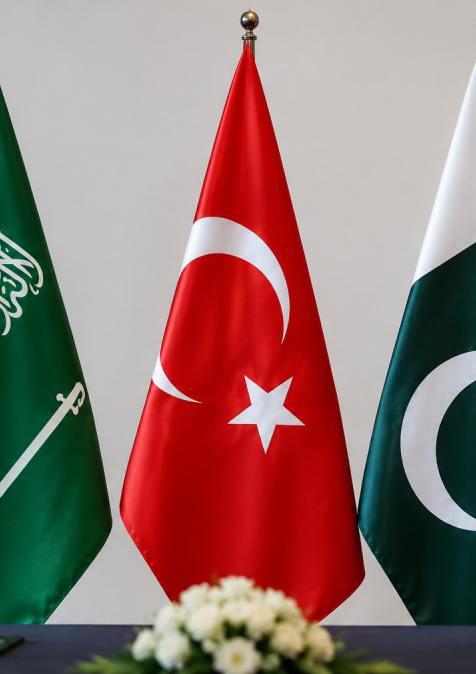
    On August 7, 2026, Saudi Arabia, Turkey, and Pakistan signed the Mecca Joint Défense Agreement, a collective-defense pact widely compared to NATO’s Article 5. This essay argues that the comparison is misleading. Mecca borrows NATO’s language of solidarity without yet possessing NATO’s institutional machinery, and the Houthi offensive against Saudi Arabia in September 2026 provided an early and revealing test of what the agreement actually means in practice. Neither Pakistan nor Turk ...
  • Authors
    September 23, 2026
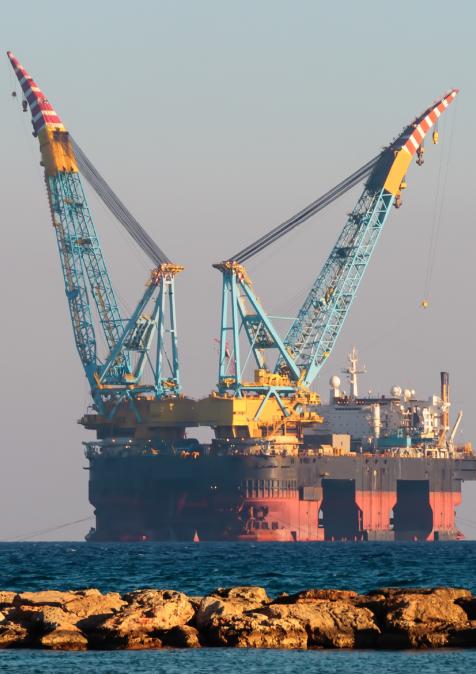
    Since around 2010, it has been known that the Eastern Mediterranean is a new gas province. Gas resources have indeed been discovered offshore four countries or territories: Egypt, Israel, Cyprus and Gaza. Two of them have become producers and exporters of natural gas, Egypt and Israel. Off the coast of Gaza, the Gaza Marine gas field has never been developed, and it is highly unlikely to be developed anytime soon given the very high tensions between the State of Israel and Hamas. By ...
  • Authors
    September 23, 2026
    Depuis 2010, environ, on sait que la Méditerranée orientale est une nouvelle province gazière. Des ressources gazières ont en effet été découvertes au large de quatre pays ou territoires, l’Égypte, Israël, Chypre et Gaza. Deux d’entre eux sont devenus producteurs et exportateurs de gaz naturel, l’Égypte et Israël. Au large de Gaza, le champ gazier de Gaza Marine n’a jamais été développé et il est très peu probable qu’il le soit prochainement en raison des très fortes tensions entre ...
  • Authors
    August 11, 2026
    The Mecca Agreement: A First Step Towards a New Regional Security Architecture? On 7 August, Saudi Arabia, Türkiye and Pakistan signed the Mecca Agreement, a trilateral defense pact aimed at strengthening collective security and defense cooperation between the three countries. At its core lies a collective defense commitment under which an attack on one member is considered an attack on all three. While many details concerning its practical implementation remain unclear, the agreeme ...
  • Authors
    August 7, 2026
    THE END OF AN ERAThe US-Israeli war on Iran, a 'little excursion' envisaged to be over within a matter of weeks, has entered its fourth month. Shock waves ripple across the globe. This war is just one in a series of recent crises which have fractured the international community, making the decades of the 2020's among the most disruptive in recent history. Each crisis compounds the deleterious effects of those which came before. The war in Iran is no exception. It abruptly stalled ec ...