Publications /
Opinion
The Mecca Agreement: A First Step Towards a New Regional Security Architecture?
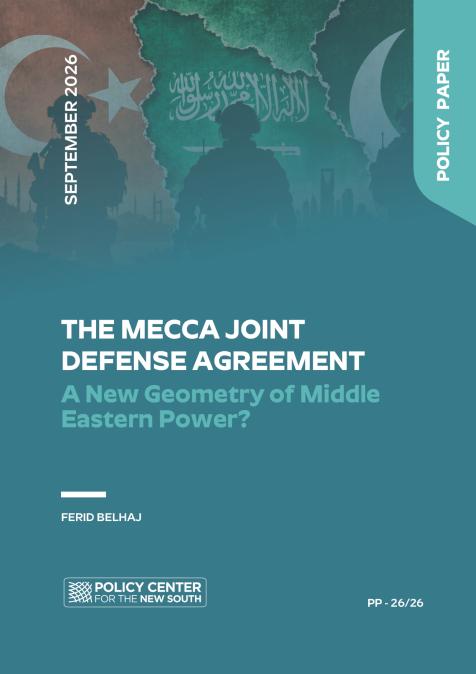
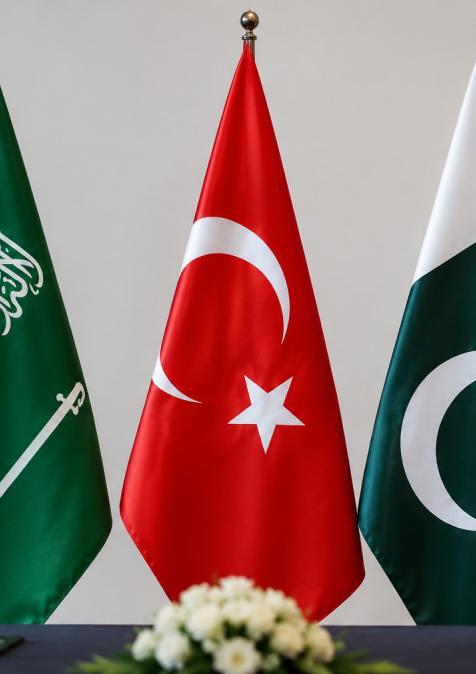
On 7 August, Saudi Arabia, Türkiye and Pakistan signed the Mecca Agreement, a trilateral defense pact aimed at strengthening collective security and defense cooperation between the three countries. At its core lies a collective defense commitment under which an attack on one member is considered an attack on all three. While many details concerning its practical implementation remain unclear, the agreement brings together, for the first time, three important regional middle powers within a new security framework and remains open for other countries in the region to join.
The Middle East has never lacked security arrangements; what it has lacked, particularly in recent decades, is the long-term development of a regional security architecture capable of uniting key players around a shared interest in stability. While the Mecca Agreement between Saudi Arabia, Türkiye and Pakistan may still prove far from achieving that, at such a critical juncture of regional uncertainty, it could represent a vital first step toward creating one.
The agreement's importance should not be attributed solely to its provision for collective defense. More broadly, it should be seen as a significant declaration that three important regional middle powers are seeking to deepen security cooperation at an increasingly fragmented moment in the regional order.
The emergence of this initiative at this particular moment is not accidental. The region is undergoing one of its most unstable periods in decades. From the crisis involving Iran, Israel and the U.S., which has reshaped threat perceptions across the region, to attacks by non-state actors that have highlighted the vulnerabilities of regional states and key maritime routes, the security environment has become increasingly precarious. From Saudi Arabia’s perspective in particular, instability in the Red Sea, Bab el-Mandeb and the Strait of Hormuz is not a minor geopolitical issue; it poses a substantial threat to Saudi security and its long-term economic development.
Beyond Another Defense Pact
In light of this, the Mecca Agreement should not be seen primarily as an anti-Iranian, anti-Israeli or, indeed, anti-Indian alliance. Any attempt to interpret it in this way risks imposing preconceived rivalries onto an initiative whose significance derives precisely from its potential to move beyond them. Saudi Arabia, Türkiye and Pakistan are not inherently aligned on every matter pertaining to the region. All of them work with the U.S. at various levels, while independently pursuing relations with other global and regional powers.
Although their interests overlap, they are not identical; this may, in fact, prove to be an advantage. A security pact that relies above all on pragmatism will be better suited to the region than one that demands total ideological alignment and may therefore prove more effective.
Indeed, all three countries would benefit considerably from developing a closer security relationship, given their complementary capabilities. Türkiye can leverage its increasingly sophisticated defense industry, large and experienced military, and NATO membership; Pakistan can contribute its own formidable military capabilities and nuclear deterrent; while Saudi Arabia’s considerable economic weight, alongside its vital geostrategic position, could facilitate the development of mechanisms extending beyond collective defense to military training, defense-industrial cooperation, technology sharing, intelligence cooperation and maritime security.
Towards Greater Regional Agency
For Riyadh, the agreement also forms part of its broader policy of diversification. For decades, Saudi security arrangements have relied heavily on the U.S. The Mecca Agreement does not diminish that relationship, nor is it intended to replace it, as the U.S. will continue to maintain a significant presence in the region. Rather, the agreement should be seen as part of Saudi Arabia’s broader effort to diversify its security partnerships.
If the region can achieve a greater level of self-reliance and become better able to secure itself, this could be welcomed by the U.S., not as a marginalization of its position but as a development that would enable it to focus its attention elsewhere while allowing regional states greater agency within their own region. This distinction is vital: the Middle East must not be forced into a choice between relying on security provided from outside the region and pursuing complete strategic autonomy. Instead, a truly durable security framework can be built through international cooperation combined with strong, regionally driven defense and crisis-management mechanisms.
The Test of Collective Defense
Despite all of this, however, unrealistic expectations must be kept firmly in check. A declaration of collective defense is relatively easy; acting on it is significantly harder. Questions remain over exactly what constitutes an attack, the precise nature and form of the assistance that would be provided in such a case, and the extent to which the three states would be willing to act if their own interests conflicted with what the agreement required.
This may prove particularly difficult when dealing with Iran and non-state actors. It would be difficult for Pakistan to be drawn into attacking another Muslim state if requested to do so, while Türkiye's own strategic objectives may at times conflict with those of its partners, and Saudi Arabia has little incentive to become involved in another prolonged regional conflict. As such, the agreement may in fact serve better, at least in the medium term, as a security deterrent and an instrument of diplomatic coordination than as a mechanism for joint warfare. While some may find it difficult to regard this as a benefit, an effective security architecture should ultimately be judged as much by the conflicts it helps to prevent as by the conflicts it enables its members to confront.
From a Pact to a Regional Architecture?
An additional question that must be considered is whether further states will join the pact. The most obvious omission is Egypt. With its large population and substantial military force, Egypt would lend considerable weight to the pact within the region, while other states could also follow if the agreement continues to demonstrate its defensive character rather than evolving into an alliance directed against any particular state.
If the agreement proceeds further without contributing to additional bloc-based divisions, and if cooperation remains driven by shared security needs rather than by the geopolitical rivalries of external powers, it could eventually form the nucleus of a much broader regional organization.
Advancing in that direction, however, would require a significant diplomatic effort. The greatest risk is that the agreement instead develops into another exclusive alliance, further compounding regional divisions and encouraging the emergence of rival defense arrangements designed to balance against it.
The alternative is far more ambitious, but arguably necessary: to use the agreement to demonstrate that states across the region can cooperate despite significant differences in their individual foreign policy objectives and that, through such cooperation, space can eventually be created for dialogue with a wider range of actors, including Iran, provided that all states operating in the region respect the security of their neighbors. Such a transformation is far from assured, particularly as the pact is still new and only time will tell how effective it will be when confronted with actual threats. Financial commitments, military coordination and political alignment among the three states will all have to be sustained if the agreement is to survive, particularly amid the region’s continued volatility.
Towards a Regionally Driven Security Architecture
However, dismissing the pact simply because it is not currently equivalent to NATO would be too narrow an interpretation and would overlook the way in which most significant regional organizations actually develop. Such institutions are built through cooperation, crises, trial and error, and ultimately a sustained commitment to stability. The agreement between Saudi Arabia, Türkiye and Pakistan may therefore represent only a first chapter.
For too long, the Middle East has struggled to establish durable security mechanisms of its own, with regional security shaped first by external powers and later by competing regional states. The Mecca Agreement offers another path: one in which the states of the region themselves take a greater role in developing collective security arrangements while continuing to maintain broad international partnerships.
Whether Saudi Arabia, Türkiye and Pakistan can ultimately establish a lasting institution remains to be seen. However, if the agreement maintains its defensive character and expands its outreach to include other regional actors, its signing may eventually be remembered not simply as the conclusion of another defense pact, but as a pivotal step towards the creation of a genuinely regionally driven security architecture.