
John Sawers, former Chief of the Secret Intelligence Service (MI6), shares his insights on how security threats have evolved with the rise of digital technologies and social media. In this interview, he offers a compelling exploration of the shift from traditional methods to contemporary security challenges. Sawers examines how intelligence approaches have adapted to address new threats, including the influence of social media on democratic processes and the evolving global geopolitical landscape. The discussion provides An insightful analysis of the current dynamics in intelligence work and highlights the critical issues facing intelligence services in an increasingly interconnected and digital world.
RELATED CONTENT
-
 October 9, 2025Dans cet ouvrage, Professeur Mohamed Benabid propose une analyse rigoureuse d’un phénomène devenu structurel, révélateur des fragilités démocratiques et institutionnelles. Loin des discours simplistes, l’ouvrage articule dimensions cognitives, technologiques, juridiques et éducatives po...
 -
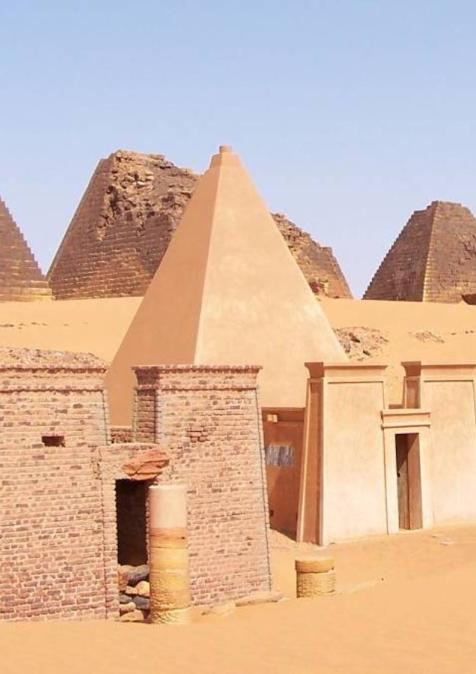 October 6, 2025Le Soudan, en plus de la crise politique et humanitaire qui le secoue depuis des années, doit faire face à une dégradation inquiétante de son patrimoine culturel, matériel et immatériel. Particulièrement dans les zones où les combats sont les plus intenses. Le patrimoine culturel soudanais est l’autre victime de cette guerre : la destruction des sites archéologiques et le pillage des musées alimentent le trafic illicite des biens culturels et contribuent aux dynamiques d’instabilité ...
 -
October 6, 2025إلى جانب الأزمة السياسية والإنسانية التي تعصف بالسودان منذ سنوات، أضحى التراث الثقافي السوداني ضحية لهذه الحرب حيث شهد تدهوراً مقلقا، لا سيما في المناطق التي تشهد أعنف المعارك ً. فقد أدت عمليات تدمير المواقع الأثرية ونهب المتاحف إلى تغذية شبكات الاتجار غير المشروع بالممتلكات الثقافية، الأمر الذي يزيد من تفاقم ديناميات عدم الاستقرار في المنطقةوتدور رحى الحرب بين الجيش النظامي، أو القوات المسلحة السودانية (SAF) بقيادة عبد الفتاح البرهان، وبين قوات الدعم السريع، (RS ...
-
October 6, 2025Sudan’s Heritage: Looting as a Weapon of WarSudan, in addition to the political and humanitarian crisis that has shaken the country for years, is now facing a worrying degradation of its cultural heritage, both tangible and intangible, particularly in areas where the fighting is most intense. Cultural heritage has become another victim of this war: the destruction of archaeological sites and the looting of museums fuel the illicit trafficking of cultural property and contribute to r ...
-
 September 30, 2025The report for the 9th edition of APSACO synthesizes the discussions and insights generated during the June 2025 conference. This document captures the conference’s core deliberations, examining how rapidly evolving global geopolitical shifts, changing multilateral structures, and internal fragmentation affect peace and security across the continent. Framed around the 2025 theme, "Africa Amid Global Uncertainties”, the publication covers key discussions on sub-regional politica ...
 -
 September 29, 2025Ce livre n’est pas un énième essai sur les Fake news. Il refuse les raccourcis moralisants, les solutions toutes faites ou les anathèmes technophobes. Ce que propose ici l’auteur, c’est une cartographie rigoureuse et plurielle d’un désordre informationnel devenu structurel — non pas un simple accident de parcours numérique, mais un révélateur des tensions démocratiques, des fractures institutionnelles et sociétales ainsi que des reconfigurations épistémiques de notre épo ...
 -
 September 26, 2025Rida Lyammouri, Senior Fellow at the Policy Center for the New South, examines the rise of drone use by non-state armed groups in the Sahel. The discussion highlights how civilian drones ...
 -
September 25, 2025This episode examines the African Peace and Security Architecture amid evolving threats, questioning its effectiveness against modern crises such as terrorism, environmental stress, disinformation, and cyber risks. It highlights institutional and political gaps, exploring the chal...
-
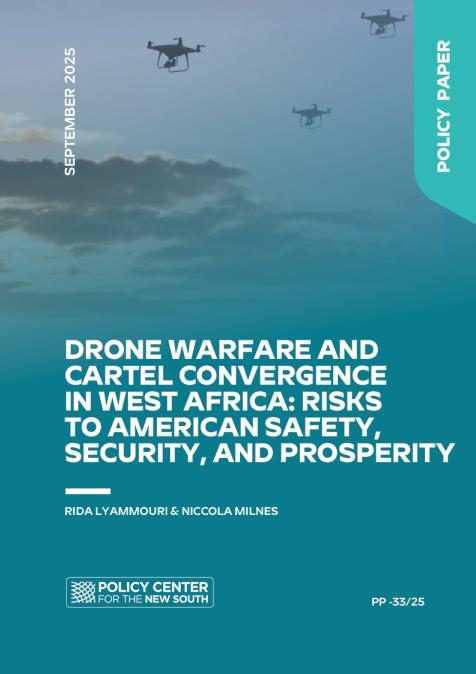 September 19, 2025The convergence of armed group drone warfare and cartel expansion in the Sahel is a global problem with direct consequences for the United States. Far from being a peripheral conflict, instability in the Sahel directly affects American safety, security, and prosperity. For U.S. safety, Jama’at Nusrat al-Islam wal-Muslimin (JNIM)’s rapid shift from crude drone experiments to battlefield strikes—combined with cartel drone attacks and Ukraine-trained operatives—means tactics tested abr ...
 -
September 17, 2025Cet épisode s’interroge sur l’avenir des blocs régionaux africains, pris entre l’idéal d’intégration et une réalité marquée par la fragmentation. De la fragilisation de la CEDEAO à l’émergence de l’Alliance des États du Sahel, en passant par l’influence croissante d’acteurs extérieurs, ...

