Publications /
Opinion
The inventory is worrisomely low
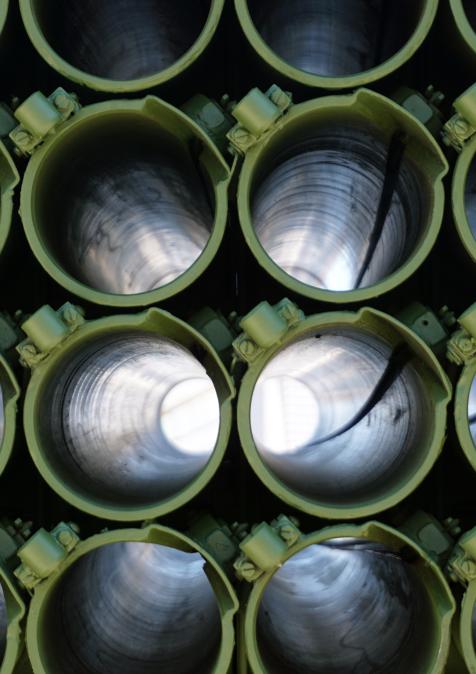
The US military has fired off more than 1000 Tomahawk cruise missiles, roughly ten times the number it currently buys each year. The Pentagon used more than 1200 Patriot interceptor missiles, "more than three million dollars a pop", and more than 1000 precision strike, ground based missiles, "leaving the inventories worrisomely low." US commanders were forced to ration interceptors by letting unguided or less destructive missiles hit empty or non critical areas. While Washington projected an effortless victory, leaked reports and congressional hearings revealed that the US not only suffered heavy infrastructure and material damage that the Pentagon initially minimized. Investigations by the "Washington Post" and CNN revealed that Iranian retaliatory missile and drone strikes successfully penetrated multi billion dollar US air defense networks. Iran destroyed or severely damaged over 42 US aircraft.
Confirmed losses included an E-3 Sentry surveillance plane valued at nearly 500-million-dollar, multiple MC 130 tankers and helicopters. The intensity of the conflict forced the US to expend roughly half of its entire theater interceptor inventory-including over 200 THAAD and 100 Standard missile interceptors. Dramatic demand forced the Pentagon to replenish with systems dismantled in Europe and Asia, straining the US defense industrial base, forcing a pause on a 14 billion arms shipment to Taiwan to replenish domestic stockpiles.
In the midst of tension and menace, Iranian defenses remained lethal enough to down between 24 and 30 US MQ-9 Reaper drones, the White House received, just the end of May, a letter from Kyiev, (May 27, 2026) signed by Volodymyr Zelensky, pleading for urgent deliveries of American made Patriot PAC 3 missile interceptors and additional air defense systems. The current pace of weapon delivery via NATO financing programs "is no longer keeping up with the reality of the threat we face." Zelensky does not hide his desperation, "For us- for a nation fighting for its survival-there is hardly anything more painful to see than Patriot batteries with no missiles loaded." Inventory values for the Patriot range from 1 million to 2, but newly produced missiles can cost up to 5 million per shot. The also depleted THAAD system (Terminal High Altitude Area Defense Interceptor), highly specialized and three to five years in the making, cost 12 to 13 million per missile.
The US military observed the "Washington Post" (May 7, 2026) "underestimated Iran's targeting ability", not sufficiently adapted "of modern drone warfare, and left some bases under protected." Replacing the destroyed radars takes considerable time to build, thus the US air defenses will be, for the time being, weakened. Replacing, financing the systems for hundreds of millions of dollars, is hardly a priority—the system, inherently exposed, makes it difficult to defend against attack drones, which led to widespread damage to satellite communication and challenges to the Military's operational capacity.
Running out of key munitions
The Iran war has significantly drained much of the Pentagon supply of munitions, and forced the Armed Forces, wrote the "New York Times" "to rush bombs, missiles and other hardware to the Middle East from commands in Asia and Europe", the "Jerusalem Post" (March 25, 2026) alarmed its readers with the news, that "US interceptor stockpiles depleted by Iran war; could take three to eight years to replenish", echoing Al Jazeera's question, (May 23, 2026) "missiles to munitions, does the US risk running out of key weapons?" The fear preoccupying military analysts, the questions asked, what if another war breaks out, in which Washington needs to project power and protect its interests, Taiwan comes to mind.
The US is "at risk of running out of missiles if another war breaks out after depleting stockpile in Iran operations" reported Zacharin Cohen and Natasha Bertrand in a CNN political report (April 21, 2026), "in the short term, the US likely maintains enough bombs and missiles to continue combat operations in Iran, in any scenario, even without a ceasefire. But the number of crucial munitions remaining in US stockpiles is no longer sufficient to confront a near-peer adversary like China, and it will likely take years before the inventory of those weapons return to pre war levels." The high munitions expenditures have created a window of increased vulnerability in the Western Pacific, Mark Cancian, a retired Marine Corps colonel and one of the authors of the CSIS report predicts, "it will take one to four years to replenish these inventories and several years after that to expand them to where they need to be."
No quick fixes
CSIS author Seth Jones recalls in her report, "Is the US prepared for a war with China" (May 12, 2026) the unexpected Iranian missiles and drone strikes against critical American infrastructure in the Middle East as a "a stark reminder that China and other adversaries could execute similar strikes. US bases and installations throughout the Indo Pacific, such as in Japan, the Philippines, and Guam, are in a desperate need of hardened shelter, including underground shelters, air defenses and sufficient stockpiles, fuel, munitions and spare parts." Despite recent progress, the expert argues, "the US military would struggle to fight a protracted war with China because of a lack of long range munitions, air defense systems, interceptors and unmanned air, undersea and surface systems." Deterring a war on two fronts-in the Indo-Pacific and Europe-would be even more difficult. There're no quick fixes since production timelines are between three and four years for some critical munitions as SM-6, SM 3 IR, Jassm and Tomahawk.
Facing the reality of US munition shortages and potential delivery delays, Europe, finally, is drastically re-arming and seeking strategic independence. Decades of lean, peacetime military manufacturing have been rendered obsolete, US inventory shortages are pushing frontline allied nations to diversify their defense purchases away from Washington and towards nations like South Korea.
It will take years and take hundreds of millions
The Pentagon is actively signing billion dollar agreements with major defence firms as "Lockheed Martin", "Honeywell" and "BAE Systems" to boost production to a wartime footing. Lockheed Martin and the US military signed an agreement to triple the production capacity from about 600 Patriot missiles a year to 2000 by 2030. Lockheed will expand their production from 96 THAAD systems, offered for about 13 million dollars a system, to 400. "This is not a marginal adjustment", says Harvard professor Bilmes, "it is a large-scale industrial expansion that will take years and will cost hundreds of billions."
The Pentagon is also trying to entice car manufacturers like Ford and General Motors into military manufacturing processes. The Pentagon, although disagreeing with one of their own Intelligent services, may be pushed into a more determined war posture, even ready to invade Iran with ground troops—on April 3, 2026 the "Telegraph" revealed that half of Iran's missile launchers were still intact, US intelligence finds and thousands of attack drones remained in Iran's arsenal, ready to be launched, and, although some elements of Iran's airpower had been heavily damaged, two thirds, allegedly, remained operational- fake news, or reality? Missile launchers, no doubt, had been destroyed by the US Air Forces, but now the US "Defense Intelligence Agency" itself, presumably reported that Tehran maintained, underground, significant coastal cruise missile launchers and other threats, like small speedboats, which swarm like gadflies around America's naval power, provoking, needling, threatening. Provoking with hidden drone arsenals, bunkers filled with enriched uranium, which remains out of reach of conventional air strikes. A classified DIA report, presenting to Washington lawmakers their assessment of the war effort, is contradicting the Trump administration and its trumpeting, the war has been won, the enemy is wiped out: the "New York Times" (May 12, 2026) informants did reveal the opposite: "U.S. Intelligence Shows Iran Retains Substantial Missile Capabilities." The enemy confirmed the media skepticism- ships were hit by Iran, ballistic missiles fired into Gulf region targets, and once again Washington directed stealth B-2 Spirit bombers into action, attempting to destroy underground missile launchers with advanced Penetrator bombs, ready to crash through meters of reinforced concrete-before exploding-one bomb worth about 250 000 dollars. The US military reinstated the naval blockade of Iranian harbors, intercepting a noncompliant tanker heading toward Kharg island with hellfire missiles, disabling, but not sinking the vessel. During those two violent days in mid-July Washington hit 80 Iranian coastal targets, and a representative of the enemy, Hossein Kanani Moghaddam, a former senior commander of the Islamic Revolutionary Guard Corps (IRGC), claimed that Iran could target US President Donald Trump "even in the White House", (Thepunemirror.com, July 17, 2026).