Publications /
Opinion
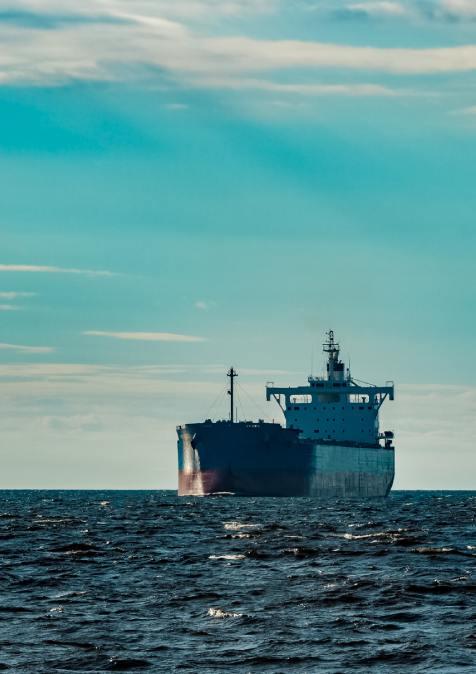
On “marinetraffic.com”, thousands of triangles fill a map of the world’s ports and oceans, each representing the active location and destination of a ship, reported the “McGill International Review” (April 16, 2026) adding,” suspicious tankers are plentiful among them.” One of these vessels, marked by a red triangle, appears, zoomed, as “Monique”, a twenty-year-old vessel, aka Tokyo, Phuket and Elysia. Its old age and the frequent name change, suspects reporter Julnar Alzuki, “indicate it may be a ghost tanker”, transporting illegal loads of crude oil or petroleum products, attempting to evade sanctions imposed by the US, UK or the European Union. Its cargo, carried for Russia, is delivered to harbors in India, China or Turkey, which accounted for roughly 95 percent of Russian crude oil exports via this fleet in 2024.
The Baltic Sea route is considered the most critical and dangerous route, with 150 to 170 tankers transiting monthly through the narrow, shallow Danish Straits and the English Channel, its crude oil cargo originating from Russian ports such as Primorsk and Ust-Luga. Ghost tankers also carry oil from Novorossiysk to destinations in the Mediterranean, often engaging in ship-to-ship transfer. The elusiveness of ghost fleets notes the “McGill International Review”, sustains Iran and Russia’s reliance on the illicit oil market, as American sanctions remain a distant form of response, rarely implemented due to the challenges of tracking and capturing hundreds of ghost tankers. The last Russian ghost vessel was boarded by the British Royal Navy on June 14, 2026 (BBC, June 26, 2026), the “Smyntos”, a Cameroon-flagged tanker. Since that date, the ship, crewed by 24, mainly Indians and Georgians, was anchored off the coast of Dorset, England, obliged to wait for court proceedings about supplying illegal, sanctioned oil from Russia to a third country.
The number of tankers operating under the Russian flag, noted the “Centre for Research on Energy and Clean Air” (Helsinki, Finland), increased from 217 at the start of 2025 to 297 by March 2026 (April 13, 2026), as Russia tries to bring these tankers under state control of “Sovcomflot”, Russia’s largest shipping company, to avoid seizures of shadow tankers sneaking oil past Western sanctions, as observed by the “Wall Street Journal” (February 19, 2024): “The Secret Oil-Trading Ring That Funds Russia’s War”.
As of March 12, 2026, the course of the Monique is officially registered at 274°, while its true heading is 8°. The discrepancy between the two values is a common sign of “spoofing”, the attempt to falsify data. The ship departed the port city of Yantai, Eastern China, officially on August 29, 2025, its estimated arrival date in Singapore being January 18, 2026, a voyage which usually takes about 14 days.
Strangely enough, the ship signaled on March 10 that it was still on the way to Singapore. The tanker had reason to hide its whereabouts, the US Office of Foreign Assets Control having again sanctioned the vessel on December 11 of last year, a day after the US launched a military raid to capture “Skipper”, a crude oil tanker that was carrying about 1.8 million barrels of Venezuelan crude, the “Monique” was sanctioned along with five other tankers, which constituted the mainstay of Venezuela’s crude oil export fleet. The gap between observation and sanction enforcement was “sharply closed” in the US crackdown of tankers leaving Venezuela, reported the “McGill International Review”. After seizing “Skipper”, the US instituted a blockade of sanctioned tankers coming in and out of Venezuelan waters. By the end of January 2026, the US had seized at least seven tankers, crippling the nation’s oil exports, which had already dropped 36 percent by December 2025.
As a result of US intervention, at least 16 tankers fled the Venezuelan coast in a coordinated attempt to evade US capture. Four vessels resorted to false names and spoofed positions, while the remaining twelve completely switched off their transponders.
Decorative flags
In 2022, when Moscow started its attempt to invade and occupy Ukraine through military force, an estimated 600 vessels were active in the so-called ghost or shadow fleet, of which 400 were crude oil tankers, floating across the globe without official destination, falsified records, and no insurance since the vessels were beyond a safe operating age, 15 to 20 years old. “Greece is making a killing selling ships to Russia”, confirmed “Foreign Policy” (September 11, 2023), an estimated 230 vessels were sold by Western European owners to Moscow, with Greek shipping companies being the largest sellers, profiting from high prices for old tankers, many of them owned by single-purpose entities based in jurisdictions like the Seychelles, Mauritius, Marshall Islands and the UAE.
In 2025 the shadow fleet was reported to have more than tripled to an estimated 1100 to 1400 vessels, of which 135 have been targeted with new sanctions by the UK (Reuters, July 21, 2025). The fleet is demonstrating “a highly adaptive and successful evasion model”, noted “Wikipedia”. The fleet employs opaque ownership structures, flags of convenience such as Gabon, Cameroon or Sierra Leone, and risky ship-to-ship transfers in international waters to mask the origin of the oil.
Vow of assertive action
The shadow fleet, transporting a massive volume of crude, is growing. The vessels are observed through satellite imagery and can be investigated from a distance, but continue to be a working part of the global oil ecosystem, making up roughly 15 to 20 percent of the global oil fleet. The demand for crude oil and other petroleum products worldwide, the destruction of Iran, the submission of Venezuela, and the attempted isolation of Russian oil exports are provoking growing tension on the high seas, forcing Moscow to escort its tankers with armed warships through the English Channel in order to intervene in a possible ship seizure. “Dozens of sanctioned Russian tankers navigate channels”, reported the BBC (January 23, 2026), “despite UK vow of assertive action.”
The ghost fleet is a central pillar of revenue for the Russian state, essential for keeping the oil flowing, allowing Moscow to circumvent the G7 price cap of $60 per barrel and to avoid Western shipping insurance services. The aging tanker fleet, uninsured, its transponders mostly turned off or manipulated, its flags decorative rather than reflective of reality, is transporting roughly 65 to 70 percent of Russia’s seaborne oil trade (Center for Strategic and International Studies, Washington, DC, December 15, 2025). Despite sanctions, the ghost fleet has enabled Russia to generate an estimated $87 to $100 billion in annual revenue as of late 2025, reaping additional profit due to the oil price explosion created through the Iran war and the Venezuela blockade by the US. The UK, EU and US authorities have intensified their pursuit of sanctioned ships, but Russia replied, after the boarding of one of its shadow-fleet boats by French naval units in the Mediterranean Sea (Politico, January 22, 2026) and the seizure of a falsely flagged oil tanker on its way to Russia by Swedish forces (Moscow Times, March 13, 2026), that it has the right to defend itself from “piracy” (Reuters, April 9, 2026). Nevertheless, on January 7, the US Navy seized the Russian-flagged tanker “Marinera” in the North Atlantic; the tanker previously bore the name “Bella 1” and flew the flag of Guyana (BBC, January 7, 2026). A month later, a Panama-flagged tanker known to transport Russian oil was boarded by the US Navy in the Indian Ocean (AP, February 15, 2026).
Who knows under which name the “Monique” is now transporting crude oil for Moscow, and when she will finally end up as scrap metal on the coast of India. Nothing is predictable these days, not even the US forces at the Strait of Hormuz, where a tanker named “Nabian”, which crossed the American-monitored strait on March 23, 2026, was allegedly allowed clear passage, although officially “Nabian” was sold as scrap five years ago. Ukraine, though, unlike its rather reluctant Western allies, which are trying to avoid further entanglement in the war, has intensified its hits on Russian ghost-fleet vessels or related elements, such as tug boats. The commander of Ukraine’s “Unmanned Systems Forces”, aka Drones, Robert Bovdi, revealed (“Odessa Journal”, July 16, 2026) that his forces disabled, destroyed or sank, over the ten days since July 6, in the Azov Sea and the Black Sea, 147 Russian vessels, including five tankers, one gas tanker, and three dry cargo ships.