Publications /
Opinion
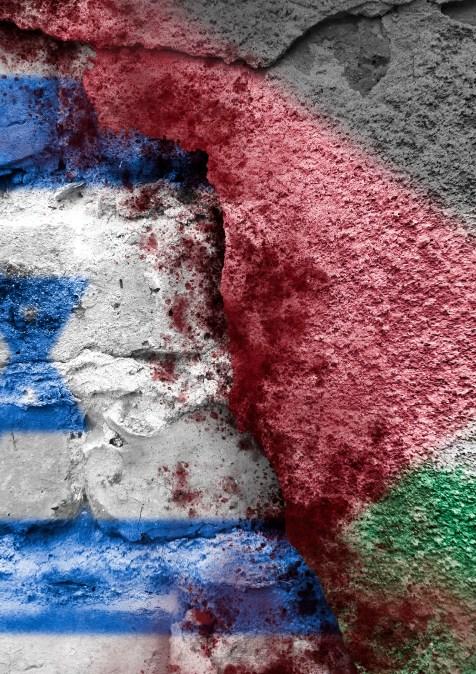
I recently participated in a discussion between Israelis and Arabs, some living in the Middle East, some living abroad[1]. The discussion topic was ‘The Two State Solution’. This article presents my personal takeaways from the discussion. It does not try to describe the details, and other participants may have different takeaways.
I joined the discussion thinking that the two-state solution was dead. Most of the other participants felt the same way—all very pessimistic. But I left feeling more optimistic than when I arrived. Israelis and Arabs sharing the same pessimism makes me think that someday we may share a solution to end our pessimism, giving us more hope about our region’s future.
Some Israeli participants raised the issue of the rise of antisemitism in the United States and Europe. The Arab participants also stressed that they were victims of racism and Islamophobia. Antisemitism and Islamophobia are both unacceptable. Holding a whole group of innocent people responsible for things they cannot control, even though they might be done in their name (e.g. Islamist terrorism, or Israeli actions in Gaza) is unacceptable. Arabs and Jews should unite to fight racism, antisemitism, and Islamophobia. The murder on December 14 of Jews celebrating Hannukah in Australia underlines the importance for all peace-loving people to stand up against terrorism, and against all attacks on innocent civilians.
Gaza Reconstruction
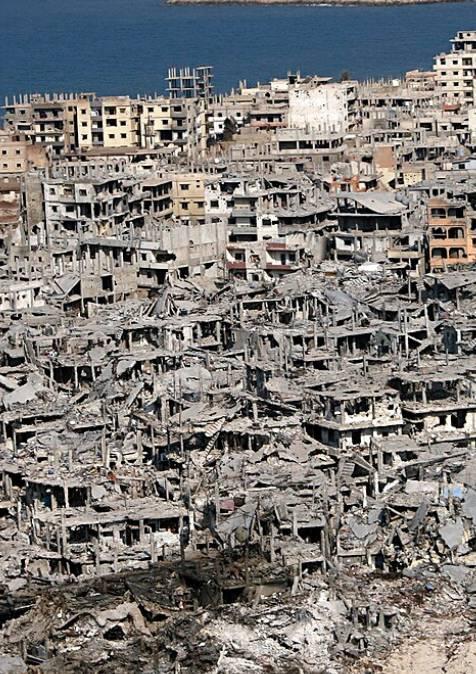
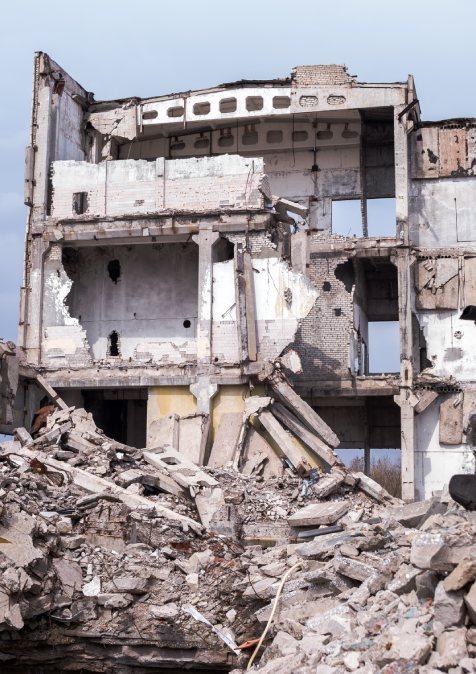
The discussion began with the war in Gaza. Surprisingly, there was a semblance of a consensus. Arabs and Israelis agreed that Hamas needs to leave Gaza, opening the way for other Palestinians (still to be defined) to govern. It was also agreed that Gaza reconstruction this time around (the fifth in less than twenty years) must be different.
Gaza reconstruction should go beyond rebuilding damaged physical structures, and should be aimed at creating a thriving and inclusive economy, with a view to combatting radicalization[2]. The high unemployment rate among educated young people in Gaza (60% before October 7, 2023) led them to feel excluded, creating fertile ground for radical and extremist ideologies. For Gaza’s economy to flourish, and to provide opportunities to all Gazans and hope for its young people, it must no longer be a large maximum-security prison[3]. The blockade needs to end, and Gaza must be open to the world[4].
Normalization and the Two State Solution
The group discussed the Abraham Accords and the normalization of relations between Israel and the Arab World. Israel has a lot to offer to Arab countries in terms of advanced technology in many fields, including the digital economy, agriculture, and food security. The Arab world can offer Israel a great deal in terms of capital investment and markets for its products.
The group understood that to fully integrate Israel into the broader Middle East economy—which would be in the interest of the whole region— the Palestinian-Israeli conflict must be resolved. Different alternatives were discussed: (1) one state that will be democratic but not Jewish; (2) one state that is Jewish but with an apartheid system (more or less the current status quo); (3) two separate states; and (4) two states with some kind of link. The consensus was for two states—option 3 or 4. Israelis want to protect the ‘Jewishness’ of their country, and nobody supported maintenance of an apartheid state. The late Martin Indyk was right when he wrote in 2024: “if the conflict is to be resolved peacefully, the two-state solution is the only idea left standing.”
The group did not go into the details of the relationship between the two states. My view is that it will be very difficult to agree on hard borders between two states, because of the Israeli settlements in the West Bank and the need for Palestinian workers in Israel. It may be easier to first agree that the borders are to be ‘soft borders’, allowing Israelis to live and work in Palestine, and Palestinians to live and work in Israel. This effectively means an economic union between Israel and Palestine, which would have many benefits but also some complications.
The group agreed that the priority is to create an atmosphere of trust between all parties. In the short run, it is important that Israelis and Palestinians feel secure. As security issues are resolved and some trust is restored, negotiations on a final peace could proceed. Cooperation on Gaza reconstruction could also open up another channel for dialogue and trust-building between the two sides.
Politics and Peace
The last question addressed by the group was: if most people agree on what needs to be done to bring peace to the region, why isn’t it happening? A part of the answer is that October 7 and its aftermath have created so much animosity and hatred on both sides that it is very difficult to reach an agreement.
There is also a leadership problem. The Palestinian leadership lacks credibility and legitimacy; it is old and out of touch with the realities of Palestinians’ daily lives. The Israeli leadership has been hijacked by right-wing extremists and Jewish supremacists. It is hard to see how anything good could happen without leadership change, in both Palestine and Israel. Some participants were optimistic that the next Israeli elections would bring to power a less extremist governing coalition, and that reforms of the Palestinian Authority (as part of the Gaza peace agreement) would lead to a renewal of Palestinian leadership.
Hoping for a Better Future
Two days after this discussion I was at an international conference, seated near a young Israeli woman. When it was her turn to speak, she said “I am from the Middle East which is the most divided region in the world.”
I hope that in thirty years or so this woman’s daughter would be sitting next to her Palestinian colleague at a similar conference and would say, “I am from Israel, my neighbor is from Palestine, we are from the Middle East, the most united region in the world.”
[1] Held under Chatham house rules.
[2] For more on Gaza reconstruction see my October 2025 policy brief, here.
[3] The Israeli historian and political scientist Ilan Pappe used the term ‘maximum security prison’ to describe Gaza in his 2019 book.
[4] Both the IMF (2023) and the World Bank (2004) have highlighted the importance of ending the blockade for Gaza’s economic development.