Publications /
Policy Brief

Back
Presence of Foreign Fighters: Concessions for Security?
March 2, 2022

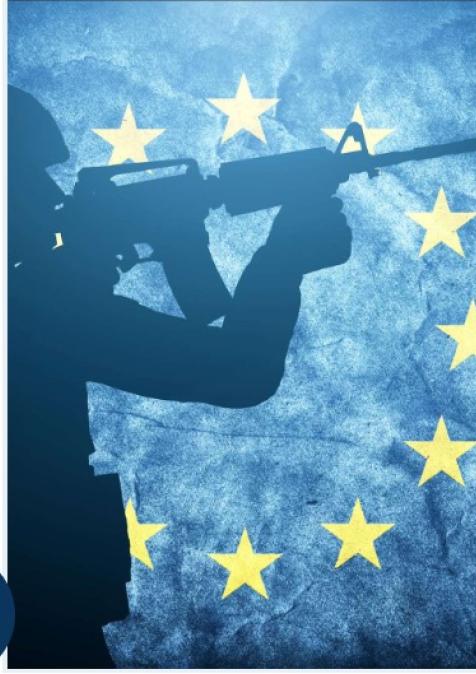
The purpose of this second paper is to highlight the involvement of mercenaries in decolonization processes in Africa on one hand, and the emergence of Private Military and Security Companies since the 1990s on another hand. The main argument is that despite the change in the structure of private contractors operating in Africa, their essence remains the same: security in exchange of mining concessions. Hence, the paper analyses to what extent mining companies have contributed to the privatization of security in Africa. To do so, the first section of this paper focuses on the role of mercenaries in the Katanga (now DRC) and Biafra (Nigeria), and their links with mining companies that had links with former colonies. To explain the shift from ad hoc mercenaries to the rise of private military and security companies, the second section of this paper argues that there has been a revolution in military affairs that changed the structure of the privatization of security, which also changed the dynamics of international conflict. Finally, the third section argues that the corporatization of former mercenaries and/or soldiers gave rise to structured companies that offered training, military advice, intelligence gathering and many other services, and reduced the political cost of deploying an army for governments. An analysis of the Angolan and Sierra Leonean civil wars is provided to illustrate the growing use of PMSCs by conflict-torn countries, and the links between these private contractors to companies in position to benefit from natural resources.

RELATED CONTENT

  • June 10, 2026
    L’édition 2026 du Rapport annuel sur la Géopolitique de l’Afrique (RAGA) du Policy Center for the New South analyse un continent africain saisi par une double transformation : celle du système international, plus fragmenté, plus conflictuel et plus transactionnel ; et celle des environn...
  • Authors
    Niagalé Bagayoko
    Christophe Chabert
    Sara Hasnaa Mokaddem
    Alain Oudot de Dainville
    Anne-Sophie Raujol
    Hassane Saoud
    Olivier Tramond
    Emmanuel Véron
    May 6, 2026
    Cette publication est le résultat de la 19° édition des Dialogues Stratégiques, organisée le 24 octobre 2025, où ont été présentés et débattus 15 chapitres autour de deux thématiques majeures: « Recompositions et dynamiques croisées en Asie du Sud-Ouest : Focus sur PIran, l'Afghanistan, le Pakistan et l'Inde » et « Nouvelles perceptions de l'Afrique dans les stratégies internationales».Au croisement de ces discussions, émerge une interrogation centrale: comment les États et les régi ...
  • Authors
    May 6, 2026
    Trump’s Strategy of Overriding Constitutional SafeguardsPerhaps bearing in mind that only a minority of voters in the United States support U.S. military action against Iran, President Donald Trump has called the war a “short term excursion” and a “little journey” that may be over “pretty quickly”. The war is thus not a war, although Trump has said the U.S. will take Iran “back to the stone ages, where they belong”, and the U.S. military has admitted to attacks on 14,000 Irania ...
  • Authors
    April 1, 2026
    We are now in the fifth week since the U.S. airstrike that killed top leaders of the Iranian regime, initiating a war involving the United States and Israel against the country. More than a month of mutual bombardments between Iran and Israel has ensued, extending to other Persian Gulf nations, U.S. military installations—and even Cyprus. From a global perspective, the impact has stemmed primarily from disruptions to regional production of goods and the blockade of the Strait of Hor ...
  • March 27, 2026
    This interview analyzes how tariff wars are transforming global power dynamics, disrupting trade systems, and redefining trade policy as a geopolitical tool, while examining the risks and opportunities for emerging economies and the Global South, the repositioning of regions like Latin ...
  • January 29, 2026
    Le Mali, le Burkina Faso et le Niger, réunis au sein de l’Alliance des États du Sahel (AES), affirment l’ambition de bâtir une souveraineté nationale qui leur permettrait de s’émanciper de la domination et des influences extérieures et de se doter d’une liberté d’action dans les choix de développement politique et économique. Cependant, cette ambition se heurte à de nombreuses contraintes économiques et sécuritaires.La souveraineté ne peut se construire sans une base économique soli ...
  • January 6, 2026
    La création de l’Alliance des États du Sahel (AES) symbolise une rupture politique et géostratégique majeure, appuyée sur un discours souverainiste et anti-occidental. Deux ans après, Mali, Burkina Faso et Niger peinent à assurer leur intégrité territoriale, à stabiliser leur sécurité intérieure et à bâtir une gouvernance solide. L’intégrité territoriale est un problème commun aux trois États, car dans ces pays, la cohésion de l’État et le contrôle du territoire sont directement men ...
  • Authors
    Niccola Milnes
    December 30, 2025
    Fuel access has become a strategic pressure point across Mali and its neighbors. In 2025, Jama’t Nusrat al Islam wal- Muslimeen (JNIM) shifted from sporadic interdictions to a deliberate fuel-blockade strategy intended to pressure Bamako without holding territory. By selectively constraining movement along the Sikasso–Kayes–Bamako corridor, the group turned fuel scarcity into a tool of coercion, governance, and narrative control—shaping behavior in the capital while remaining largel ...
  • Authors
    December 18, 2025
    The return of President Donald Trump to the White House at the start of 2025 was expected to signal an American retreat from international engagement, especially in regions of traditional security interest, such as southern Europe, North Africa, and the Middle East. To the surprise of many observers around the Mediterranean, and perhaps to the dismay of some in the Trump administration’s ideological orbit, this has not happened. If anything, the second half of 2025 has seen a high d ...