Publications /
Opinion

Back
Beijing, Washington and the Global South
May 13, 2026

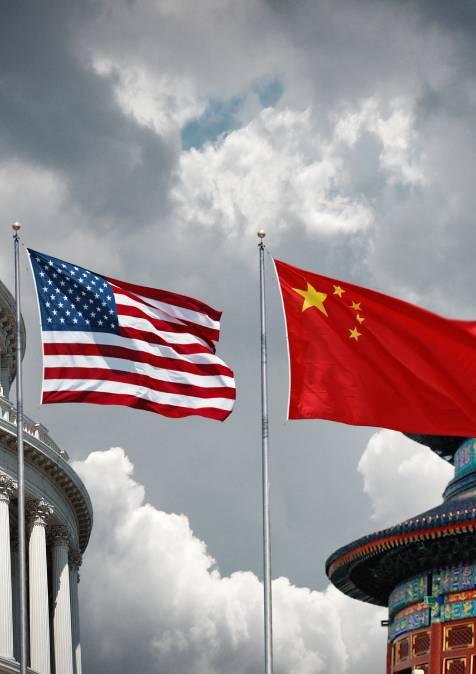
The meeting between Donald Trump and Xi Jinping in Beijing this week goes far beyond the traditional framework of a bilateral encounter between the world’s two largest economies. In many respects, it is a symbolic moment in the transition toward a new international order—one increasingly shaped not only by great-power competition but also by the Global South’s growing political consciousness and strategic relevance.

For decades, the post-Cold War international system operated on the assumption of Western permanence. The United States projected military, financial, and institutional dominance globally, while Europe sought to present itself as the moral and normative centre of international governance. Yet the geopolitical landscape of 2026 reveals a very different reality: a fragmented world, fatigued by conflict, increasingly skeptical of ideological universalism, and deeply distrustful of selective interpretations of international law and global norms.

This is precisely why the Xi–Trump encounter will be closely watched across Africa, Latin America, the Middle East, and large parts of Asia. For much of the Global South, the central question is no longer whether the United States remains powerful, but whether Washington still offers a convincing vision of international leadership.

The repeated articulation of the concept of “peace through strength” by the United States has significantly contributed to this erosion of credibility. While such language may resonate domestically within strategic and military circles, it generates profound discomfort across many developing nations. The underlying perception is that excessive reliance on coercion, sanctions, military pressure, and strategic intimidation ultimately weakens the legitimacy of the international system.

From the perspective of much of the Global South, stability cannot arise solely from military superiority. Development, infrastructure, technological access, poverty reduction, and economic inclusion are seen as far more sustainable foundations for peace than the permanent threat of force. Countries that have experienced colonialism, interventionism, or externally imposed political models tend to be particularly resistant to doctrines that appear to normalize the use of power as the principal organizing mechanism of international relations.

This does not necessarily imply unconditional alignment with China. Rather, it reflects the growing appeal of a discourse centered on sovereignty, development, and pragmatic coexistence. Beijing has perhaps understood more clearly than many Western capitals that large parts of the developing world are less interested in ideological sermons and more interested in roads, ports, energy, connectivity, trade, and industrial transformation.

China is not free from contradictions, strategic ambitions, or forms of pressure of its own. Many countries of the Global South remain cautious about excessive dependence on Beijing. Yet the central issue is that large parts of the developing world no longer believe that the Western model possesses either moral consistency or unquestionable strategic legitimacy.

At the same time, Europe faces its own crisis of relevance. Across much of the Global South, the European Union is increasingly seen as politically fatigued, economically stagnant, and strategically uncertain. The war in Ukraine exposed severe vulnerabilities in energy security, defense capacity, and industrial competitiveness. Meanwhile, internal fragmentation, demographic anxieties, and bureaucratic excess have weakened Europe’s standing as a dynamic civilizational model worthy of emulation.

More damaging still is the growing perception of Western double standards. Across the developing world, many capitals are increasingly frustrated by what is seen as a selective application of moral principles. Certain violations of international law provoke outrage and sanctions; others elicit ambiguity, silence, or strategic accommodation. Such inconsistency gradually erodes the moral authority the West once sought to project internationally.

The result is a profound transformation in the psychology of the international system. The Global South no longer sees itself merely as an observer of great-power politics but increasingly as a determining force in shaping a multipolar order. This explains why the Beijing meeting matters so deeply. It is not simply about tariffs, semiconductors, or trade balances. It is about competing visions of global legitimacy.

The United States continues to possess immense military, technological, and financial power. China continues to face significant criticism and internal contradictions. Yet the strategic dispute of the twenty-first century may ultimately be decided less by the capacity to instill fear than by the ability to inspire confidence, offer development, and demonstrate coherence between rhetoric and action.

This is now the basis on which the Global South is assessing the credibility of competing powers.

RELATED CONTENT

  • September 7, 2022
    Le président des États-Unis, Joe Biden, malgré les états de service catastrophiques de son pays en Irak ou en Afghanistan, n’a pas tort d’affirmer que le monde va vers un affrontement entre l’autocratie et la liberté. Et, qu’en fin de compte, il va falloir choisir. Cela fait grincer des dents, surtout en Europe qui est divisée sur le sujet. ...
  • Authors
    November 22, 2021
    Richard Blumenthal, the US Democratic Senator from Connecticut, was shaken by the testimonies of top officials of the Department of Justice during the August 2021 Congressional hearings. The Officials recounted how the former President, Donald Trump, through phone and in private meetings, pressured them to falsify the results of the November 2020 Presidential: "say that the election was corrupt and leave the rest to the congressmen and me". (”Mother Jones”, July 30, 2021) Blumenthal ...
  • Authors
    Pascal Chaigneau
    Eugène Berg
    Rodolphe Monnet
    Jacques Gravereau
    Jérémy Ghez
    Olivier Tramond
    Niagalé Bagayoko
    Alain Oudot de Dainville
    Jérôme Evrard
    Coordination de l’ouvrage: Imane Lahrich
    Fatine Cherkaoui
    October 28, 2021
    Depuis l’accession au trône du Roi Mohammed VI, l’Afrique s’est transformée en priorité de la diplomatie marocaine. Sur le plan économique, l’Afrique est devenue le prolongement naturel du Maroc en termes d’investissements et d’implantations. Pascal Chaigneau s’attarde sur les relations affaiblies Europe-Afrique, l’ambitieuse relation Chine-Afrique ainsi que les relations entre la Russie, les Etats-Unis, la Turquie ou encore les pays du Golf et l’Afrique. Ce chapitre traite égalemen ...
  • August 24, 2021
    The Taliban movement took control of Afghanistan’s capital, Kabul, without confrontation or resistance, as soon as the president, Ashraf Ghani, fled the country. Afghan forces were not able to face the Taliban, despite of the fact that Taliban was technically outnumbered and outgunned by Afghan government forces. The New American administration first priority is to make US military mission in Afghanistan conclude by August 31st. Biden believes that the mission US army in Afghanistan ...
  • Authors
    Salma Daoudi
    December 25, 2020
    The maxim that in adversity we find unity has never truly materialized following the outbreak of the novel coronavirus (COVID-19). Despite fighting a common enemy, individual societies have turned inwards, moved by a self-preservation instinct that prioritizes individual over collective well-being. Outbursts and demonstrations of solidarity have punctuated national and international responses to COVID-19, but the virus has also often exacerbated structural inequalities, reopening ol ...
  • Authors
    December 22, 2020
    “When I got home late that night, the house was dark and Michelle was already asleep. After taking a shower and going through a stack of mail, I slipped under the covers and began drifting off. In that luminal space between wakefulness and sleep, I imagined myself stepping toward a portal of some sort, a bright and cold and airless place, uninhabited and severed from the world. And behind me, out of the darkness, I heard a voice, sharp and clear, as if someone were right next to me, ...
  • Authors
    November 27, 2020
    As President elect Biden prepares for the enormous responsibility of becoming President of the United States (US), there is one question I want to ask him, writes Stephen Young, Washington Representative and Senior Analyst of the ”Union of Concerned Scientists” on November 7th, 2020: “Sir ,are you a fan of nuclear arms race? Because you are being handed one, a burgeoning nuclear and technology arms race waged by Russia, China and the United States.” Two weeks after Joe Biden will be ...
  • Authors
    Souha Majidi
    November 26, 2020
    The Trump Administration “America First” policy changed U.S. foreign policy towards the African continent. Trump opposed trade agreements with several countries, considering them to be unfavorable to the U.S., given the nature of the African market. He shifted the U.S. concern in Africa from fighting against violent extremism and terrorism to a direct competition with other great powers—China and Russia—which had already extensively implemented African strategies. He endeavored to r ...
  • Authors
    November 19, 2020
    Le mandat du président Trump qui, sauf miracle, s’achève en janvier 2021, avait soumis à rude épreuve les alliances des Etats-Unis d’Amérique avec plusieurs pays et entités européens et asiatiques. Plusieurs de ces alliés stratégiques des Etats-Unis avaient, alors, perdu confiance en l’esprit de solidarité qui a toujours empreint l’action étasunienne à leur égard, et amorcé des réflexions sur la construction de leurs propres systèmes de défense. L’arrivée à la Maison Blanche d’un no ...
  • Authors
    October 16, 2020
    Whether President Trump is reelected or not, the United States will, sooner or later, revert to a traditonalist foreign policy of openness and alliances. If Joe Biden beats Donald Trump on November 3, as he is expected to do, the United States will return to a traditionalist brand of foreign policy: one of openness, support for multilateralism, and constructive engagement with allies. But even if Biden doesn’t winwhich is possible—and four more years of Trump’s America First polici ...