Publications /
Opinion
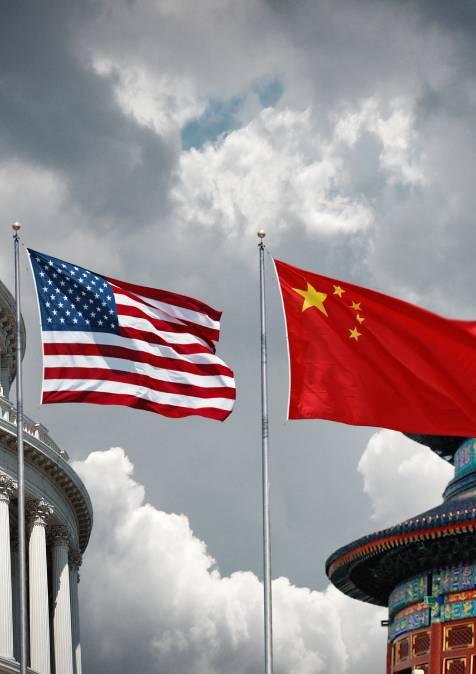
The meeting between Donald Trump and Xi Jinping in Beijing this week goes far beyond the traditional framework of a bilateral encounter between the world’s two largest economies. In many respects, it is a symbolic moment in the transition toward a new international order—one increasingly shaped not only by great-power competition but also by the Global South’s growing political consciousness and strategic relevance.
For decades, the post-Cold War international system operated on the assumption of Western permanence. The United States projected military, financial, and institutional dominance globally, while Europe sought to present itself as the moral and normative centre of international governance. Yet the geopolitical landscape of 2026 reveals a very different reality: a fragmented world, fatigued by conflict, increasingly skeptical of ideological universalism, and deeply distrustful of selective interpretations of international law and global norms.
This is precisely why the Xi–Trump encounter will be closely watched across Africa, Latin America, the Middle East, and large parts of Asia. For much of the Global South, the central question is no longer whether the United States remains powerful, but whether Washington still offers a convincing vision of international leadership.
The repeated articulation of the concept of “peace through strength” by the United States has significantly contributed to this erosion of credibility. While such language may resonate domestically within strategic and military circles, it generates profound discomfort across many developing nations. The underlying perception is that excessive reliance on coercion, sanctions, military pressure, and strategic intimidation ultimately weakens the legitimacy of the international system.
From the perspective of much of the Global South, stability cannot arise solely from military superiority. Development, infrastructure, technological access, poverty reduction, and economic inclusion are seen as far more sustainable foundations for peace than the permanent threat of force. Countries that have experienced colonialism, interventionism, or externally imposed political models tend to be particularly resistant to doctrines that appear to normalize the use of power as the principal organizing mechanism of international relations.
This does not necessarily imply unconditional alignment with China. Rather, it reflects the growing appeal of a discourse centered on sovereignty, development, and pragmatic coexistence. Beijing has perhaps understood more clearly than many Western capitals that large parts of the developing world are less interested in ideological sermons and more interested in roads, ports, energy, connectivity, trade, and industrial transformation.
China is not free from contradictions, strategic ambitions, or forms of pressure of its own. Many countries of the Global South remain cautious about excessive dependence on Beijing. Yet the central issue is that large parts of the developing world no longer believe that the Western model possesses either moral consistency or unquestionable strategic legitimacy.
At the same time, Europe faces its own crisis of relevance. Across much of the Global South, the European Union is increasingly seen as politically fatigued, economically stagnant, and strategically uncertain. The war in Ukraine exposed severe vulnerabilities in energy security, defense capacity, and industrial competitiveness. Meanwhile, internal fragmentation, demographic anxieties, and bureaucratic excess have weakened Europe’s standing as a dynamic civilizational model worthy of emulation.
More damaging still is the growing perception of Western double standards. Across the developing world, many capitals are increasingly frustrated by what is seen as a selective application of moral principles. Certain violations of international law provoke outrage and sanctions; others elicit ambiguity, silence, or strategic accommodation. Such inconsistency gradually erodes the moral authority the West once sought to project internationally.
The result is a profound transformation in the psychology of the international system. The Global South no longer sees itself merely as an observer of great-power politics but increasingly as a determining force in shaping a multipolar order. This explains why the Beijing meeting matters so deeply. It is not simply about tariffs, semiconductors, or trade balances. It is about competing visions of global legitimacy.
The United States continues to possess immense military, technological, and financial power. China continues to face significant criticism and internal contradictions. Yet the strategic dispute of the twenty-first century may ultimately be decided less by the capacity to instill fear than by the ability to inspire confidence, offer development, and demonstrate coherence between rhetoric and action.
This is now the basis on which the Global South is assessing the credibility of competing powers.