Publications /
Opinion

Back
Africa Needs More Petroleum Refineries
Authors
June 8, 2026

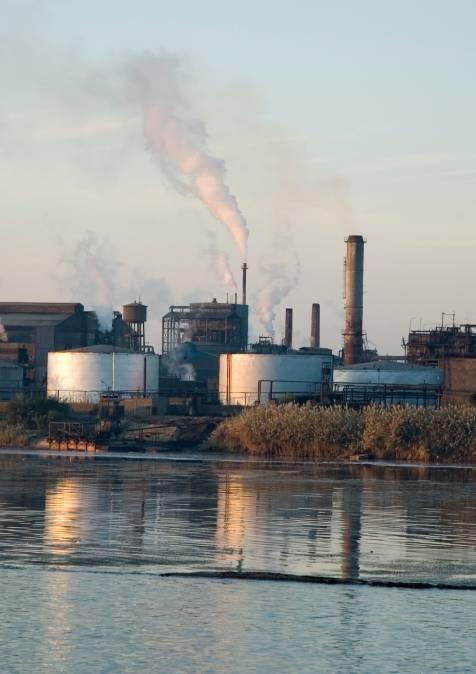
The energy shock caused by the war between the United States and Israel and Iran has highlighted the need for Africa to refine more of its own crude oil. Africa is a net hydrocarbon exporter, but remains stuck in the old colonial economic model: it mostly exports raw materials and imports refined products. Africa exports about 2.6 billion barrels of crude oil every year, and imports about 1.4 billion barrels of refined products. This is a problem for two reasons. First, Africa is losing the value added that comes from refining its own petroleum. Second, by relying so much on imports of refined petroleum products, Africa is vulnerable to exogenous shocks, such as wars and the closure of maritime routes. These impact supply and are becoming more frequent.

The first benefit of expanding petroleum refining in Africa would be the creation of more domestic value added. Industrial capacity would be built by creating high-skill jobs in engineering, operations, maintenance, safety, laboratory services, logistics, and project management. An examination of refinery margins—as published by the U.S. Energy Information Administration (EIA) provides one measure of the value added from refining. The margins range from $10 to $25 per barrel. This implies that if all of Africa’s oil is exported as refined products rather than crude oil, the additional value added for the continent would range from $26 billion to $65 billion/year, or 0.9% to 2.2% of Africa’s GDP.

Refineries require major investment, but the rates of return are potentially very high. The Dangote refinery in Nigeria, for example, reached its full capacity of 650,000 barrels per day in early 2026. It cost $2 billion to construct—an implied capital cost of about $31 thousand/barrel/day. To refine all of Africa’s crude exports of some 2.6 billion barrels/year would require a refining capacity of 7.1 million barrels per day or a total capital investment of $220 billion. Using the range for refining margins published by the EIA, the implied rate of return on investments in African refineries would range from 12% to 30%. Clearly, more detailed feasibility studies will be needed on a case-by-case basis. Nevertheless, this back of the envelope calculation indicates that refineries in Africa have the potential to provide high rates of return on investment.

A second benefit of more petroleum refining in Africa would be reduced import dependence. In a deglobalizing world, where trade is weaponized, sea routes are blocked and rich countries are prioritizing nearshoring and friendshoring, Africa should increase its resilience to shocks by relying more on regionally refined products. The Iran was has made this need crystal clear. Countries with domestic or regional refining options have more flexibility than those wholly dependent on products imported from faraway places.

Africa has the knowledge and capacity to refine its crude oil. According to the IEA, Africa already produces nearly a billion barrels per year of refined products. The objective therefore should be to expand the existing sector, which is easier than starting a new activity for which no local knowledge or capacity exists. Africa could and should refine its own crude oil.

African political and business leaders are cognizant of the need to increase the continent’s refinery capacity. The  Africa Energy Chamber provides a list of new refinery projects being implemented—the largest being the Dangote, followed by two refineries in Angola. While this new investment is encouraging, it is important to note that even when all those projects operate at full capacity, Africa’s output of refined petroleum products will only increase by about 430 million barrels/year. Compare this with the total imports of refined products of 1.4 billion barrels per year, and exports of crude of 2.6 billion barrels/year. There is clearly scope for further expansion of Africa’s refining capacity.

It could be argued that given the energy transition and the move away from hydrocarbons and into renewables, it may not make sense to invest in refineries that could become obsolete in a few years. It is true that the demand for hydrocarbons is expected to taper off as renewables are adopted by more users. However, this transition will take time. Demand for petroleum products will continue for many years to come. The expansion of renewables is not an argument for continuing to export crude oil and rely on imports of refined products from rich countries. Rather, it is an argument to build more efficient integrated refining and petrochemical plants that leverage decarbonization technology and digitalization. 

Meanwhile, Africa should continue to invest in green energy. The continent has huge solar, wind, and hydropower resources, and the cost of producing green energy has been declining rapidly, making it economically competitive. Green technologies could help meet Africa’s huge energy needs and bring electricity to the 600 million Africans who do not have access.
 

RELATED CONTENT

  • August 27, 2021
    Il est bien connu que le poids de l’Afrique sur la scène énergétique mondiale est faible, ce qui est le reflet de son poids économique. En 2020, en termes de consommation, la part de l’Afrique dans le total mondial ne dépassait pas 3% à 4%. De plus, cette part n’a que très peu augmenté au cours des dix dernières années. L’an dernier, l’Afrique ne représentait que 3,3% de la consommation mondiale d’énergie primaire (pétrole, gaz naturel, charbon, énergie nucléaire, hydroélectricité ...
  • Authors
    Chami Abdelilah
    Derj Atar
    Hammi Ibtissem
    Morazzo Mariano
    Naciri Yassine
    with the technical support of AFRY
    July 29, 2021
    As decarbonization is a long-term process and requires significant investments, specific financial and non- financial measures will need to be implemented, both in the short and long term, to facilitate this transition. In Part II of Morocco’s decarbonization pathway Policy Brief series, an update of the decarbonization scenarios was presented. It revealed that the Increased Ambition and Green Development scenarios achieve higher decarbonization targets than current policy. It showe ...
  • Authors
    Chami Abdelilah
    Derj Atar
    Hammi Ibtissem
    Morazzo Mariano
    Naciri Yassine
    with the technical support of AFRY
    July 23, 2021
    La décarbonisation est un processus à long terme qui nécessite des investissements importants. Ainsi, des mesures financières et non financières spécifiques devront être mises en œuvre, à la fois à court et à long termes, pour faciliter cette transition. Dans la deuxième partie de la série de Policy Briefs sur la trajectoire de décarbonisation du Maroc, une mise à jour des scénarios de décarbonisation a été présentée. Elle révèle que les scénarios « Ambition accélérée » et « Dévelop ...
  • Authors
    Chami Abdelilah
    Derj Atar
    Hammi Ibtissem
    Morazzo Mariano
    Naciri Yassine
    with the technical support of AFRY
    July 19, 2021
    Morocco's significant renewable energy resources offer an unprecedented opportunity to anchor the country’s economic and political choices in the energy transition, and to turn the transition into an essential lever for economic development. This is all the more relevant as the costs of renewable energies have dropped over the past 10 years2, and now offer strong potential, not only for creating green jobs but for ensuring a dynamic and resilient economic growth as well. In 2020, ne ...
  • Authors
    Chami Abdelilah
    Derj Atar
    Hammi Ibtissem
    Morazzo Mariano
    Naciri Yassine
    with the technical support of AFRY
    July 9, 2021
    Les importantes ressources en énergies renouvelables du Maroc offrent une opportunité sans précédent d’ancrer les choix économiques et politiques du pays dans la transition énergétique, et de faire de cette transition un levier essentiel du développement économique. Ceci est d’autant plus important que le coût des énergies renouvelables a baissé au cours des 10 dernières années2 et présente désormais un fort potentiel, non seulement de création d’emplois verts mais aussi de croissan ...
  • Authors
    Chami Abdelilah
    Derj Atar
    Hammi Ibtissem
    Morazzo Mariano
    Naciri Yassine
    with the technical support of AFRY
    July 9, 2021
    The consequences of climate change are becoming progressively more visible in Morocco. Changes in rainfall patterns and drought, increases in average temperatures and heatwaves, flooding, and rising sea levels are increasingly affecting several regions. Yet, Morocco has a relatively low greenhouse gas (GHG) emission rate, compared to other countries. In 20162, Morocco’s total GHG emissions reached 86127.7 gigagram of carbon dioxide equivalent (Gg CO2-eq), totaling around 0.2% of glo ...
  • Authors
    Chami Abdelilah
    Derj Atar
    Hammi Ibtissem
    Morazzo Mariano
    Naciri Yassine
    with the technical support of AFRY
    July 9, 2021
    Les conséquences du changement climatique sont de plus en plus visibles au Maroc. Le schéma changeant des précipitations et de la sécheresse, l'augmentation des températures moyennes et des canicules, les inondations et l'augmentation du niveau de la mer affectent de plus en plus de nombreuses régions. Et pourtant, le taux d'émission de gaz à effet de serre (GES) du Maroc est relativement faible, comparé à celui d'autres pays. En 20162, les émissions totales de GES du Maroc ont atte ...
  • Authors
    Chami Abdelilah
    Derj Atar
    Hammi Ibtissem
    Morazzo Mariano
    Naciri Yassine
    with the technical support of AFRY
    June 28, 2021
    During the 2015 Paris Conference of the Parties to the United Nations Framework Convention on Climate Change (UNFCCC), governments pledged to limit the global temperature increase to well below 2°C above pre- industrial levels, to peak emissions as soon as possible, and to achieve carbon neutrality in the second half of the century. Yet, even assuming full implementation of the commitments made by governments in Paris, the global concentration of greenhouse-gas (GHG) emissions will ...
  • Authors
    Chami Abdelilah
    Derj Atar
    Hammi Ibtissem
    Morazzo Mariano
    Naciri Yassine
    with the technical support of AFRY
    June 28, 2021
    Lors de la Conférence des Parties à la Convention-cadre des Nations unies sur les changements climatiques (CCNUCC) qui s'est tenue à Paris en 2015, les gouvernements se sont engagés à limiter l'augmentation de la température mondiale à un niveau bien inférieur à 2°C par rapport aux niveaux préindustriels. Ils se sont également engagés à atteindre, dès que possible, un pic de leurs émissions et à parvenir à la neutralité carbone au cours de la seconde moitié du siècle. Pour autant, m ...