Publications /
Opinion

Back
Africa Needs More Petroleum Refineries
Authors
June 8, 2026

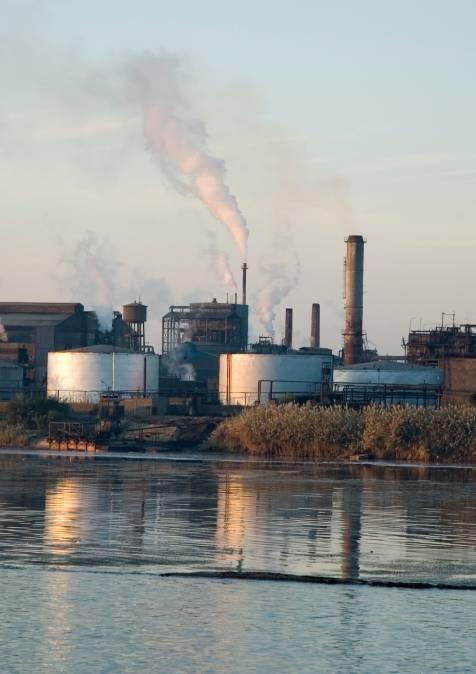
The energy shock caused by the war between the United States and Israel and Iran has highlighted the need for Africa to refine more of its own crude oil. Africa is a net hydrocarbon exporter, but remains stuck in the old colonial economic model: it mostly exports raw materials and imports refined products. Africa exports about 2.6 billion barrels of crude oil every year, and imports about 1.4 billion barrels of refined products. This is a problem for two reasons. First, Africa is losing the value added that comes from refining its own petroleum. Second, by relying so much on imports of refined petroleum products, Africa is vulnerable to exogenous shocks, such as wars and the closure of maritime routes. These impact supply and are becoming more frequent.

The first benefit of expanding petroleum refining in Africa would be the creation of more domestic value added. Industrial capacity would be built by creating high-skill jobs in engineering, operations, maintenance, safety, laboratory services, logistics, and project management. An examination of refinery margins—as published by the U.S. Energy Information Administration (EIA) provides one measure of the value added from refining. The margins range from $10 to $25 per barrel. This implies that if all of Africa’s oil is exported as refined products rather than crude oil, the additional value added for the continent would range from $26 billion to $65 billion/year, or 0.9% to 2.2% of Africa’s GDP.

Refineries require major investment, but the rates of return are potentially very high. The Dangote refinery in Nigeria, for example, reached its full capacity of 650,000 barrels per day in early 2026. It cost $2 billion to construct—an implied capital cost of about $31 thousand/barrel/day. To refine all of Africa’s crude exports of some 2.6 billion barrels/year would require a refining capacity of 7.1 million barrels per day or a total capital investment of $220 billion. Using the range for refining margins published by the EIA, the implied rate of return on investments in African refineries would range from 12% to 30%. Clearly, more detailed feasibility studies will be needed on a case-by-case basis. Nevertheless, this back of the envelope calculation indicates that refineries in Africa have the potential to provide high rates of return on investment.

A second benefit of more petroleum refining in Africa would be reduced import dependence. In a deglobalizing world, where trade is weaponized, sea routes are blocked and rich countries are prioritizing nearshoring and friendshoring, Africa should increase its resilience to shocks by relying more on regionally refined products. The Iran was has made this need crystal clear. Countries with domestic or regional refining options have more flexibility than those wholly dependent on products imported from faraway places.

Africa has the knowledge and capacity to refine its crude oil. According to the IEA, Africa already produces nearly a billion barrels per year of refined products. The objective therefore should be to expand the existing sector, which is easier than starting a new activity for which no local knowledge or capacity exists. Africa could and should refine its own crude oil.

African political and business leaders are cognizant of the need to increase the continent’s refinery capacity. The  Africa Energy Chamber provides a list of new refinery projects being implemented—the largest being the Dangote, followed by two refineries in Angola. While this new investment is encouraging, it is important to note that even when all those projects operate at full capacity, Africa’s output of refined petroleum products will only increase by about 430 million barrels/year. Compare this with the total imports of refined products of 1.4 billion barrels per year, and exports of crude of 2.6 billion barrels/year. There is clearly scope for further expansion of Africa’s refining capacity.

It could be argued that given the energy transition and the move away from hydrocarbons and into renewables, it may not make sense to invest in refineries that could become obsolete in a few years. It is true that the demand for hydrocarbons is expected to taper off as renewables are adopted by more users. However, this transition will take time. Demand for petroleum products will continue for many years to come. The expansion of renewables is not an argument for continuing to export crude oil and rely on imports of refined products from rich countries. Rather, it is an argument to build more efficient integrated refining and petrochemical plants that leverage decarbonization technology and digitalization. 

Meanwhile, Africa should continue to invest in green energy. The continent has huge solar, wind, and hydropower resources, and the cost of producing green energy has been declining rapidly, making it economically competitive. Green technologies could help meet Africa’s huge energy needs and bring electricity to the 600 million Africans who do not have access.

 

RELATED CONTENT

  • Authors
    Under the direction of
    Philippe Chalmin
    April 9, 2019
    Commodity prices were once again marked by significant volatility in 2017 and 2018. While there are many economic factors to explain this, politics were also present—trade tensions between China and the United States and, more generally, a rise in uncertainties—weighing upon the global macroeconomic outlook and the ‘dynamism of the markets’. Africa, which has countries with strong growth rates, has, however, been able to show solid economic performance, and this trajectory is not li ...
  • Authors
    Nchimunya Hamukoma
    April 9, 2019
    The author is an alumnus of the 2018 Atlantic Dialogues Emerging Leaders program On a Saturday evening in March at an upscale gallery in Johannesburg’s CBD, the lights went out.  A child in the crowd yelped in shock, but most of the adults let out a gentle sigh of resignation. An attendant came by soon after to assure that it wasn’t load shedding and that the power would be reconnected shortly, but we had become inured to the darkness and the idea that electricity wasn’t somet ...
  • Authors
    Manfred Hafner
    Simone Tagliapietra
    Lucia de Strasser
    October 4, 2018
    This blog post summarizes the key findings of the new book Energy in Africa: Challenges and Opportunities, co-authored by Manfred Hafner, Simone Tagliapietra and Lucia de Strasser of the Italian think-tank, Fondazione Eni Enrico Mattei. The book, published by Springer, is freely available online. The book presents a picture of the current energy challenges on the African continent- the Sub-Saharan region in particular- and proposes pathways to an accelerated energy t ...
  • Authors
    May 11, 2018
    Awad Ibrahim, chairman of the Lybian Organisation of Policies and Strategies (LOPS), one of the few think tanks in this violence-torn country, has escaped to establish contacts with his African colleagues at the African Think Tank Summit held in Rabat from May 9th to 11th. For a few years he was Minister of Electricity and Renewable Energy in his country, and later appointed Deputy Prime minister. At times Awad Ibrahim fears for his life, but he believes a political soluti ...
  • Authors
    July 28, 2017
    Renewable energy technologies are projected to have substantial growth in the coming decades, especially given the environmental, social and economic drivers observed globally. The Middle East and North Africa (MENA) region encloses abundant alternative energy sources such as solar, wind and hydropower. The concern is more whether the Arab region will be able to respond to and manage the growth opportunities in this emerging sector. This Policy Brief explores opportunities and chall ...
  • Authors
    April 12, 2017
    We argue in this paper that electricity production needs to be multiplied by a large factor in the coming years for East Africa to reach the economic growth rate it deserves after the improvement of its socio-political situation. The rural electrification rate in North Africa as represented for instance by Morocco was higher than 99.50% in the first quarter of 2017 while it was barely 10% in some parts of Western Kenya. We also make the case for hydroelectricity as the adequate ren ...
  • Authors
    March 29, 2017
    Dans un contexte mondial de plus en plus préoccupé par les aléas climatiques, comprendre l’impact de la croissance économique sur l’environnement devient crucial, notamment pour les pays en voie de développement. Ce papier aborde cette problématique sous le prisme des émissions de dioxyde de carbone (CO2) et examine comment la croissance économique se répercute sur l’environnement. L’objectif de cette étude est de tester la validité de la courbe environnementale de Kuznets (CEK) pou ...
  • Authors
    Laura El Katiri
    December 30, 2016
    Le paysage énergétique du Maroc a connu une évolution rapide au cours des dernières décennies. La croissance démographique, l'industrialisation et la hausse du niveau de vie, qui se sont accompagnés d'une augmentation des taux d'accès à l'électricité, ainsi que de taux élevés d'exode rural, ont tous contribué à l'expansion des besoins énergétiques du Maroc. Étant voisin d'une Algérie riche en pétrole et en gaz à l'Est, et d'une Europe avide d'énergie au nord de la Méditerranée, le M ...
  • Authors
    Priscillia Andrieu
    October 24, 2016
    Africa is the new frontier of a global energy transition during a century in which people are rightfully preoccupied by climate change and sustainable development. Energy access in Africa can be reached through unity within and across the continent. Eliminating the obstacles of the historical divisions of the continent – whether linguistic, economic, or geographic – would foment investments and development aid. The African Union would be best equipped to reallocate and redistribute ...
  • Authors
    Laura El Katiri
    October 18, 2016
    Morocco’s energy landscape has been changing rapidly over the past decades. Alongside its own population growth, rising access rates to electricity as well as high rates of rural-urban migration and rising living standards, Morocco’s domestic energy needs have risen sharply since the early 1990s. This policy paper explores Morocco’s long-term energy options, focusing on “green” energy solutions that lie within Morocco’s natural competitive advantage. Using Morocco’s strategic assets ...