Publications /
Opinion
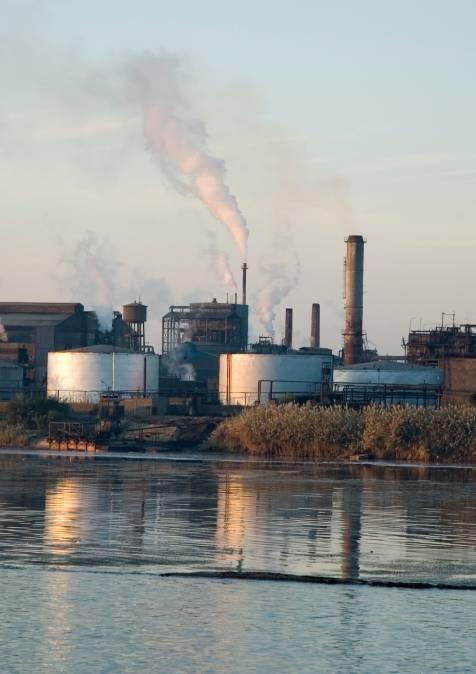
The energy shock caused by the war between the United States and Israel and Iran has highlighted the need for Africa to refine more of its own crude oil. Africa is a net hydrocarbon exporter, but remains stuck in the old colonial economic model: it mostly exports raw materials and imports refined products. Africa exports about 2.6 billion barrels of crude oil every year, and imports about 1.4 billion barrels of refined products. This is a problem for two reasons. First, Africa is losing the value added that comes from refining its own petroleum. Second, by relying so much on imports of refined petroleum products, Africa is vulnerable to exogenous shocks, such as wars and the closure of maritime routes. These impact supply and are becoming more frequent.
The first benefit of expanding petroleum refining in Africa would be the creation of more domestic value added. Industrial capacity would be built by creating high-skill jobs in engineering, operations, maintenance, safety, laboratory services, logistics, and project management. An examination of refinery margins—as published by the U.S. Energy Information Administration (EIA) provides one measure of the value added from refining. The margins range from $10 to $25 per barrel. This implies that if all of Africa’s oil is exported as refined products rather than crude oil, the additional value added for the continent would range from $26 billion to $65 billion/year, or 0.9% to 2.2% of Africa’s GDP.
Refineries require major investment, but the rates of return are potentially very high. The Dangote refinery in Nigeria, for example, reached its full capacity of 650,000 barrels per day in early 2026. It cost $2 billion to construct—an implied capital cost of about $31 thousand/barrel/day. To refine all of Africa’s crude exports of some 2.6 billion barrels/year would require a refining capacity of 7.1 million barrels per day or a total capital investment of $220 billion. Using the range for refining margins published by the EIA, the implied rate of return on investments in African refineries would range from 12% to 30%. Clearly, more detailed feasibility studies will be needed on a case-by-case basis. Nevertheless, this back of the envelope calculation indicates that refineries in Africa have the potential to provide high rates of return on investment.
A second benefit of more petroleum refining in Africa would be reduced import dependence. In a deglobalizing world, where trade is weaponized, sea routes are blocked and rich countries are prioritizing nearshoring and friendshoring, Africa should increase its resilience to shocks by relying more on regionally refined products. The Iran was has made this need crystal clear. Countries with domestic or regional refining options have more flexibility than those wholly dependent on products imported from faraway places.
Africa has the knowledge and capacity to refine its crude oil. According to the IEA, Africa already produces nearly a billion barrels per year of refined products. The objective therefore should be to expand the existing sector, which is easier than starting a new activity for which no local knowledge or capacity exists. Africa could and should refine its own crude oil.
African political and business leaders are cognizant of the need to increase the continent’s refinery capacity. The Africa Energy Chamber provides a list of new refinery projects being implemented—the largest being the Dangote, followed by two refineries in Angola. While this new investment is encouraging, it is important to note that even when all those projects operate at full capacity, Africa’s output of refined petroleum products will only increase by about 430 million barrels/year. Compare this with the total imports of refined products of 1.4 billion barrels per year, and exports of crude of 2.6 billion barrels/year. There is clearly scope for further expansion of Africa’s refining capacity.
It could be argued that given the energy transition and the move away from hydrocarbons and into renewables, it may not make sense to invest in refineries that could become obsolete in a few years. It is true that the demand for hydrocarbons is expected to taper off as renewables are adopted by more users. However, this transition will take time. Demand for petroleum products will continue for many years to come. The expansion of renewables is not an argument for continuing to export crude oil and rely on imports of refined products from rich countries. Rather, it is an argument to build more efficient integrated refining and petrochemical plants that leverage decarbonization technology and digitalization.
Meanwhile, Africa should continue to invest in green energy. The continent has huge solar, wind, and hydropower resources, and the cost of producing green energy has been declining rapidly, making it economically competitive. Green technologies could help meet Africa’s huge energy needs and bring electricity to the 600 million Africans who do not have access.