Publications /
Opinion
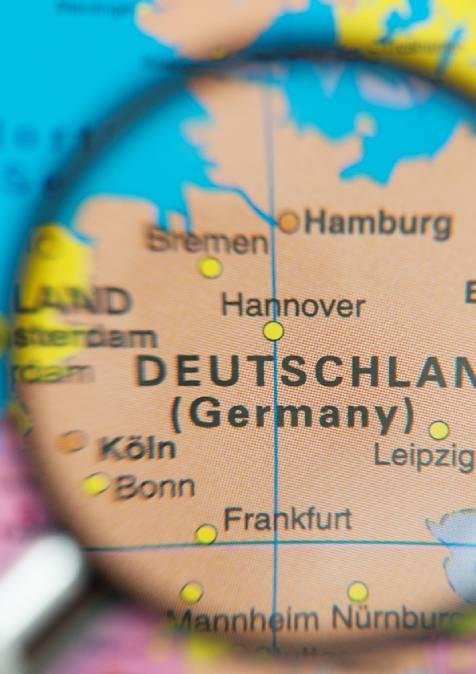
It has been more than 100 years since Germany manifested colonial power, a dark period of history indeed. Political and military leaders, supported by its ruler, Wilhelm II, Emperor of Germany and King of Prussia, committed crimes against humanity on African land. The first genocide of the 20th Century, mass killings of 65 000 Herero in Africa, today known as Namibia. Between 1904 and 1908, Germany suffocated humanity in concentration camps like Shark Island, forcing them into deadly labor camps.
The German Empire colonized Togo, Burundi, Tanzania, Chad, Rwanda, Cameroon, Central African Republic. In no African land was this colonial occupier more brutal than in the South West, attempting to control rebellious groups like the Herero and Nama by ethnic extermination, driving them into the Kalahari Desert. Many died of thirst. 31 years of German rule ended by military defeat in the First World War. Still, Berlin repeated its crime against humanity three decades later- yesterday the Herero, today the Jews, the horror not named Shark Island, but Auschwitz. The Germans are back in Africa, mainly in the Sahel, a region south of the Sahara Desert, stretching from the Atlantic coast to Sudan, about 1500 German soldiers, about 880 of those are peacekeepers under the command of the Multidimensional Integrated Stabilization Mission in Mali (MINUSMA) mandate.
German Luftwaffe pilots are taking off from a Nigerien airport in Tahoua, bordering Northern Mali. German special forces train and accompany Malian units into combat against suspected terrorist groups aligned to” Islamic State in the Greater Sahara” or al Qaeda’s affiliate” Jama’at Nusrat al-Islam wal- Muslimeen”. They patrol the borderless eternity of the desert with French partners, surprised by land mines or attacks of Malian terrorists in the north or center of the troubled nation. 17 European countries have deployed soldiers or police instructors to support the MINUSMA forces of about 15000 fighters as of September 2021.” Combatting terrorist groups is not part of the explicit mandate of MINUSMA ”, reminds the German “ Zentrum fuer International Friedenseinsaetze”in Berlin (Center for International Peace Operations)in a report published 2020 Besides, MINUSMA is the most dangerous UN peace operation with 242 military fatalities to date (Pass Blue, December 23, 2021). Last October, one UN peacekeeper was killed near the Malian -Algerian border, four others were seriously injured. Early December 2021 an UN convoy struck an improvised explosive device when driving in an area where groups linked to al Queda and ISIS are operating (Aljazeera, December 8, 2021)
The joint Niger, Mali, Mauritania, Burkina Faso, Chad under G5 Sahel Joint Force, where each nation contributes 1000 soldiers, in counterterrorist operations in their own country, but also mandated to cross borders of the G5 states in the pursuit of their targets, particularly in the border triangle Mali-Niger-Burkina Faso. In 2012, the Malian state collapsed in the face of a military coup, and heavily armed Tuareg militants, who had worked as mercenaries in Muammar Gaddafi’s Libya, triggered a rebellion. By late 2012-armed jihadists and their allies had captured the cities of Kidal, Timbuktu, and Gao. A new state, Azawad, declared its independence, which did not last long: Paris deployed 4000 troops, supported by the US and European airpower, and by the end of the year, they succeeded in recapturing the lost territory- two years later the warring parties signed the “Algier’s accords” under the auspice of the US, USA, and UN, France and Algeria.
Katherine Pye, author of the study The Sahel: Europe’s forever war? , published by the London based think tank Centre for European Reform, (March 31, 2021) notes that “the ink was barely dry“ on the Northern Mali- peace agreement, when a new conflict erupted, jihads attacking, ethnic frictions exploded Worse: extremist organizations are gradually expanding to Niger, Burkina Faso, and more recently in northern Ivory Coast and northern Benin. Events in the Sahel, and Mali especially, “are taking an uncertain and worrying turn,“ writes Rida Lyammouri, Senior fellow in the Policy Center for the New South in his timely study, “ For Mali and the Sahel, new tensions and an old-and worsening -security problem”. Mali witnessed two coups d’état in less than a year, while the West African Sahel went through the most violent year yet, and” there are no signs that the violence is slowing down.”
A political, military, and social cacophony, a drama in the center of drought and floods, kidnapping and treason, conspiracy and assassination attempts, broken ceasefires and shifting frontiers, border crossing ambushes, human trafficking-welcome to the Sahel. In May 2020, the French Ministry for Europe and Foreign Affairs deplored in a research paper(G-5 Sahel Force and the Sahel Alliance)the growing threat of terrorism and organized crime, climate change, and demographic growth, leading to cases of institutional fragility in the region.” In a document titled “US relations with Mali, the State Department writes in November 16, 2021 “prolonged displacement, disrupted trade flows, and constrained humanitarian access continue to increase vulnerabilities among affected households.” Mali, a nation of an estimated 20 million people, existing on 1.2 million square kilometers, double the size of France, is, in foreign service speak, “experiencing a complex emergency.”
More bad news
“More than 35 percent of the Malian population, approximately 7.2 million people, live in areas affected by the crisis, and five million people experience food insecurities, and five million people need human assistance (US State Department). The number of internally displaced persons (IDP’s) continues to rise. January 2021 recorded over 147 000 refugees, and in April 2021, IDP’s surged past 372 000, the highest number to date .
“The number of civilians killed by extremist groups and security forces in Mali, Niger, and Burkina Faso “reached record highs in 2020 and 2021”, noted Rida Lyammouni; in her “Policy Center for the New South “paper, published in November 2021.”In Mali, data showed that state forces killed more civilians than extremist groups. In Mali, Niger, and Burkina Faso 2400 civilians were killed in 2020, making it the deadliest year yet.” Since 2011, Katherine Pye stated in her study, there has been “a plethora of strategies and action plans from France and the EU”. While they differ in their exact focus, they all priorities shorter term interest in curbing migration and counter terrorism. The Sahel, the author insists, is “a strategic priority for three reasons”:
“First, its location just below Algeria and Libya makes it relevant for the EU, which is seeking to limit migration flows from Africa. Many Europe-bound migrants travel through Niger and then towards the Mediterranean. Networks of smugglers have used the region’s porous borders to traffic migrants through Libya to cross the sea in boats. Second, the presence of jihadist groups affiliated with al -Qaeda and IS in the region is of great concern in Europe. France, in particular is worried that these organizations could sponsor terrorism in Europe or attack French-owned uranium mines in Niger, which are crucial to France's nuclear power program. Third, the region is of broader importance to European security. The Sahel conflict is a rare example of Europe deploying significant resources and political capital. The EU now plays a role as a crisis manager in the region, with three Common Security and Defense Policy missions in Mali and Niger… By investing so much energy and so many resources in the Sahel, the EU has allowed itself to demonstrate its competence as a crisis manager to the rest of the world, and to prove it can manage instability in its own backyard.” These expectations, more cloud cuckoo land than reality, are in collision with the decision of France, to scale back its Sahel engagement, reducing its troops from 5100 to 3000.
Tensions between France and its former colony Mali”, revealed France24 (September 14, 2021) have grown” since reports were circulating that “the Sahel state was close to hiring 1000 paramilitaries from Russia’s private security firm Wagner to help its fight against groups linked to al Qaeda and ISIS.” Rida Lyammouri of the Policy Center for the New South suggests: “For Russia upgrading its military relationship with Sahel countries- former colonies that still maintain deep links with France-would represent a notable geopolitical win”, a fact not ignored by the European Sahel partners .”If the Mali government makes such a deal with Russia, it goes against everything that Germany, France, the EU, and the UN have been doing in Mali over the last eight years, ”warned Germany’s then Defense Secretary Annegret Kramp-Karrenbauer on Twitter. (EURACTIV.com, September 15, 2021).
One day before Christmas eve the rumor turned into reality: “Western powers slam “deployment “of Russian mercenaries in Mali” ,reported Aljazeera ( December 24, 2021) in a headline,” a “French government source told AFP news agency ,“we are seeing repeated air rotations with military transport planes belonging to the Russian army and installations at Bamako airport to allow the arrival of a significant number of mercenaries ”.France and more than a dozen Western allies, including Canada, Germany and the UK; condemned the arrival of troops sponsored by Moscow on Malian territory”, because this decision by the Malian government,” can only further deteriorate the security situation in West Africa, lead to an aggravation of the human rights situation in Mali (and) threaten the agreement for peace and reconciliation in Mali” (Aljazeera, December 24, 2021).Crisis manager EU has another crisis on hand, its own, a possible ,even accidental, confrontation of German or French soldiers with Russian mercenaries or troops in the desert or a forgotten village of Africa.