The US-Iran Conflict and the New Great-Power Landscape: Transatlantic Strains and China's Strategic Calculus

July 7, 2026

Following recent developments in the Middle East, the Policy Center for the New South is launching a three-part webinar series on the strategic, geopolitical, security, and economic consequences of the US-Iran conflict. 

Building on the publication Hormuz and the Invisible Fractures: The Price of a Distant War – Views from the New South, the series examines the Strait of Hormuz as both a vital maritime chokepoint and a fault line in a changing global order. While the recent U.S.–Iran agreement has eased immediate tensions, the crisis remains ongoing and continues to evolve, making this publication a timely snapshot of a dynamic and still-unfolding geopolitical landscape.

Drawing on the volume's multidisciplinary analysis, the webinars explore the conflict's implications for the New South, global trade routes, energy security, and the evolving international order, while fostering informed discussion on the long-term strategic lessons emerging from the crisis.

This session explores how the US-Iran conflict is reshaping relations among major global powers. The discussion assess the impact of the crisis on transatlantic cohesion, the evolving positions of Europe and the United States, and China's strategic calculations in this changing environment. Particular attention is being paid to the implications for global governance, great-power competition, and the emerging international order.
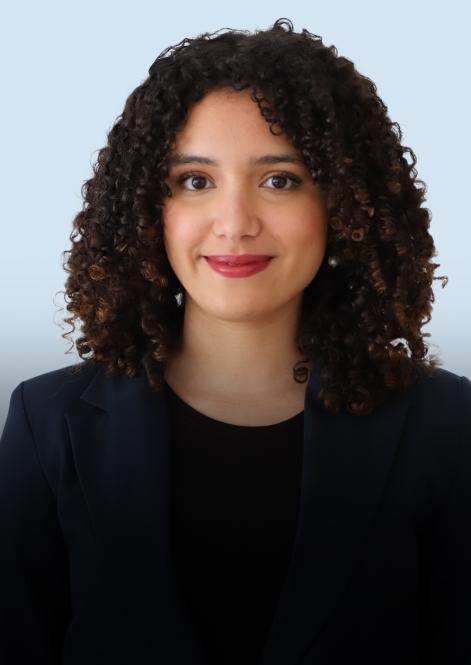
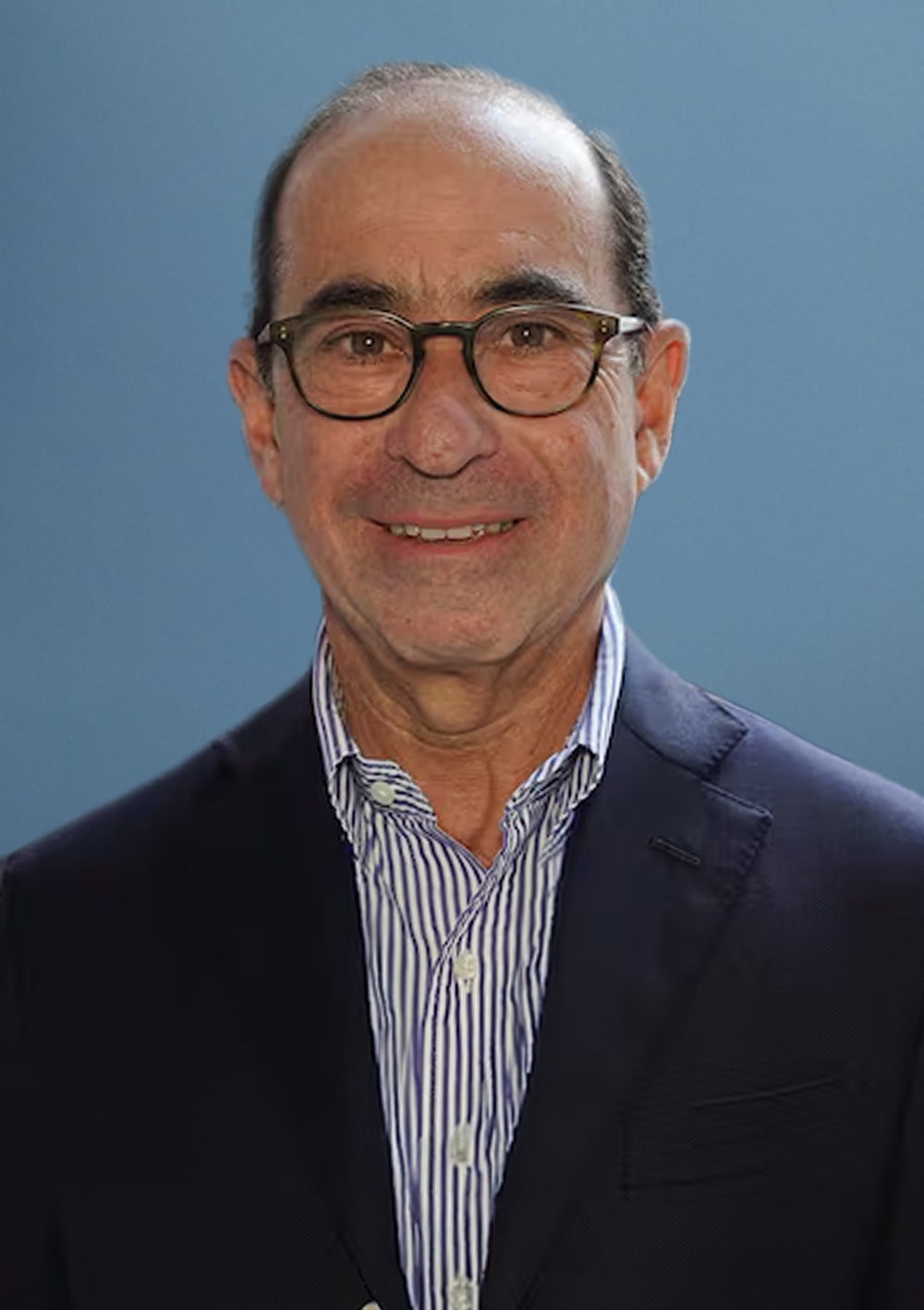
Speakers
Khadija Mamouni
Junior Analyst - International Relations Research Department
...
Ian O. Lesser
Senior Fellow
Ian Lesser is Senior Fellow at the Policy Center for the New South (PCNS). Based in Brussels, he also serves as Distinguished Fellow and Advisor to the President at the German Marshall Fund of the United States (GMF), where he has held several senior leadership roles, including Vice President and Acting President. Dr. Lesser has built a distinguished career at the intersection of transatlantic relations, strategy, and international security. He holds the Chair in Transatlantic Affairs at the College of Europe in Bruges. Before joining GMF, he was a Public Policy Scholar at the Woodrow Wilson International Center for Scholars, Vice President and Director of Studies at the Pacific Council on International Policy, and spent over a decade at the RAND Corporation focusing on s ...
Marcus Vinicius de Freitas
Senior Fellow
Marcus Vinicius De Freitas is Senior Fellow at Policy Center for the New South, focusing on International Law, International Relations and Brazil, and is currently a Visiting Professor of International Law and International Relations at China Foreign Affairs University in Beijing, China. Previously, he was a Professor of The Armando Alvares Penteado Foundation in Sao Paulo, where he served as the coordinator of their International Relations Program from December 2012 until December 2013. He was president of the Sao Paulo Directorate of the Progressive Party, having run for vice governor of the State of Sao Paulo in 2010, where his party polled in third place with more than 1.2 million votes. He also served as the Administrative Director of the Sao Paulo Metropolitan Housing Co ...

RELATED CONTENT

  • Authors
    Souha Majidi
    November 26, 2020
    The Trump Administration “America First” policy changed U.S. foreign policy towards the African continent. Trump opposed trade agreements with several countries, considering them to be unfavorable to the U.S., given the nature of the African market. He shifted the U.S. concern in Africa from fighting against violent extremism and terrorism to a direct competition with other great powers—China and Russia—which had already extensively implemented African strategies. He endeavored to r ...
  • Authors
    November 19, 2020
    Le mandat du président Trump qui, sauf miracle, s’achève en janvier 2021, avait soumis à rude épreuve les alliances des Etats-Unis d’Amérique avec plusieurs pays et entités européens et asiatiques. Plusieurs de ces alliés stratégiques des Etats-Unis avaient, alors, perdu confiance en l’esprit de solidarité qui a toujours empreint l’action étasunienne à leur égard, et amorcé des réflexions sur la construction de leurs propres systèmes de défense. L’arrivée à la Maison Blanche d’un no ...
  • Authors
    October 16, 2020
    Whether President Trump is reelected or not, the United States will, sooner or later, revert to a traditonalist foreign policy of openness and alliances. If Joe Biden beats Donald Trump on November 3, as he is expected to do, the United States will return to a traditionalist brand of foreign policy: one of openness, support for multilateralism, and constructive engagement with allies. But even if Biden doesn’t winwhich is possible—and four more years of Trump’s America First polici ...
  • Authors
    September 28, 2020
    Bank robbers are now and then caught because banks, insurance companies, or robbed personalities promise rewards for the arrest of criminals. In the past, Hollywood took the lead in dreaming up such scenarios. But in early August, the U.S. State Department offered a $10 million reward for information leading “to the identification or location of any person, who works with or for a foreign government for the purpose of interfering with U.S. elections through certain illegal cybe ...
  • Authors
    June 26, 2020
    At the beginning of June, officers from U.S. Customs and Border Protection, usually active on America’s periphery, were deployed to Washington D.C., where President Donald Trump had sighted an internal threat posed by “anarchists, agitators, looters, or lowlifes”. In reality, American citizens were protesting, mostly peacefully, against police brutality, and the killings of African-Americans by cops. Nevertheless, the urban revolt seemed grave enough for the Trump Administrati ...
  • Authors
    June 12, 2020
    The United States has suffered more COVID-19 casualties than any other country and continues to report large numbers of new cases and deaths, and – as evident recently in stock markets – investors remain extremely sensitive to the epidemic’s shifting trends. As every state reopens, including most recently the New York epicenter, the fates of the American economy and of the global economy depend on whether the United States has put the worst of the epidemic behind it, or whether it w ...
  • Authors
    May 27, 2020
    Les tensions dans les relations entre les Etats-Unis et la Chine sont un sujet de préoccupation pour le monde. En dépit des quelques ouvertures éphémères, qui donnent parfois espoir à la détente, la tendance de ces derniers temps est plutôt vers l’escalade. Il ne se passe pas un mois, voire une semaine sans qu’actions, déclarations ou positions de l’un des deux pays contre l’autre ne fasse la Une de l’actualité. Des incidents les plus dangereux en Mer de Chine méridionale, aux mesur ...
  • Authors
    May 22, 2020
    On February 3, 2003, Colin Powell, U.S. President George Bush’s Secretary of State, informed the United Nations Security Council about secret information collected by the U.S. about Iraq’s weapons of mass destructions. “Every statement I make today is backed up by sources, solid sources. These are not assertions,” he said. There was “no doubt in my mind” that Saddam Hussein had a nuclear weapons program, and the invasion of Iraq was urgent and justified, because& ...
  • January 17, 2020
    The drone strike that claimed the life of Iranian general Qasem Soleimani unmasks the limits of so-called "hybrid" – or "asymmetric" – strategies. These low-intensity military operations, conducted through unofficial paramilitary forces, are supposed to allow a weaker state to gain geopolitical advantages without risking an open war with a stronger one. The idea is to gradually accumulate small tactical victories by capitalizing on more powerful states’ lack of appetite for distant ...