The US-Iran Conflict and the New Great-Power Landscape: Transatlantic Strains and China's Strategic Calculus

July 7, 2026

Following recent developments in the Middle East, the Policy Center for the New South is launching a three-part webinar series on the strategic, geopolitical, security, and economic consequences of the US-Iran conflict. 

Building on the publication Hormuz and the Invisible Fractures: The Price of a Distant War – Views from the New South, the series examines the Strait of Hormuz as both a vital maritime chokepoint and a fault line in a changing global order. While the recent U.S.–Iran agreement has eased immediate tensions, the crisis remains ongoing and continues to evolve, making this publication a timely snapshot of a dynamic and still-unfolding geopolitical landscape.

Drawing on the volume's multidisciplinary analysis, the webinars explore the conflict's implications for the New South, global trade routes, energy security, and the evolving international order, while fostering informed discussion on the long-term strategic lessons emerging from the crisis.

This session explores how the US-Iran conflict is reshaping relations among major global powers. The discussion assess the impact of the crisis on transatlantic cohesion, the evolving positions of Europe and the United States, and China's strategic calculations in this changing environment. Particular attention is being paid to the implications for global governance, great-power competition, and the emerging international order.
Speakers
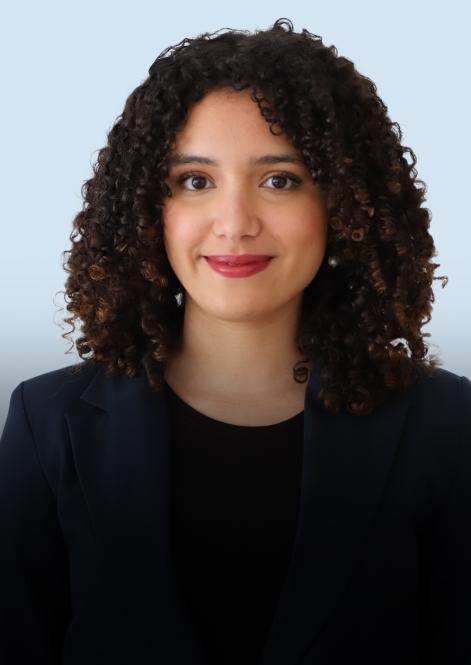
Khadija Mamouni
Junior Analyst - International Relations Research Department
...
Ian O. Lesser
Senior Fellow
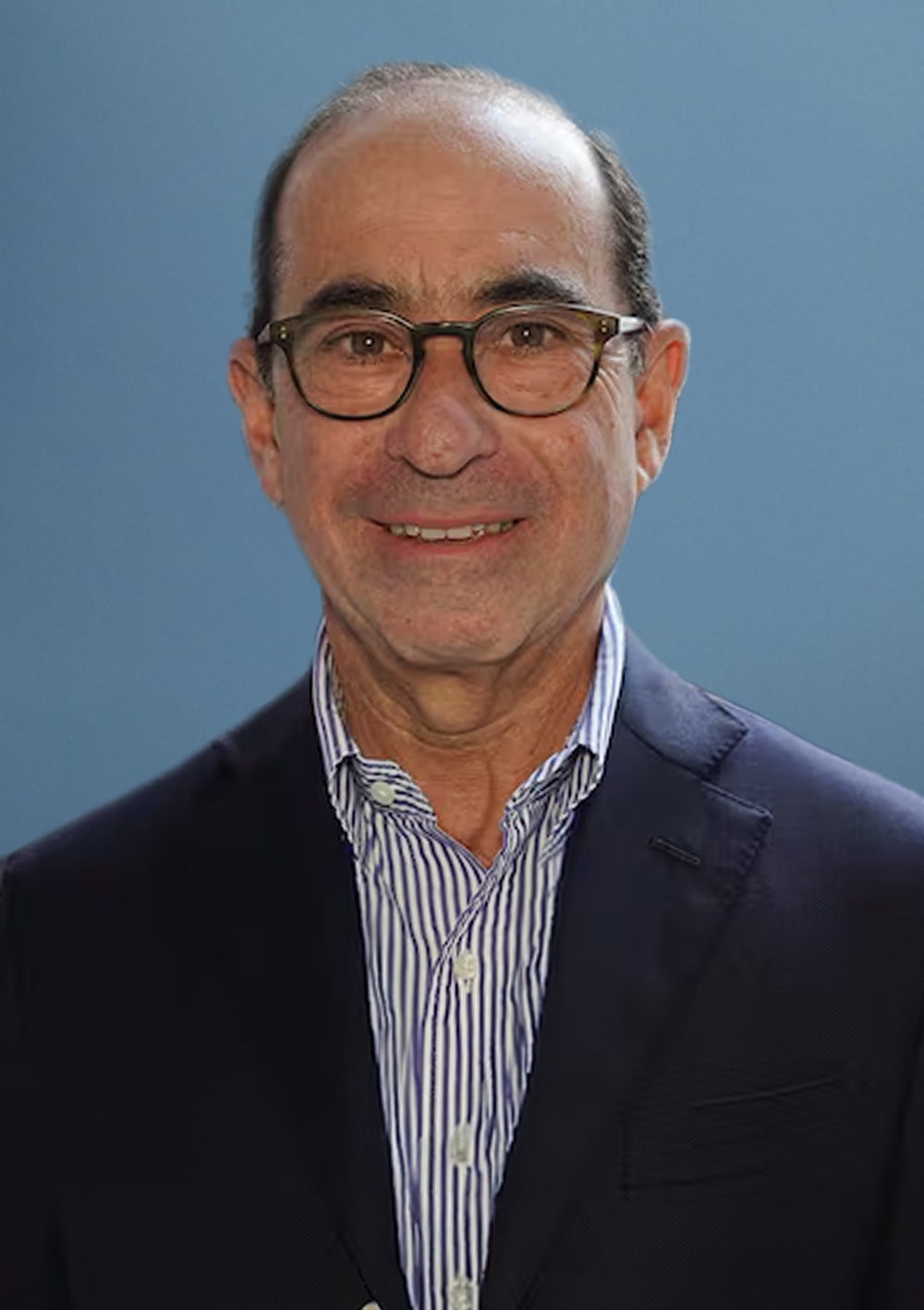
Ian Lesser is Senior Fellow at the Policy Center for the New South (PCNS). Based in Brussels, he also serves as Distinguished Fellow and Advisor to the President at the German Marshall Fund of the United States (GMF), where he has held several senior leadership roles, including Vice President and Acting President. Dr. Lesser has built a distinguished career at the intersection of transatlantic relations, strategy, and international security. He holds the Chair in Transatlantic Affairs at the College of Europe in Bruges. Before joining GMF, he was a Public Policy Scholar at the Woodrow Wilson International Center for Scholars, Vice President and Director of Studies at the Pacific Council on International Policy, and spent over a decade at the RAND Corporation focusing on s ...
Marcus Vinicius de Freitas
Senior Fellow
Marcus Vinicius De Freitas is Senior Fellow at Policy Center for the New South, focusing on International Law, International Relations and Brazil, and is currently a Visiting Professor of International Law and International Relations at China Foreign Affairs University in Beijing, China. Previously, he was a Professor of The Armando Alvares Penteado Foundation in Sao Paulo, where he served as the coordinator of their International Relations Program from December 2012 until December 2013. He was president of the Sao Paulo Directorate of the Progressive Party, having run for vice governor of the State of Sao Paulo in 2010, where his party polled in third place with more than 1.2 million votes. He also served as the Administrative Director of the Sao Paulo Metropolitan Housing Co ...

RELATED CONTENT

  • Authors
    February 11, 2026
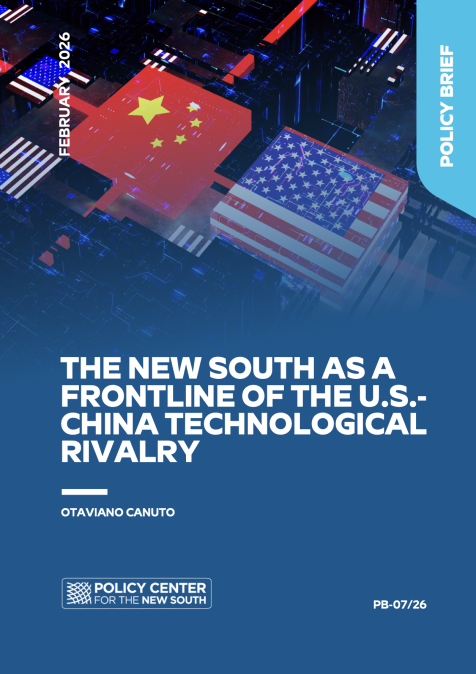
    The U.S.–China technological rivalry has become a central axis of global economic and geopolitical competition. While the United States continues to lead in frontier innovation—most notably in advanced semiconductors and artificial intelligence (AI)—China has consolidated strengths in large-scale implementation, manufacturing capacity, and control over critical segments of global supply chains. These advantages are especially visible in clean energy technologies and in the processin ...
  • January 30, 2026
    En 2019, Donald Trump a proposé d’acheter le Groenland, déclenchant un refus catégorique du Danemark et une tension diplomatique transatlantique. Cette initiative reflétait l’intérêt stratégique et économique des États-Unis pour l’Arctique et ses ressources. L’épisode a mis en lumière l...
  • January 09, 2026
    This episode explores the Trump administration’s confrontational stance toward Venezuela, including sanctions and military posturing and evaluates their effectiveness in undermining Madur ...
  • Authors
    January 5, 2026
    The candidate could not have been more controversial—or more celebrated. Born in Kampala, the capital of Uganda, once ruled by Idi Amin, who famously declared himself “Conqueror of the British Empire” and “King of Scotland,” Zohran Kwama Mamdani, 34, is of Indian descent. His father is an academic, a professor of anthropology at Columbia University, his mother, Mira Nair, is an influential filmmaker. Zohran arrived in the USA on a visa at age seven. No doubt the agents of the feared ...
  • Authors
    December 18, 2025
    The return of President Donald Trump to the White House at the start of 2025 was expected to signal an American retreat from international engagement, especially in regions of traditional security interest, such as southern Europe, North Africa, and the Middle East. To the surprise of many observers around the Mediterranean, and perhaps to the dismay of some in the Trump administration’s ideological orbit, this has not happened. If anything, the second half of 2025 has seen a high d ...
  • November 18, 2025
    The meeting between Donald Trump and Xi Jinping in Busan, South Korea, was more than an exercise in diplomacy. It was an emblematic performance of a world in transformation. Behind the formalities, the cameras, and the studied smiles lay an unspoken recognition: the world is no longer unipolar. The era of American supremacy, sustained for decades through its economic reach, military presence, and ideological projection, is giving way to a more diffuse, multipolar reality. ...
  • Authors
    November 10, 2025
    Almost a year after President Donald Trump’s return to the White House, the United States displays little of the isolationism many of the country’s international partners anticipated, and many of Trump’s supporters desired. From economic sanctions to military intervention, Trump is proving to be something of a foreign policy president, although with distinctly unilateral instincts. This approach is particularly evident in Washington’s current approach to the ‘South’, including Latin ...