Leçons stratégiques, économiques et sécuritaires de la guerre entre les États-Unis et l’Iran

July 10, 2026

À la suite des récents développements au Moyen-Orient, le Policy Center for the New South lance une série de trois webinaires consacrée aux conséquences stratégiques, géopolitiques, sécuritaires et économiques du conflit entre les États-Unis et l’Iran.

S’appuyant sur la publication Hormuz and the Invisible Fractures: The Price of a Distant War – Views from the New South, cette série analyse le détroit d’Ormuz à la fois comme un point de passage maritime stratégique essentiel et comme une ligne de fracture révélatrice des mutations de l’ordre mondial. Si le récent accord entre les États-Unis et l’Iran atténue les tensions immédiates, la crise se poursuit et continue d’évoluer, faisant de cette publication un éclairage particulièrement opportun sur un paysage géopolitique dynamique et encore en pleine recomposition.

À travers une approche pluridisciplinaire, ces webinaires examinent les répercussions du conflit sur les pays du Nouveau Sud, les routes commerciales mondiales, la sécurité énergétique et l’évolution de l’ordre international. Ils offrent également un espace de réflexion sur les enseignements stratégiques de long terme qui se dégagent de cette crise.

Cette session analyse les enseignements stratégiques de la confrontation entre les États-Unis et l’Iran, en mettant en lumière les nouvelles formes de dissuasion, de guerre hybride et de compétition régionale. Elle examine également les conséquences économiques et commerciales du conflit, notamment à travers le détroit d’Hormuz. Enfin, le débat porte sur les répercussions sécuritaires au Moyen-Orient, en Afrique et dans le Sahel, ainsi que sur les implications pour la stabilité régionale et internationale.

Speakers
Fatim Zohra Azouzou
Morocco
Junior Analyst
Fatim Zohra Azouzou is a Junior Analyst at the Policy Center for the New South (PCNS).  At the PCNS, Fatim Zohra Azouzou works on the Geopolitics of Morocco and West African Dynamics focusing on both security and foreign policy dimensions.  Before joining the PCNS in 2024, Fatim Zohra Azouzou contributed to a labour mobility project at the Deutsche Gesellschaft für Internationale Zusammenarbeit (GIZ).  Fatim Zohra Azouzou holds a master’s degree in Global Affairs and an undergraduate degree in International Relations from the Faculty of Governance, Economics & Social Sciences-Mohammed VI Polytechnic University. During her undergraduate studies, Fatim Zohra Azouzou participated in a student exchange program at Sciences Po Paris.  Fati ...
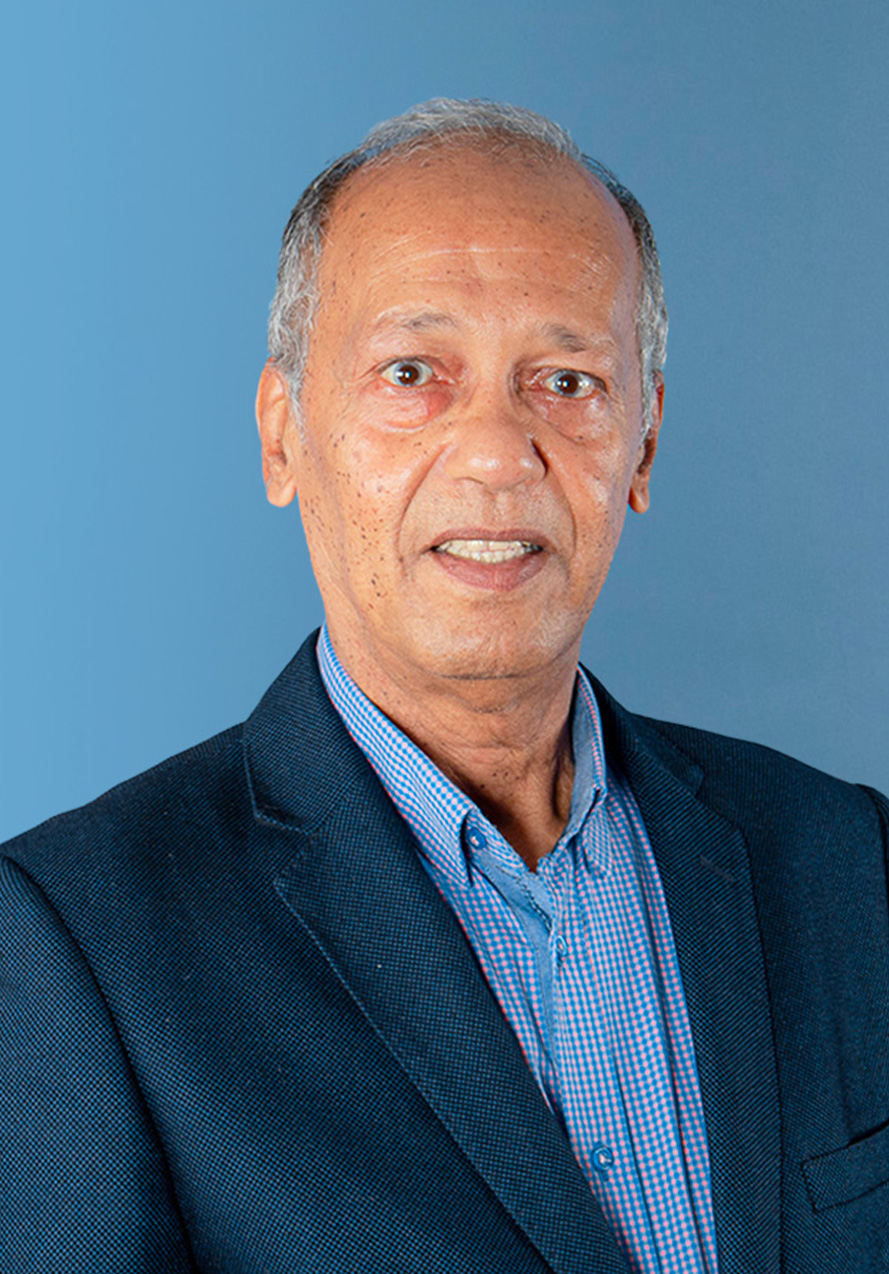
Abdelhak Bassou
Senior Fellow
Abdelhak Bassou is a Senior Fellow at the Policy Center for the New South and a non-resident senior fellow at the Atlantic Council’s Africa Center. He is also an Affiliate Professor at Mohammed VI Polytechnic University. Bassou has had an extensive career in Moroccan National Security, where he served in various capacities including as head of the border division from 1978 to 1993. He was the former director of the Royal Institute of Police in 1998 and served as Head of Regional Security (Errachidia 1999-2003, Sidi Kacem 2003-2005) and as Central Director of General Intelligence from 2006 to 2009.   He holds a master's degree in political science and international studies from the Faculty of Law, Economics, and Social Sciences in Rabat. His academic research delves into ...
Ferid Belhaj
Senior Fellow
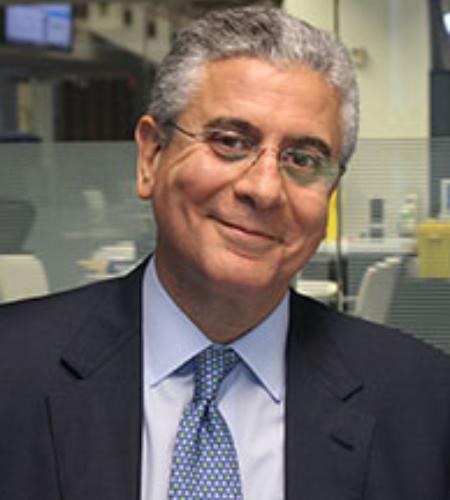
Ferid Belhaj took up the position of World Bank Vice President for Middle East and North Africa on July 1, 2018. Prior to this, he served as the Chief of Staff of the President of the World Bank Group for 15 months. From 2012 to 2017, Mr. Belhaj was World Bank Director for the Middle East, in charge of work programs in Lebanon, Syria, Jordan, Iraq and Iran, based in Beirut, Lebanon. In this capacity, he led the Bank’s engagement on the Syrian refugee crisis and its impact on the region, including the creation of new financing instruments to help countries hosting forcibly displaced people; the ramping up of the Bank drive towards the reconstruction and recovery of Iraq during and after the ISIS invasion and the scaling up of the Bank's commitments to Lebanon and Jordan. Befo ...
Rida Lyammouri
Senior Fellow
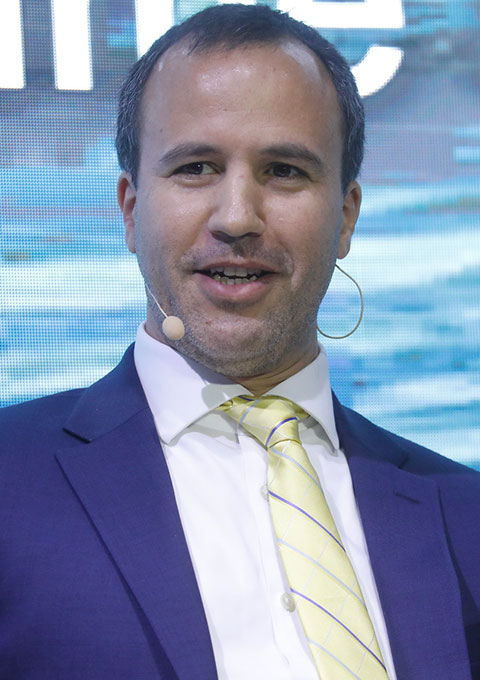
Rida Lyammouri is a senior fellow at the Policy Center for the New South (PCNS). He is also a senior West Africa and Lake Chad Basin researcher and advisor, with expertise in regional conflicts, violent extremism, climate change, migration, and trafficking. His research activities focus on geopolitics and international relations in the West African Sahel and Lake Chad Basin, regions he has worked on for 14 years, including in the field. He has extensive experience supporting both governmental and non-governmental organizations in the areas of international development, security, countering violent extremism and terrorism, preventing conflicts, ensuring humanitarian access, and migration. Mr. Lyammouri has contributed to in-depth research and analysis reports aiming at building ...

RELATED CONTENT

  • Authors
    November 19, 2020
    In October 2014, Burkina Faso entered a new era when a social uprising resulted in the overthrow after 27 years of President Blaise Compaoré. The uprising was triggered by Compaoré’s attempt to amend the constitution so he could run for another term. In late 2015, Roch Marc Christian Kaboré was elected and sworn as a new president with high hopes for a new Burkina Faso. Corruption, democratic reforms, poverty, and economic development dominated President Kaboré’s inauguration speech ...
  • Authors
    August 6, 2020
    Il y a, d’abord, les premières images. Celles d’une gigantesque déflagration. Même les dizaines de déflagrations, dont nous parviennent régulièrement les clichés ou les films, et qui ont embrasé, ces dernières années, le Moyen-Orient, ne nous ont pas habitués à des images de cette violence. Puis, dans tous les esprits, en écho, viennent les théories sur l’origine de l’incident. Nous sommes au Liban. Les hypothèses d’attentat, de nouveau règlement de comptes sanglant entre puis ...
  • Authors
    Hind Zaamoun
    July 29, 2020
    Ce Papier a pour objet de considérer le blocage que connait le processus de résolution des conflits, en prenant la Syrie comme cas d’étude. Il s’agira de mettre l’accent sur les changements instaurés par le nouvel ordre global dans les zones de conflit, avant d’approfondir la réflexion sur les retombées et les limites sur le plan pratique. Pour se faire, l’analyse se focalisera sur l’étude de la transformation des conflits et des nouveaux défis et dysfonctionnements initiés par le n ...
  • Authors
    April 14, 2020
    Parallèlement à l’apparition du Covid-19 au début de l’année en cours, les différents foyers de tensions et de guerres ont vu se développer, entre les belligérants, des escalades dangereuses qui menacent la paix et la sécurité dans le monde. Du Yémen au Sahel, en passant par la Syrie et la Libye, le monde voyait les chances de retrouver la sérénité et la quiétude s’évaporer avec les tirs de mortiers, les raids aériens, les attaques de drones et le renforcement des lignes de fronts e ...
  • Authors
    December 7, 2019
    La présence de la France au Sahel n’est pas un sujet facile à discuter, à commenter ou à traiter. D’une part, l’intervention française, en 2013, (Opération Serval), avait permis de prolonger l’existence de l’Etat malien qui, sans l’opération française, n’aurait pas pu résister aux menées terroristes qui visaient Bamako. D’autre part, la présence française semble ne rien pouvoir changer à l’avancée du terrorisme dans la région, le phénomène semble même gagner du terrain devant l’imp ...
  • Authors
    October 18, 2019
    The third edition of the African Peace and Security Annual Conference (APSACO) was held on June 18-19th 2019 under the theme “Africa's Place and Influence in a Changing World”. The two-day event, organized by Policy Center for the New South (PCNS), was launched with the publication of the Annual Report on Africa’s Geopolitics, Followed by five panels : - Panel 1: Africa and the world or How to balance Mutual perceptions; - Panel 2: Africa and the production of strategic and normati ...
  • Authors
    July 1, 2019
    Few weeks ago, I gained the chance of reading the UN Security Council resolution 2468 of 30 April on MINURSO , and was surprised by the frequently repeated expression of “Morocco, the Frente Polisario, Algeria, and Mauritania”, instead of the previous “all parties and neighbours”. Besides, it was reported that the US representative twice referred to “Morocco, the Frente Polisario, Algeria, and Mauritania” in his short remark in the Security Council meeting1. Shortly after that, I co ...
  • Authors
    July 1, 2019
    One week ago, Bahrain has hosted the "Peace to Prosperity" workshop to discuss what the United States has described as the economic part of President Donald Trump's "deal of the century", his proposal for solving the Israeli-Palestinian conflict. The Palestinian leadership boycotted the meeting on June 25 and 26 in Manama, leading critics to question the credibility of the event. Below is an international press review of events preceding the workshop by Helmut Sorge,&nbsp ...
  • Authors
    Joseph Hammond
    May 16, 2019
    The author is an alumnus of the 2018 Atlantic Dialogues Emerging Leaders program Last year Ethiopian Prime Minister Abiy Ahmed took a big step toward stabilizing the Horn of Africa when he agreed to sign a long-disputed peace agreement with Eritrea - one that previous Ethiopian governments had refused to sign beca of the border demarcation within the agreement would seem to leave Ethiopia to blame for sparking the conflict in 1998 that eventually caused as many ...
  • Authors
    May 3, 2019
    La chancelière allemande, Angela Merkel, effectue une visite officielle au Burkina Faso en ces débuts du mois de mai, accompagnée d’une délégation d’hommes d’affaires et de responsables de l’économie. La visite est assortie d’une participation à un Sommet du G5 Sahel, dont le Burkina assure présentement la présidence. Si la question de la sécurité et de la lutte contre le terrorisme reste toujours de mise, l’intérêt allemand pour la région, et surtout la nature de la délé ...