Leçons stratégiques, économiques et sécuritaires de la guerre entre les États-Unis et l’Iran

July 10, 2026

À la suite des récents développements au Moyen-Orient, le Policy Center for the New South lance une série de trois webinaires consacrée aux conséquences stratégiques, géopolitiques, sécuritaires et économiques du conflit entre les États-Unis et l’Iran.

S’appuyant sur la publication Hormuz and the Invisible Fractures: The Price of a Distant War – Views from the New South, cette série analyse le détroit d’Ormuz à la fois comme un point de passage maritime stratégique essentiel et comme une ligne de fracture révélatrice des mutations de l’ordre mondial. Si le récent accord entre les États-Unis et l’Iran atténue les tensions immédiates, la crise se poursuit et continue d’évoluer, faisant de cette publication un éclairage particulièrement opportun sur un paysage géopolitique dynamique et encore en pleine recomposition.

À travers une approche pluridisciplinaire, ces webinaires examinent les répercussions du conflit sur les pays du Nouveau Sud, les routes commerciales mondiales, la sécurité énergétique et l’évolution de l’ordre international. Ils offrent également un espace de réflexion sur les enseignements stratégiques de long terme qui se dégagent de cette crise.

Cette session analyse les enseignements stratégiques de la confrontation entre les États-Unis et l’Iran, en mettant en lumière les nouvelles formes de dissuasion, de guerre hybride et de compétition régionale. Elle examine également les conséquences économiques et commerciales du conflit, notamment à travers le détroit d’Hormuz. Enfin, le débat porte sur les répercussions sécuritaires au Moyen-Orient, en Afrique et dans le Sahel, ainsi que sur les implications pour la stabilité régionale et internationale.

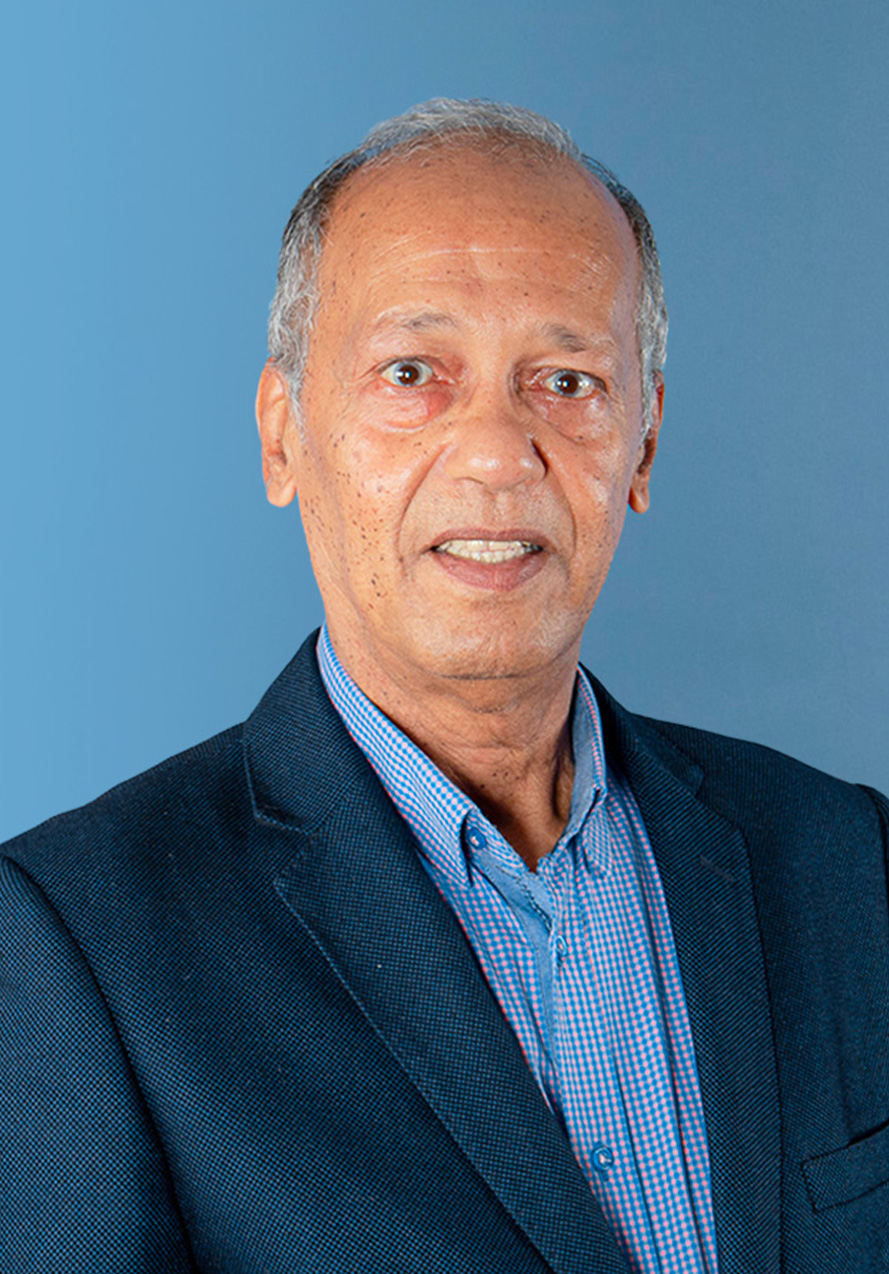
Speakers
Fatim Zohra Azouzou
Morocco
Junior Analyst
Fatim Zohra Azouzou is a Junior Analyst at the Policy Center for the New South (PCNS).  At the PCNS, Fatim Zohra Azouzou works on the Geopolitics of Morocco and West African Dynamics focusing on both security and foreign policy dimensions.  Before joining the PCNS in 2024, Fatim Zohra Azouzou contributed to a labour mobility project at the Deutsche Gesellschaft für Internationale Zusammenarbeit (GIZ).  Fatim Zohra Azouzou holds a master’s degree in Global Affairs and an undergraduate degree in International Relations from the Faculty of Governance, Economics & Social Sciences-Mohammed VI Polytechnic University. During her undergraduate studies, Fatim Zohra Azouzou participated in a student exchange program at Sciences Po Paris.  Fati ...
Abdelhak Bassou
Senior Fellow
Abdelhak Bassou is a Senior Fellow at the Policy Center for the New South and a non-resident senior fellow at the Atlantic Council’s Africa Center. He is also an Affiliate Professor at Mohammed VI Polytechnic University. Bassou has had an extensive career in Moroccan National Security, where he served in various capacities including as head of the border division from 1978 to 1993. He was the former director of the Royal Institute of Police in 1998 and served as Head of Regional Security (Errachidia 1999-2003, Sidi Kacem 2003-2005) and as Central Director of General Intelligence from 2006 to 2009.   He holds a master's degree in political science and international studies from the Faculty of Law, Economics, and Social Sciences in Rabat. His academic research delves into ...
Ferid Belhaj
Senior Fellow
Ferid Belhaj took up the position of World Bank Vice President for Middle East and North Africa on July 1, 2018. Prior to this, he served as the Chief of Staff of the President of the World Bank Group for 15 months. From 2012 to 2017, Mr. Belhaj was World Bank Director for the Middle East, in charge of work programs in Lebanon, Syria, Jordan, Iraq and Iran, based in Beirut, Lebanon. In this capacity, he led the Bank’s engagement on the Syrian refugee crisis and its impact on the region, including the creation of new financing instruments to help countries hosting forcibly displaced people; the ramping up of the Bank drive towards the reconstruction and recovery of Iraq during and after the ISIS invasion and the scaling up of the Bank's commitments to Lebanon and Jordan. Befo ...
Rida Lyammouri
Senior Fellow
Rida Lyammouri is a senior fellow at the Policy Center for the New South (PCNS). He is also a senior West Africa and Lake Chad Basin researcher and advisor, with expertise in regional conflicts, violent extremism, climate change, migration, and trafficking. His research activities focus on geopolitics and international relations in the West African Sahel and Lake Chad Basin, regions he has worked on for 14 years, including in the field. He has extensive experience supporting both governmental and non-governmental organizations in the areas of international development, security, countering violent extremism and terrorism, preventing conflicts, ensuring humanitarian access, and migration. Mr. Lyammouri has contributed to in-depth research and analysis reports aiming at building ...

RELATED CONTENT

  • Authors
    April 6, 2018
    The young women sitting in the Olympic ice hockey stadium of Kwandong, South Korea, were dressed like a group of gorgeous stewardesses on an outing after graduating from flight school, or as if they were celebrating the survival of an emergency landing. They applauded in a very methodical fashion, a well-studied rhythm that their eternal Supreme leader Kim Jong-Un certainly did not learn at his Swiss boarding school “Liebefeld Steinhoelzi” near Bern, Switzerland. Who dares to confir ...
  • Authors
    March 6, 2017
    The big question for Africans on safeguarding peace and security is whether the Pan-African organization, which aspires to lead the continent towards peace and prosperity and to which the continent’s predisposed human and material resource potential, is able to ensure the fulfillment of these ambitions through its own institutions? In other words, can the African Union manage African crises with independent African means? This fundamental question calls for other more intermediate ...
  • Authors
    December 7, 2015
    The Euro-Mediterranean Partnership was initiated with the aim to build a space of shared prosperity and security among all the countries in the region. The achievement of this objective, however, continues to be challenged by several geopolitical, economic and social factors. In such a context, there is now a greater urgency to adapt the approach and the instruments, thus allowing Euro-Mediterranean partners to seize opportunities towards an effective area of shared stability and pr ...
  • From

    16
    5:30 pm February 2022
    Rida Lyammouri, Senior Fellow at Policy Center for the New South, will be speaking at the webinar “security and governence in africa: sahel and libya” organized by frica Study Group in partnership with The Middle East Institute. The security dynamics of the Maghreb and the Sahel are intertwined and the consequences of the Libyan conflict on the Sahel have been serious. Since its beginning in 2011, this conflict has triggered global concern about the economic, security, and geostrategic impacts on the Sahel. Current threats are posed by the illicit transfer, destabilizing accumulation, and misuse of arms, as well as the flow of armed groups and mercenaries. Despite considerable international efforts, especially by African countries, the Sahel is still experiencing one of the ...