Gouvernance et biens communs : repenser la coopération dans un monde fragmenté

January 16, 2025

Alors que les défis globaux – changement climatique, transition énergétique, montée des conflits – s'accumulent, les outils multilatéraux peinent à offrir des solutions efficaces. La montée du protectionnisme et des intérêts nationaux exacerbe ces tensions, tandis que l'Afrique, riche en ressources stratégiques, s'impose comme un acteur incontournable. La souveraineté économique, la transformation locale des ressources et l'équité dans les échanges deviennent des impératifs pour une gouvernance mondiale qui réponde véritablement aux besoins des populations et des générations futures.

Speakers
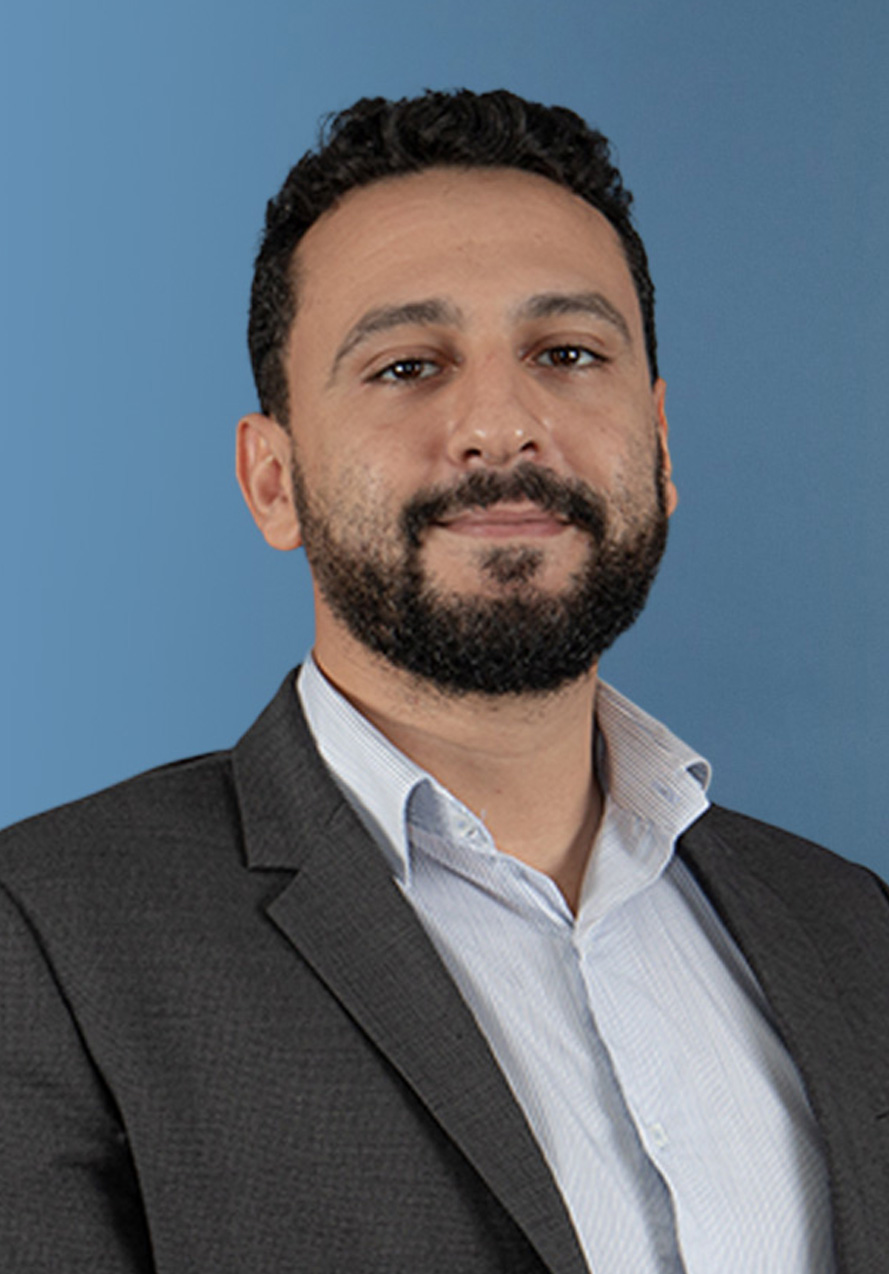
Akram Zaoui
Chargé de Mission to the Executive President
Akram Zaoui is a Senior International Relations Specialist and Chargé de Mission to the Executive President at the Policy Center for the New South (PCNS). Prior to this, he was Manager of Research Support and the Public Policy Lab at the PCNS. His main area of interest is the geopolitical economy of the Extended Middle East and North Africa (MENA) region. From 2018 to 2020, Zaoui was the coordinator of a network of 70+ civil society organizations (CSOs) across France, working with foundations, government, local communities, and the private sector. Zaoui holds a dual degree in corporate and public management from HEC Paris and Sciences Po, as well as a bachelor's degree (licence) in history from Université Paris 1 Panthéon-Sorbonne. He audited courses in Iranian and Shia Stud ...

  • Authors
    February 13, 2026
    On January 27, 2026, the Spanish government adopted a Royal Decree for the extraordinary regularization of persons in an irregular administrative situation or involved in an international protection procedure. The choice of a royal decree allows for the rapid implementation of the measure, without the need for parliamentary debate, in a political context that is highly polarized on migration issues.Regularization applies to people who can prove their presence on Spanish territory be ...
  • Authors
    February 13, 2026
    Le 27 janvier 2026, le gouvernement espagnol a adopté par décret royal une mesure de régularisation extraordinaire visant les personnes en situation administrative irrégulière ou engagées dans une procédure de protection internationale. Le choix du décret royal permet une mise en œuvre rapide de la mesure, sans passage par un débat parlementaire, dans un contexte politique fortement polarisé sur les questions migratoires.La régularisation concerne les personnes pouvant justifier d’u ...
  • Authors
    February 12, 2026
    Divergent regulatory regimes for data, driven by different motivations, ranging from privacy protection in the European Union to information control in China, could eventually produce distinctively different, and possibly contradictory, bodies of data. Artificial-intelligence models trained on those datasets could produce differing and possibly even conflicting outputs. To the extent that AI outputs start to shape human perception and to influence decisions, in governments and ...
  • Authors
    February 11, 2026
    The U.S.–China technological rivalry has become a central axis of global economic and geopolitical competition. While the United States continues to lead in frontier innovation—most notably in advanced semiconductors and artificial intelligence (AI)—China has consolidated strengths in large-scale implementation, manufacturing capacity, and control over critical segments of global supply chains. These advantages are especially visible in clean energy technologies and in the processin ...
  • Authors
    Amine Ghoulidi
    February 5, 2026
    This Paper was originally published on orient-online.com  The Western Mediterranean’s exposure to the Sahel is usually framed in terms of security spillovers and crisis management. This paper argues that this framing misreads how Sahelian access conditions now shape Mediterranean integration. Morocco’s Atlantic Initiative is a state-led corridor strategy combining Atlantic port infrastructure, inland transit routes, and energy systems to connect landlocked Sahelian economi ...
  • February 4, 2026
    This article examines the quiet but profound implications of the erosion of U.S.-led hegemony for small and vulnerable states of the New South. While the post-1945 international order was never egalitarian, it offered predictability: power was organized through law, and sovereignty for weaker states rested less on justice than on procedural stability. Davos 2026 marked a turning point in the public acknowledgment of that system’s unraveling. Statements by leading Western figures rev ...
  • Authors
    February 3, 2026
    From the use of tariffs as a foreign policy instrument, to the weaponization of critical resources, and from targeted sanctions to attacks on critical infrastructure, economic security is at the forefront of international debates. The aggressive use of economic instruments for strategic purposes has become an explicit feature of international affairs, in a way not seen since the interwar period[1]. Beyond the weaponization of resources of all kinds, an increasing ‘monetization’ is u ...
  • January 30, 2026
    En 2019, Donald Trump a proposé d’acheter le Groenland, déclenchant un refus catégorique du Danemark et une tension diplomatique transatlantique. Cette initiative reflétait l’intérêt stratégique et économique des États-Unis pour l’Arctique et ses ressources. L’épisode a mis en lumière l...
  • Authors
    January 30, 2026
    The 2026 World Economic Forum (WEF) Annual Meeting took place in an environment of elevated economic uncertainty and structural risk repricing. According to the Global Risks Report (GRR) 2026, geoeconomic confrontation and economic downturn rank among the most severe near-term risks, while inflation-related risks and economic volatility have risen sharply in perceived severity compared with the previous edition. Notably, 50% of respondents to the Global Risks Perception Survey ...