APSACO 2021 - WORKSHOP : Report Presentation: ISIS Files

June 23, 2021

The events in Iraq and Syria over the last seven years constitute one of the darkest pages in recent history. The so-called Islamic State (IS) managed to control an area the size of Britain and dominated its residents with an iron fist. It subjugated, terrorized and confiscated property of religious minorities. It mercilessly killed its opponents. It created a pervasive system of enforcement of strict moral codes, meting out corporal punishment to those who did not abide by them. It used its territory to plan and incite terrorist attacks worldwide. And it even officially introduced slavery, sanctioning it with religious edicts and imposing it on thousands of women from the Yazidi minority. In order to do all this the Islamic State created an extremely sophisticated bureaucracy. Seeing itself as a state, it created ministries, administrations, a complex tax collection system, even a consumer protection agency. And this bureaucracy, like any other, left behind a huge paper trail, a myriad of documents that reveal the inner workings of one of history’s deadliest and best organized terrorist organizations. Starting in 2015, as the Iraqi government and the international community had begun to take the battle to IS, New York Times reporter Rukmini Callimachi spent several months embedded with the Iraqi military as it liberated areas of Iraq from IS. While reporting on the military efforts, Callimachi also obtained permission from the Iraqi army officials she was embedded with to retrieve some of the documents IS had left behind. She ended up collecting some 15,000 pages of documents which came to be known as “The ISIS Files”. Callimachi and The New York Times understood the importance of making this collection, which documents a dark page of recent history that has hardly been completely turned, available to the public. In 2018, The New York Times and the George Washington University announced an exclusive partnership to digitize, translate, analyze, and publish roughly 15,000 pages of internal ISIS Files. Extensive work has been done by GW to preserve and present the information contained in The ISIS Files in an accurate, accessible, secure, and impartial manner. The ISIS Files project is ongoing with documents in additional themes being made available as they are completed. ------ Moderator: Mehdi Benomar, Head of Department of Research in International Relations, Policy Center for the New South Speakers: Devorah Margolin, Adjunct Professor, George Washington University Discussants: - Dina Hussein, Counterterrorism Policy Lead for EMEA, Facebook - El Mostafa Rezrazi, Senior Fellow, Policy Center for the New South

Speakers
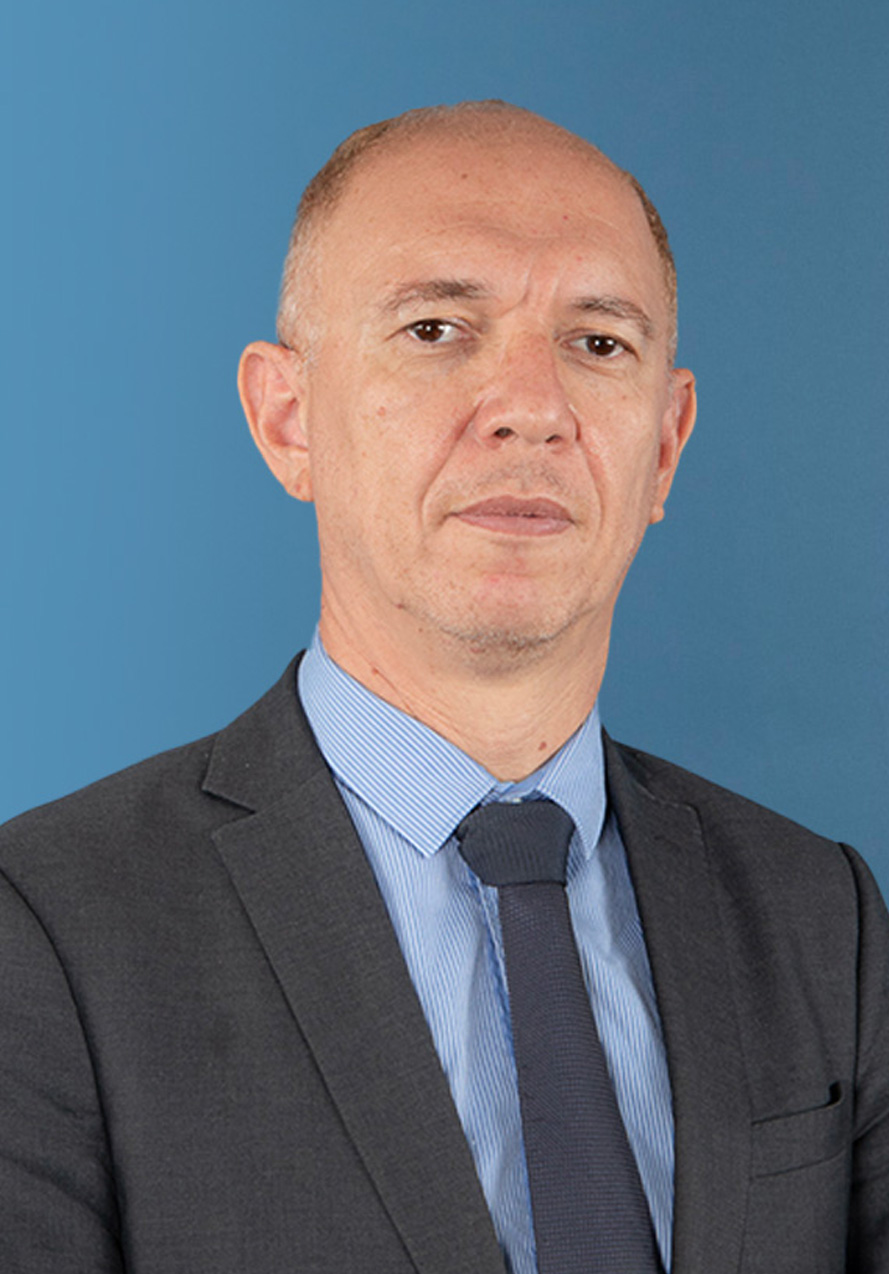
Mehdi Benomar
Head – Research in International Relations
Mehdi Benomar has cumulated 18 years of experience as analyst and occupied several positions in public organizations: in National Defense as head of division (2000-2008), in the cabinet of the ministry of Mines and Energy (2010-12) and in OCP Group (2012-2017). He also served as senior consultant in private firm Global Intelligence Partners (G.I.P.) (2008-2010) in Rabat. He specialized in strategic monitoring issues and contributed on different topics related to proliferation, energy and development in sub-Saharan Africa. Nuclear Engineer, he graduated from the Commissariat à l'énergie atomique et aux énergies alternatives and has a master in sciences. ...
El Mostafa Rezrazi
Senior Fellow
Dr El Mostafa Rezrazi is a professor of Crisis Management, and Security Studies and a Senior Fellow at the Policy Center for the New South who focuses on Terrorism, Security and East Asia studies. His area of Expertise covers Afro-Asian Affairs, Strategic & Security Studies, Terrorism, Extremism and Deradicalization, mainly from the view of Criminal; Legal and Forensic Psychology.  He got his Ph.D. in Regional & International Affairs from the University of Tokyo in 1998, and later a Doctorate from the University of Mohammed V on the Psychological dynamisms of Suicide Bombers (2014). He is the executive director of the Moroccan Observatory on Extremism and Violence, Director of the African Center for Asian Studies, Rabat. Currently, he is Visiting Professor a ...
RELATED CONTENT

  • August 18, 2020
    Fragile, poor, and conflict-affected Sahelian countries of Mali, Niger, and Burkina Faso were expected to witness catastrophic health and security situations following the emergence of COVID-19. However, the number of cases and deaths remained relatively low in all three countries compared to other parts of the world. Violent extremist organizations (VEOs) attempted to exploit the pandemic in their narratives, while continuing to conduct attacks in the region. Violence and attacks b ...
  • Authors
    August 6, 2020
    Il y a, d’abord, les premières images. Celles d’une gigantesque déflagration. Même les dizaines de déflagrations, dont nous parviennent régulièrement les clichés ou les films, et qui ont embrasé, ces dernières années, le Moyen-Orient, ne nous ont pas habitués à des images de cette violence. Puis, dans tous les esprits, en écho, viennent les théories sur l’origine de l’incident. Nous sommes au Liban. Les hypothèses d’attentat, de nouveau règlement de comptes sanglant entre puis ...
  • Authors
    Amine Harastani Madani
    July 29, 2020
    Parler de de l’Union africaine sans évoquer la place qu’y occupe le Maroc serait incomplet, car le Royaume a contribué activement à la construction africaine, s’en est séparé, en signe de protestation contre le non-respect de la légalité internationale par les organes de la défunte Organisation de l’Unité africaine pour, ensuite, y retourner, dans le cadre de l’Union africaine. Doit-on parler de retour ou d’admission ? Indépendamment de la réponse apportée à cette question, il convi ...
  • Authors
    June 26, 2020
    Peace was near, most of the 5000 Taliban fighters were released—one condition for serious peace negotiations—and a city was selected for the negotiations between the Taliban and the Afghan government: Doha, Qatar. But an invisible enemy committed sabotage. COVID-19 brought down members of both sides. Worse: the Taliban’s supreme leader, Mullah Hibatullah Akhundzada was rumored to be on the threshold of death. NATO’s new senior civilian representative in Afghanistan, Stefano Pontecor ...
  • Authors
    June 15, 2020
    La Covid-19, menace conjoncturelle en dépit des impacts néfastes attendus, ne doit pas nous détourner complètement de menaces en phase de devenir structurelles et menacer toute une région dans son existence. Le terrorisme au Sahel et dans la région du Lac Tchad s’est avéré résilient face aux efforts jusqu’à présent déployés. Non seulement il n’a pas été vaincu au Sahel mais il avance vers son objectif final : atteindre l’Atlantique à travers les pays côtiers de l’Afrique de l’O ...
  • May 04, 2020
    Elie Tenenbaum passe ici en revue les principaux développements ayant trait à l’intervention française dans la région du Sahel. Après quelques rappels liminaires sur la géographie régiona ...
  • Authors
    April 23, 2020
    Que ne doit-on concéder de nos libertés pour être protégés du Coronavirus ? partout dans notre monde en détresse -même chez les plus libéraux- l’Etat est appelé à la rescousse, il est sollicité et, même, avec insistance. Il est le seul à pouvoir déployer les moyens nécessaires à nous sauver, et personne d’autre que lui n’est assez fort pour imposer la discipline salvatrice. Exit tous les autres acteurs, place à l’Etat. Silence et respect, le Régalien est de retour. Hobbes retro ...
  • Authors
    April 14, 2020
    Parallèlement à l’apparition du Covid-19 au début de l’année en cours, les différents foyers de tensions et de guerres ont vu se développer, entre les belligérants, des escalades dangereuses qui menacent la paix et la sécurité dans le monde. Du Yémen au Sahel, en passant par la Syrie et la Libye, le monde voyait les chances de retrouver la sérénité et la quiétude s’évaporer avec les tirs de mortiers, les raids aériens, les attaques de drones et le renforcement des lignes de fronts e ...
  • Authors
    Hamza M'Jahed
    March 11, 2020
    West Africa has always played an essential role in African geopolitics. Although less thought of than north, south and east Africa, because of their envied strategic openings into both the Mediterranean Sea and Indian Ocean, West African countries are transforming themselves into a major African hub. For Britain, the completion of Brexit heralds a new era in its contemporary history. In this framework, West Africa is a crucial region for the United Kingdom’s long-term strategic goal ...
  • Authors
    Seleman Yusuph Kitenge
    February 3, 2020
    In November 2019, as a veteran peace advocate, I had a rare opportunity to be invited to attend the 2nd Paris Peace Forum in France through the nomination of the Policy Center for the New South. This gathering was of high paramount for me considering my role as a peace advocate but also as a former member of the National Working Group in Prevention of Violent Extremism in Tanzania. As an invited guest I did not want to be part of every agenda of the forum so instead, I targeted spec ...