APSACO 2021 - WORKSHOP : Report Presentation: ISIS Files

June 23, 2021

The events in Iraq and Syria over the last seven years constitute one of the darkest pages in recent history. The so-called Islamic State (IS) managed to control an area the size of Britain and dominated its residents with an iron fist. It subjugated, terrorized and confiscated property of religious minorities. It mercilessly killed its opponents. It created a pervasive system of enforcement of strict moral codes, meting out corporal punishment to those who did not abide by them. It used its territory to plan and incite terrorist attacks worldwide. And it even officially introduced slavery, sanctioning it with religious edicts and imposing it on thousands of women from the Yazidi minority. In order to do all this the Islamic State created an extremely sophisticated bureaucracy. Seeing itself as a state, it created ministries, administrations, a complex tax collection system, even a consumer protection agency. And this bureaucracy, like any other, left behind a huge paper trail, a myriad of documents that reveal the inner workings of one of history’s deadliest and best organized terrorist organizations. Starting in 2015, as the Iraqi government and the international community had begun to take the battle to IS, New York Times reporter Rukmini Callimachi spent several months embedded with the Iraqi military as it liberated areas of Iraq from IS. While reporting on the military efforts, Callimachi also obtained permission from the Iraqi army officials she was embedded with to retrieve some of the documents IS had left behind. She ended up collecting some 15,000 pages of documents which came to be known as “The ISIS Files”. Callimachi and The New York Times understood the importance of making this collection, which documents a dark page of recent history that has hardly been completely turned, available to the public. In 2018, The New York Times and the George Washington University announced an exclusive partnership to digitize, translate, analyze, and publish roughly 15,000 pages of internal ISIS Files. Extensive work has been done by GW to preserve and present the information contained in The ISIS Files in an accurate, accessible, secure, and impartial manner. The ISIS Files project is ongoing with documents in additional themes being made available as they are completed. ------ Moderator: Mehdi Benomar, Head of Department of Research in International Relations, Policy Center for the New South Speakers: Devorah Margolin, Adjunct Professor, George Washington University Discussants: - Dina Hussein, Counterterrorism Policy Lead for EMEA, Facebook - El Mostafa Rezrazi, Senior Fellow, Policy Center for the New South

Speakers
Mehdi Benomar
Head – Research in International Relations
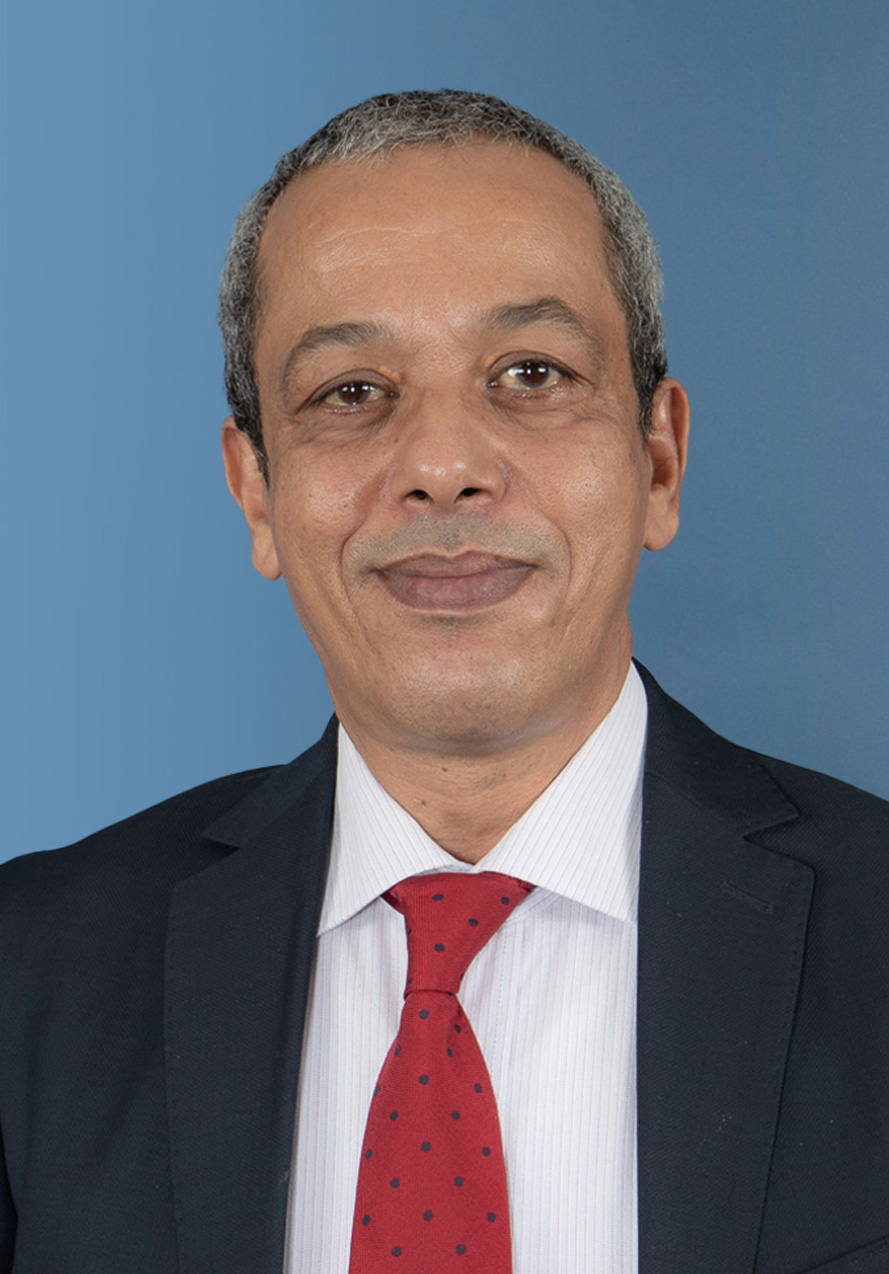
Mehdi Benomar has cumulated 18 years of experience as analyst and occupied several positions in public organizations: in National Defense as head of division (2000-2008), in the cabinet of the ministry of Mines and Energy (2010-12) and in OCP Group (2012-2017). He also served as senior consultant in private firm Global Intelligence Partners (G.I.P.) (2008-2010) in Rabat. He specialized in strategic monitoring issues and contributed on different topics related to proliferation, energy and development in sub-Saharan Africa. Nuclear Engineer, he graduated from the Commissariat à l'énergie atomique et aux énergies alternatives and has a master in sciences. ...
El Mostafa Rezrazi
Senior Fellow
Dr El Mostafa Rezrazi is a professor of Crisis Management, and Security Studies and a Senior Fellow at the Policy Center for the New South who focuses on Terrorism, Security and East Asia studies. His area of Expertise covers Afro-Asian Affairs, Strategic & Security Studies, Terrorism, Extremism and Deradicalization, mainly from the view of Criminal; Legal and Forensic Psychology.  He got his Ph.D. in Regional & International Affairs from the University of Tokyo in 1998, and later a Doctorate from the University of Mohammed V on the Psychological dynamisms of Suicide Bombers (2014). He is the executive director of the Moroccan Observatory on Extremism and Violence, Director of the African Center for Asian Studies, Rabat. Currently, he is Visiting Professor a ...
RELATED CONTENT

  • Authors
    December 1, 2025
    This Paper was originally published on transatlantic.org The contemporary maritime domain is increasingly recognized as a geopolitical and economic space, but also as an environment intertwined with human, social, ecological, and governance systems ashore. The United Nations Institute for Disarmament Research (UNIDIR 2024) report argues that maritime security has evolved from a narrow naval and state-centered concern into a multidimensional issue embedded in global human s ...
  • Authors
    November 28, 2025
    Le 17 novembre 2025, le Conseil de sécurité de l’Organisation des Nations Unies (ONU) a adopté la résolution 2803 par laquelle il fait sien le Plan d’ensemble du Président Donald Trump ayant pour objectif de mettre fin au conflit à Gaza. Contrairement à ce qu’on pourrait croire, l’initiative américaine ne date pas du 2ème mandat de l’Administration Trump. Elle a vu le jour durant son premier mandat.  Le Plan entériné par la résolution du Conseil de sécurité de l’ONU, surnommé ‘ ...
  • Authors
    Khadija Mamouni
    July 3, 2025
    While global attention has been focused on the Houthi rebel attacks in the Red Sea, Somali pirates have seized the opportunity to escalate their own attacks and violence along these strategic waterways. The threat is increasing dramatically due to an emerging network of allies between Al-Shabaab, the Houthis, and Somali pirates, as well as overlapping national and international factors. The first successful Somali piracy incident since 2017 took place in December 2023, a month ...
  • Authors
    Fadoua Ammari
    March 13, 2025
    L’extrémisme violent au Sahel trouve ses racines dans une combinaison de facteurs historique, politique et socio-économique, tels que l’instabilité étatique, la marginalisation de certaines communautés et l’influence d’idéologies transnationales. Ce Papier retrace l’émergence et l’expansion de groupes comme Al-Qaïda au Maghreb Islamique (AQMI) et l’État islamique au Grand Sahara (EIGS), ainsi que leur fragmentation, illustrée par la création de nouveaux groupes, comme le ...
  • February 19, 2024
    In this interview with Dr. Josh Martin, UNOCT Expert in Violent Extremism, USA,we examine the factors leading individuals to adopt violent beliefs and terrorist affiliations, we also explore current initiatives for monitoring susceptible individuals as we analyze the role of AI in ...
  • February 19, 2024
    In this interview with Dr. Aynabat Atayeva, Chief, International Hub on Behavioral Insights to Counter Terrorism, UNOCT, Qatar. We explore the dynamics of terrorist recruitment as we examine how terrorist organizations exploit a sense of belonging to lure vulnerable individuals. Moreove...
  • February 14, 2024
    In this interview with Dr. Jeffrey Kaplan, Senior Researcher, Danube Institute, Hungary, we explore the understanding of counterterrorism, focusing on terrorist recruitment processes and effective countermeasures. We examine the mechanisms of recruitment, strategies in counterterrorism ...