This podcast features Ingmar Juergens, CEO and co-founder of Climate & Company, discussing the challenges and opportunities of sustainability transitions and cross-regional cooperatio ...
Dans ce podcast, Helmut reçoit Abdelhak Bassou pour discuter du retour de la peur de la guerre en Europe.L’échange aborde les vulnérabilités européennes face aux tensions avec la Russie, ...
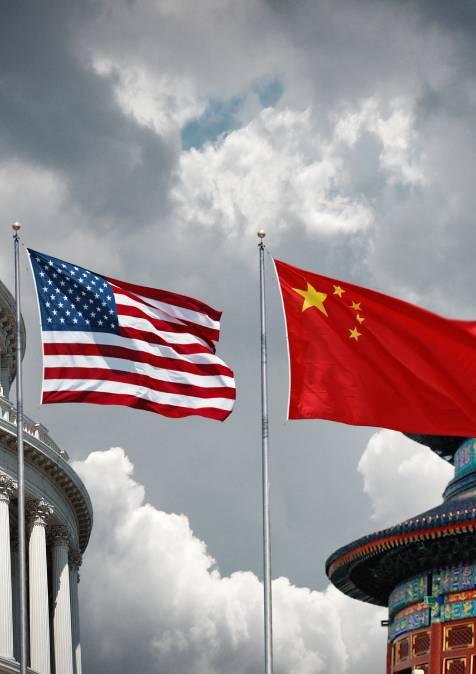
The meeting between Donald Trump and Xi Jinping in Beijing this week goes far beyond the traditional framework of a bilateral encounter between the world’s two largest economies. In many respects, it is a symbolic moment in the transition toward a new international order—one increasingly shaped not only by great-power competition but also by the Global South’s growing political consciousness and strategic relevance.
...
Cette publication est le résultat de la 19° édition des Dialogues Stratégiques, organisée le 24 octobre 2025, où ont été présentés et débattus 15 chapitres autour de deux thématiques majeures: « Recompositions et dynamiques croisées en Asie du Sud-Ouest : Focus sur PIran, l'Afghanistan, le Pakistan et l'Inde » et « Nouvelles perceptions de l'Afrique dans les stratégies internationales».Au croisement de ces discussions, émerge une interrogation centrale: comment les États et les régi ...
The podcast discusses the evolving Africa–Europe partnership following the 2025 AU–EU summit, highlighting the need to move beyond short-term migration management and extractive economic ...
This podcast examines Spain’s latest immigration reform, which aims to regularize hundreds of thousands of undocumented migrants. It discusses the economic rationale behind the policy, hi ...
On February 10, 2026, the European Parliament endorsed an asylum reform that expands the use of the ‘safe third country’ concept and introduces a common European Union list of ‘safe countries of origin’. This reform represents more than a technical adjustment of asylum procedures, as it signals a structural reorientation of EU asylum governance toward faster filtering of claims and greater reliance on external actors.The concept of a safe third country already exists in European asy ...
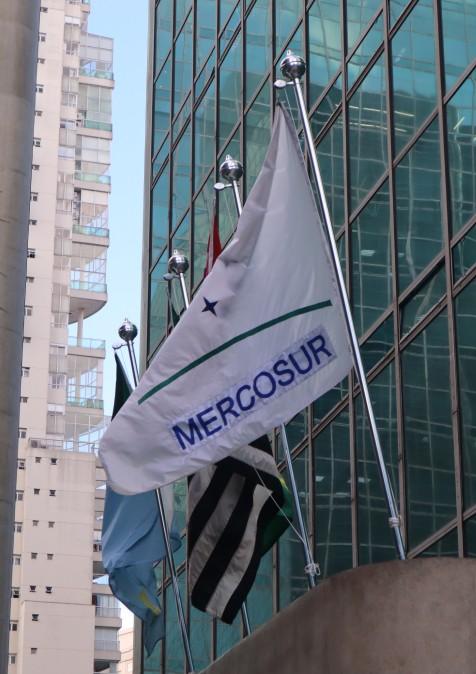
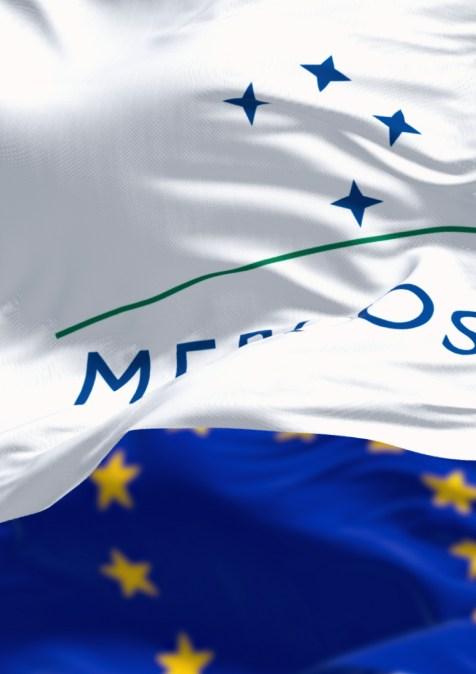
Trade agreements, in earlier eras, were instruments of exchange. In the present one, they have become instruments of order. The EU–Mercosur agreement, after more than two decades of negotiation, reaches a decisive moment—not merely as a framework for tariff reduction, but as a mechanism through which competing visions of economic organization are projected and contested.
...
Following Donald Trump’s statements asserting that the United States should acquire Greenland, fundamental questions about sovereignty, alliances, and the authority of international law have resurfaced. The Greenland case reveals the tensions between security imperatives, alliance cohes...
Le général Olivier Tramond analyse la réduction de la présence militaire française en Afrique comme un changement stratégique profond plutôt qu’un renoncement. Au-delà des coups d’État et ...
Le 27 janvier 2026, le gouvernement espagnol a adopté par décret royal une mesure de régularisation extraordinaire visant les personnes en situation administrative irrégulière ou engagées dans une procédure de protection internationale. Le choix du décret royal permet une mise en œuvre rapide de la mesure, sans passage par un débat parlementaire, dans un contexte politique fortement polarisé sur les questions migratoires.La régularisation concerne les personnes pouvant justifier d’u ...
On January 27, 2026, the Spanish government adopted a Royal Decree for the extraordinary regularization of persons in an irregular administrative situation or involved in an international protection procedure. The choice of a royal decree allows for the rapid implementation of the measure, without the need for parliamentary debate, in a political context that is highly polarized on migration issues.Regularization applies to people who can prove their presence on Spanish territory be ...
Divergent regulatory regimes for data, driven by different motivations, ranging from privacy protection in the European Union to information control in China, could eventually produce distinctively different, and possibly contradictory, bodies of data. Artificial-intelligence models trained on those datasets could produce differing and possibly even conflicting outputs. To the extent that AI outputs start to shape human perception and to influence decisions, in governments and ...
En 2019, Donald Trump a proposé d’acheter le Groenland, déclenchant un refus catégorique du Danemark et une tension diplomatique transatlantique. Cette initiative reflétait l’intérêt stratégique et économique des États-Unis pour l’Arctique et ses ressources. L’épisode a mis en lumière l...
This Opinion was originally published by the Hanns Seidel Stiftung on January 19th, 2026. The author of this opinion, Gabriela Keseberg Dávalos, is a 2013 alumna of the Atlantic Dialogues Emerging Leaders Program. The signing of the EU–Mercosur agreement is a small geopolitical miracle. Signed on 17 January 2026 in Paraguay, it arrives at a moment when Europe is unmistakably being cast aside by the United States. Meanwhile Latin America, and with it, the Mer ...
This episode examines the apparent backlash against the European Green Deal and questions whether Europe is witnessing a true reversal of its environmental ambitions. Dominique Bocquet ar ...
In this episode of the Policy Center for the New South podcast, we examine the first 100 days of German Chancellor Friedrich Merz. Together with Bilal Mali, International Relations Specia ...
The return of President Donald Trump to the White House at the start of 2025 was expected to signal an American retreat from international engagement, especially in regions of traditional security interest, such as southern Europe, North Africa, and the Middle East. To the surprise of many observers around the Mediterranean, and perhaps to the dismay of some in the Trump administration’s ideological orbit, this has not happened. If anything, the second half of 2025 has seen a high d ...
An unusual gesture indeed—the dictator, more often than not a recluse, withdrawn behind his fortress and protected by 1.2 million armed soldiers, finally admitted what had long been seen on the battlefield in Ukraine and by spy satellites far above. North Korean soldiers—possibly 12,000 of them—are fighting on front lines alongside Russian troops, and they are falling or being wounded; some 4,000 men so far, by current estimates.
...
Morocco–EU relations have evolved from the Barcelona Process to an advanced, differentiated strategic partnership. The new Mediterranean Pact focuses on citizens, sustainable economies, a ...
In this episode, we examine the Mattei Plan, launched by Italian Prime Minister Giorgia Meloni, and its implications for Italy’s engagement with Africa, particularly around migration. Fra ...
Les Dialogues Stratégiques, fruit d'une collaboration entre le HEC Center for Geopolitics et le Policy Center for the New South, constituent une plateforme d'échanges biannuelle dédiée à l'analyse des grandes tendances mondiales et des problématiques régionalesqui lient l'Europe et l'Afrique. Réunissant praticiens, décideurs, universitaires et représentants desmédias, cet espace de réflexion permet de décoder les transformations en cours et de proposer des réponses aux défis contemp ...
The UN’s funding crisis, fueled by unpaid contributions and expanding mandates, is worsening as U.S. disengagement strains peacekeeping and development efforts, particularly in Africa. This shift also strengthens rivals like China and Russia and raises deeper questions about the legitim...
Depuis plus de trente ans, les relations entre le Maroc et l’Union européenne (UE) se caractérisent par un équilibre entre pragmatisme politique, ouverture économique et convergence stratégique. Le processus de Barcelone de 1995 a marqué le début d’une coopération euro-méditerranéenne renforcée, consolidée par l’Accord du Statut avancé en 2008 et le Partenariat euro-marocain de prospérité partagée, faisant de l’UE le principal partenaire économique du Royaume. Dans un contexte régio ...
A direct threatIs history repeating itself? That was the question circulating at NATO headquarters in Brussels as officials observed a joint Russian-Belarusian strategic exercise held in Belarus last September, Ukraine’s neighbor and Moscow’s staunch ally.
...
This episode explores how green hydrogen can drive Morocco’s energy transition and economic development, with a focus on export opportunities to Europe, integration into industrial value chains, and the development of supporting infrastructure. It highlights financing mechanisms and tec...
Professor David Luke, Director of the Institute for Africa at LSE, explores Africa’s economic potential and its ties with Europe. He discusses demographics, trade asymmetries, the African ...
This policy brief analyzes the first 100 days in office of Chancellor Friedrich Merz, which have been marked by an assertive foreign policy, ambitious security reforms, and a shift toward economic pragmatism. Merz has sought to reestablish Germany as a ‘leading middle power’, emphasizing closer European coordination, renewed transatlantic engagement, and unwavering support for Ukraine. However, his approach to the Gaza conflict, characterized by alignment with U.S. positions and rel ...
The Mattei Plan, launched by far-right Italian Prime Minister Giorgia Meloni, aims to redefine Italy’s engagement with Africa through a strategic blend of political vision, development cooperation, and economic diplomacy. Framed as a non- predatory alternative to traditional models, the Plan seeks to position Italy as a credible and constructive partner by promoting co-creation with African stakeholders and delivering concrete, results-oriented projects. Central to its approach is t ...
This paper was originally published on tandfonline.comThis study investigates the long-term impact of hosting the FIFA World Cup on unemployment using panel data of 10 countries from 1983 to 2022. The empirical analysis used two estimation techniques namely the Robust Weighted Least Squares (RWLS) and Estimated Generalized Least Squares (EGLS) with fixed and random effects. Our findings reveal that hosting the FIFA World Cup can reduce long-term unemployment by 2.86% to 3.60% over f ...