Publications /
Opinion
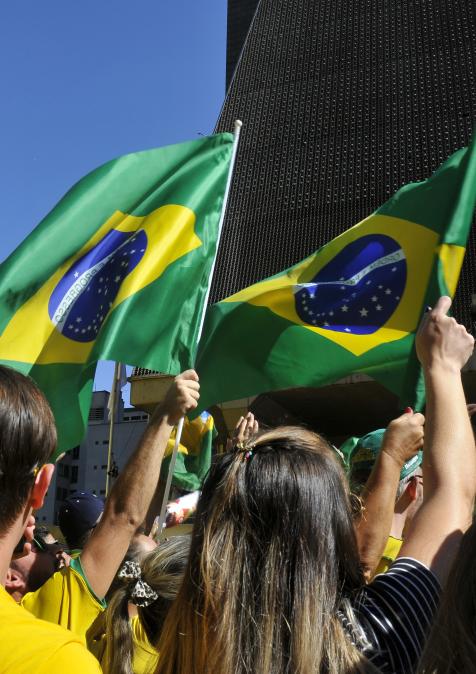
Luiz Inácio Lula da Silva’s victory brings to an end one of the most closely contested elections in Brazil’s recent history. Before any broader analysis, however, a qualification is necessary. Supreme Court Justice Cristiano Zanin’s controversial decision to extend voting hours sparked debate over the electoral process. Although the measure was not mathematically decisive in Lula’s come-from-behind victory, the episode risks fuelling challenges to the result and further eroding political trust. In a country urgently in need of reconciliation, institutions must preserve the confidence of winners and losers alike through clear decisions and transparent explanations.
This election offers important lessons about the exhaustion of two political movements that have dominated Brazilian public life.
The first concerns Lula and the Workers’ Party. Lula begins what is expected to be his final term without having secured a political successor of comparable stature. After four presidential victories, the Brazilian left remains dependent on a leader whose personal standing exceeds that of his party. It lacks renewal, a new generation of national leaders, and an original agenda for the changes Brazil needs. Lula has won, but the movement built around him has yet to explain how it intends to survive him.
That renewal requires confronting the gap between past achievements and present expectations. Recalling programmes that improved lives is legitimate, but voters also want to know how Brazil will boost productivity, improve public services, and create opportunities for younger generations. The next government cannot treat electoral victory as an endorsement of everything it has done. It will need to rebuild confidence among those who supported Lula reluctantly, as well as those who voted against him.
The second lesson concerns the right. Bolsonarism has never represented the entire Brazilian right, nor has it embodied the full range of values that a modern right could offer: fiscal responsibility, economic freedom, legal certainty, an efficient state, and strong institutions. Jair Bolsonaro gradually turned his movement into a family enterprise, culminating in the selection of his son, Flávio Bolsonaro, as its presidential candidate. Turning Bolsonarism into a dynasty came at a price. The right must now decide whether to remain dependent on one family or build an identity of its own.
A credible alternative will require leaders who can accept electoral defeat, develop serious policy proposals, and compete beyond a loyal political base. Security, taxation, and public spending deserve proposals that can withstand scrutiny and be translated into effective government. The right’s future will depend on whether it can convert social influence into competent administration and offer voters more than permanent mobilisation against the Workers’ Party.
Another warning concerns the transformation of politics into digital entertainment. Political figures with enormous social media followings increasingly convert followers, views, and controversy into votes. That political capital is real. Yet the skills needed to dominate public attention differ from those required to negotiate legislation, manage budgets, and deliver public services. Those who have risen rapidly through social media must now demonstrate that visibility can be translated into results.
Digital campaigning also encourages political actors to sustain confrontation after an election. Outrage keeps supporters engaged, while compromise can easily be portrayed as betrayal. Governing, however, requires agreements whose benefits may emerge slowly and attract little online attention. Brazil will struggle to address its problems if its leaders continue to behave as though every decision were another opportunity to produce campaign material.
The election also sends a message abroad. The rapprochement between sections of the Brazilian right and Donald Trump, and their willingness to import elements of a Trumpist political agenda, failed to deliver the expected result. Brazil should maintain a strong relationship with the United States while assessing each commitment against its own economic and diplomatic interests. Cooperation with Washington must remain compatible with productive relations with China and other partners. Strategic autonomy means preserving that freedom to negotiate.
One final lesson concerns the problems that will outlast this election unless the next government addresses them directly. Four challenges merit particular attention.
Corruption remains one of Brazil’s greatest obstacles to development. It diverts resources, distorts competition, and undermines confidence in public institutions. Combating it requires professional investigations, transparent procurement, and consistent accountability, including when wrongdoing involves political allies. Successive governments have promised to confront corruption. A more lasting contribution would be to establish safeguards that endure regardless of who holds office.
Education demands an equally serious commitment. A system that allows pupils to progress through school without understanding what they read leaves them functionally illiterate despite their formal qualifications. This failure restricts access to skilled employment and weakens people’s ability to assess information, understand public debate, and exercise citizenship independently. Improving literacy, supporting teachers, and ensuring that progression reflects genuine learning must remain ongoing priorities, backed by clear measures of achievement.
Public security is another fundamental obligation. Protection from violence lies at the heart of the compact between the state and its citizens. Brazil cannot accept fear as an ordinary condition of daily life, nor allow criminal organisations to dictate how communities live and businesses operate. The response requires effective policing, stronger investigative capacity, and greater coordination across the justice system. Firm enforcement and credible penalties must apply to violent and property crime as well as to white-collar offences. Financial power and political connections cannot provide immunity from accountability, just as poverty cannot justify arbitrary treatment by the state.
Finally, Brazil needs deep political-party reform. Parties should act as guardians of democracy by developing programmes, preparing leaders, and taking responsibility for those they nominate. In the digital age, too many have become vehicles for personalities whose visibility outweighs their preparation for public office. Online popularity may help win an election, but parties remain responsible for assessing competence, integrity, and commitment to constitutional government. They must also create credible routes for renewal, enabling capable people to advance through work and experience rather than family connections or follower counts.
These four challenges offer Lula an opportunity to define his final legacy. Four presidential victories have already secured his place in Brazilian history. Meaningful progress against corruption, educational failure, and violence, alongside a stronger party system, would improve the conditions under which future governments operate. Such a legacy would endure beyond his personal leadership and give substance to the renewal his political movement needs.
Perhaps this election’s greatest significance lies less in Lula’s victory than in the possible end of two political cycles. Brazil needs a left capable of surviving Lula and a right capable of surviving the Bolsonaro family. Both will need to recruit new leaders, tolerate internal debate, and explain how their proposals would improve everyday life.
Over the next four years, the challenge will be to build a politics less reliant on family names, political saviours, and algorithms, and more firmly anchored in institutions and long-term decision-making. The twilight of Lula and Bolsonaro may offer Brazil a new beginning, provided the country uses this opportunity to prepare a generation capable of governing beyond them.