Publications /
Policy Brief

Back
Tribal Dynamics in the Sahel
Authors
October 9, 2019

This paper suggests that tribal dynamics of power structure are key in reestablishing peace and development in the region. The Sahel region’s security challenges are directly influenced by tribalism and ethnic dynamics. In recent decades mistreatment, favoritism, and corruption allowed criminality and multidimensional conflicts to flourish. This is evident in Mali, Niger, Burkina Faso, Libya, and Chad. Lightly governed and poorly secured regions in these countries became more strategic than ever to national, regional, and international actors due to the rise of militancy, criminal activities, and intercommunity violence. Beyond key cities and towns, these actors struggled and continue to look for the magic formula that will bring sustainable peace.

RELATED CONTENT

  • Authors
    October 29, 2026
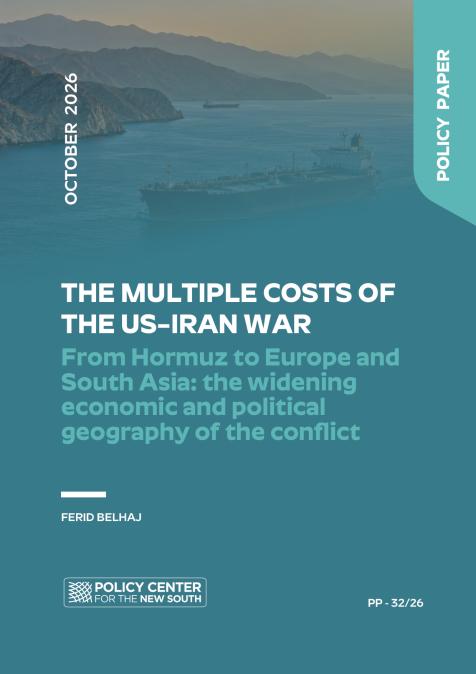
    Wars are decided by those who hold military power, but their costs are increasingly borne by those who have little or no voice in the decisions that start them. The US–Iran war shows this imbalance very clearly. Its economic consequences have gone far beyond the battlefield and have disrupted energy markets, trade routes, food supplies, public finances and investment in the Gulf, Europe, Africa and Asia. The most striking feature of the conflict, however, is not only the size of the ...
  • October 28, 2026
    Depuis 2016, le Policy Center for the New South et le Centre de Géopolitique de l’école HEC Paris organisent chaque année deux éditions des « Dialogues Stratégiques ». Cette plateforme d’analyse et d’échange réunit des experts, des chercheurs provenant de différents think-tanks et du mo...
  • Authors
    Niagalé Bagayoko
    Eugène Berg
    Pierre Berthelot
    Vincent Campredon
    Christophe Chabert
    Alain Oudot De Dainville
    Emmanuel Veron
    October 28, 2026
    Bientôt disponible en vente. Cet ouvrage est issu de la 20e édition des Dialogues Stratégiques, organisée le 6 mai 2026. Il s’articule autour de deux thématiques : « Souverainetés critiques : sécuriser les infrastructures essentielles et les ressources stratégiques » et « La Méditerranée : entre coopération régionale et rivalités globales ». La première partie examine les conditions dans lesquelles les États peuvent protéger leurs infrastructures et maitriser leur accès au ...
  • Authors
    October 13, 2026
    “Every gun that is made, every warship launched, every rocket fired signifies in the final sense, a theft from those who hunger and are not fed, those who are cold and are not clothed.”President Dwight Eisenhower, April 16, 1953 This paper examines the economic and human impacts of the first six months of the Iran war—from February to the end of August 2026—on Iran’s Arab neighbors and compares these impacts with those on the three countries directly involved—Iran, Israel and t ...
  • Authors
    Lina Jaoid
    October 8, 2026
    In the two years since the fall of Bashar al-Assad in Syria, Russia has restructured its Mediterranean presence. Although Russia’s limited and increasingly conditional access to the Khmeimim and Tartus facilities in Syria has been preserved, its presence in the country has morphed from Assad’s ‘patron-client’ configuration to a more negotiated engagement. Simultaneously, Russia has upgraded its force-projection and logistical infrastructure in eastern Libya, giving it an access path ...
  • Authors
    September 30, 2026
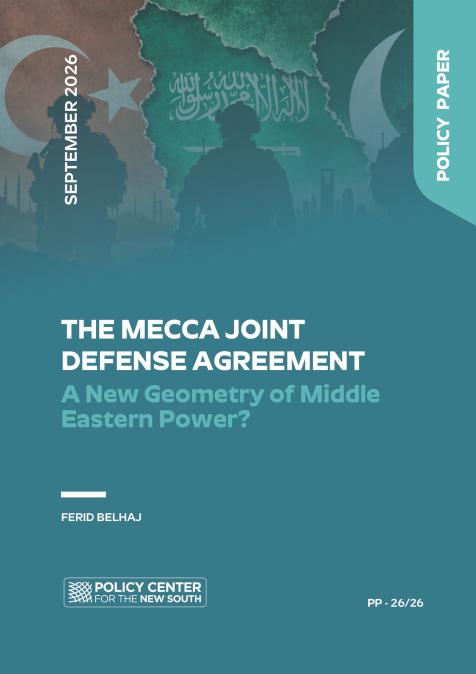
    On August 7, 2026, Saudi Arabia, Turkey, and Pakistan signed the Mecca Joint Défense Agreement, a collective-defense pact widely compared to NATO’s Article 5. This essay argues that the comparison is misleading. Mecca borrows NATO’s language of solidarity without yet possessing NATO’s institutional machinery, and the Houthi offensive against Saudi Arabia in September 2026 provided an early and revealing test of what the agreement actually means in practice. Neither Pakistan nor Turk ...
  • Authors
    September 23, 2026
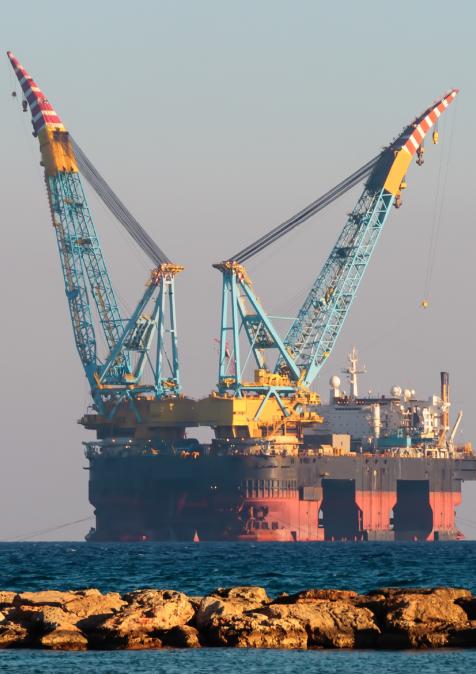
    Depuis 2010, environ, on sait que la Méditerranée orientale est une nouvelle province gazière. Des ressources gazières ont en effet été découvertes au large de quatre pays ou territoires, l’Égypte, Israël, Chypre et Gaza. Deux d’entre eux sont devenus producteurs et exportateurs de gaz naturel, l’Égypte et Israël. Au large de Gaza, le champ gazier de Gaza Marine n’a jamais été développé et il est très peu probable qu’il le soit prochainement en raison des très fortes tensions entre ...
  • Authors
    September 23, 2026
    Since around 2010, it has been known that the Eastern Mediterranean is a new gas province. Gas resources have indeed been discovered offshore four countries or territories: Egypt, Israel, Cyprus and Gaza. Two of them have become producers and exporters of natural gas, Egypt and Israel. Off the coast of Gaza, the Gaza Marine gas field has never been developed, and it is highly unlikely to be developed anytime soon given the very high tensions between the State of Israel and Hamas. By ...