Publications /
Opinion
The skepticism is obvious. “The term ‘Global South’ is in fact an overly simplistic categorization that fails to capture the diversity and complexity of the countries it encompasses,” noted the three authors who signed the foreword to the Annual Trends Report, titled ‘The Rise of Global South: New Consensus wanted’. “Some emerging economies, as they gain prominence on the global stage, may increasingly resist being labeled as ‘South’. Therefore, it is vital to redefine what the Global South stands for.” Three global think tanks united, sharing minds and messages, attempting to decipher the future in a chaotic world. The Annual Trends Report, signed by Karim El Aynaoui, Executive President of the Policy Center for the New South, Paolo Magri, Executive Vice President of the Italian Institute for International Political Studies, and Samir Saran, President of the Observer Research Foundation, is a monumental research and analytical project, analyzing trends, focusing on prevailing tendencies and inclinations. It has 32 chapters, covering topics including digital transition, the menace of de-dollarization, and difficult access to outer space.
“It is vital to redefine, what the Global South stands for,” noted El Aynaoui, Magri, and Saran. “The rise of the South, and its growing impact on the 21st century international order, has become increasingly evident. Its collective economic might, for instance, has grown significantly in just a few decades. Additionally, how countries of the South organize themselves over the next decade will likely have a profound impact on the global balance of power and the contours of the new world order.”
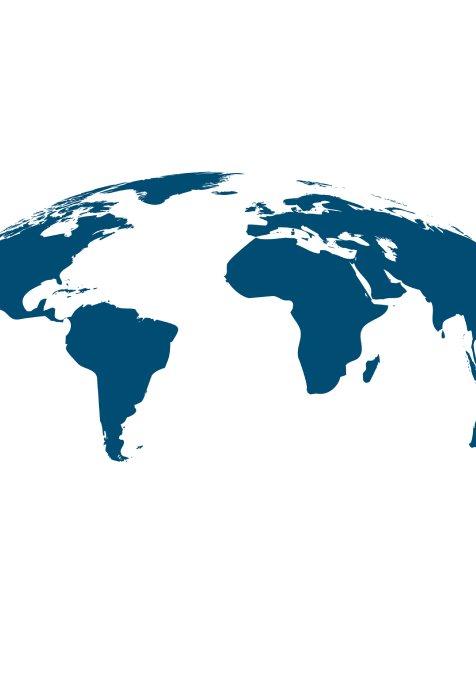
“Everyone is talking about the Global South,” reported AP ( September 6, 2023), “but what is it?” AP reporter David Rising noted that despite how it sounds, “it’s not really a geographical term. Many countries included in the Global South, are located in the Northern Hemisphere, such as China and India and all of those in the northern half of Africa. Australia and New Zealand, both in the southern hemisphere, are not in the global south.” Confused? Stewart Patrick of the Carnegie Endowment for International Peace explained (August 15, 2023): “Today the members of the G77, now 134 countries strong, regularly refer to themselves as the ‘Global South’, and the UN has launched multiple bodies and initiatives to respond to their needs and aspirations, including a UN office for South-South cooperation”.
Even the Secretary General of the United Nations, Antonio Guterres, has accepted the term ‘Global South’, explaining in November 2023, when the world’s population reached 8 billion, that “many countries of the Global South face huge debts, increasing poverty and hunger, and the growing impacts of the climate crisis.” Is the term helpful? “Among other limitations,” argues Carnegie analyst Stewart Patrick, “the category fails to account for the impressive growth that many of its ostensible members have enjoyed in recent decades.”
The question today is whether the Global South label, “whatever its past relevance still makes any sense,” Patrick wrote. “Neither Mexico nor Turkey are members of G77, thus both are positioned outside the formal boundaries of the south.” The Brussels-based economic think tank Bruegel defined (March 13, 2023) membership of the Global South based on gross domestic product per capita, using GDP at market exchange rates estimated by the World Bank: “All countries with 2021 GDP per capita above $15000 are considered part of the Global North, with the addition of EU members Bulgaria and Romania,(GDP per capita $ 12,221 and $ 14,858 respectively) Under that definition, both Russia and Ukraine are in the Global South, as are China and India.” The Annual Trends Report asked in one chapter whether the enlargement of BRICS is “a time to celebrate?” BRICS—Brazil, Russia, India, China, and South Africa united in a global mega trade organization—after 15 years of existence has (on January 1, 2024) enlarged its group to include Egypt, Ethiopia, Iran, Saudi Arabia, and the United Arab Emirates. Is it a challenge to fear?
Shifts and Realignments
Developing BRICS into a powerful organization, challenging the west and the dollar, insisting on their rightful presence in international institutions such as the International Monetary Fund, or at the UN Security Council. Whether labelled the Global South or the equally undefined New South, the questions remain: whether the BRICS partners will be able to overcome their profound differences, for example between India and China, which, not long ago, were entangled in a war at their borders. “The dualism between India and China represents one of the most significant divisions within the group,” states Filippo Fasulo, Co-Head Geo-economics Centre of ISPI. “If China’s explicit objective is to lead the Global South, India’s ambition is the same. Furthermore, the five original (BRICS) countries have different positions concerning the West, with China and Russia placing more emphasis on confrontation. These divisions will emerge in the coming months, when discussing concrete proposals, especially in the economic field, will be necessary.”
Amitendu Palit, Senior Research Fellow and Research Lead at the Institute of South Asian Studies, notes in the Annual Trends Report that China and India are “long estranged neighbors. Their relations have worsened after military clashes in the high Himalayas in June 2020.” The result: “Strained Sino-Indian ties have impacted deliberations at major global forums like the G-20.” It is unclear confirms Niall Duggan, Lecturer, Department of Government and Politics, University College Cork, how new BRICS members will benefit China in terms of increasing its overall influence in the global economy, which is necessary to create a multipolar world. To add complexity to the issue, Saudi Arabia and the UAE are part of the U.S. security umbrella, and Egypt and Ethiopia receive large amounts of Western aid, all of which helps these countries to balance Chinese influence in BRICS. Iran and Saudi Arabia “have long been in a battle over regional influence,” Duggan writes, and “Egypt and Ethiopia have a long running water security dispute over the Nile waters.” The expansion of the BRICS group, “will create issues in term of turning economic power into structural power that can reform the global order.”
“That today’s world is fragmented needs no explination”, argues Harsh V. Pant, Director of Studies and Head of the Strategic Studies Program of ORF, and Professor of International Relations at King’s India Institute. But “great power confrontation is back with a bang and the global multilateral order is unable to provide an effective framework for governance. With a war waging in Europe and a potential for multiple crises in the Indo-Pacific, cooperation among global players remain a commodity in short supply.”
“Russia’s military aggression against Ukraine has prompted further shifts and realignments,” observes Senior ISPI Advisor Antonio Missiroli, in the ‘Rise of Global South: New Consensus Wanted’. The resolution approved by the UN General Assembly in early March 2022 that condemned Russia’s invasion passed with 141 yes votes, 5 no votes, 35 abstentions, and 14 absents, yet the sum of those not supporting it once again represented more than half of the world’s population, and included large chunks of the Global South. The G7-led sanctions against Moscow that followed have also showcased the reluctance of a number of medium-sized and smaller countries to toe the line of what President Putin calls the “collective West.” Paradoxically, sanctions have even encouraged some countries (starting with China) to aim at de-dollarization of their economies in order to reduce their own exposure to external pressure. “While a substantial de-dollarization of the world economy looks still unlikely in the short or medium term,” says Missiroli, “some rebalancing of representation and power(s) within international organizations and bodies, seems not only inevitable but even desirable. If reforming the UN Security Council is almost impossible as decades of failed attempts have proven, the reluctance and even resistance of the west (and notably of the Europeans, who are still markedly over represented) to cutting down it shares in the IMF and the World Bank, has in fact favored the emergence of parallel and alternative lending institutions—as promoted especially by China—or the virtually unconstrained initiatives taken by the Gulf States, thus weakening both Western influence in the Global South and multilateralism globally.”