Publications /
Policy Brief

Back
Coopération contre la criminalité transnationale: Cas de la Zone de paix et de coopération de l’Atlantique Sud
Authors
Mostapha Mouzouni
January 23, 2017

Alors que la menaces, que la criminalité transnationale organisée présentait dans les années 70 était considérée comme étant secondaire, le changement de sa nature, l’augmentation de ses risques et sa stigmatisation de plus en plus soutenue comme étant responsable des instabilités politiques et de certains conflits internes, a poussé la communauté internationale à s’inscrire dans une logique de confrontation avec ses aspects les plus menaçants à la sécurité internationale. Or curieusement c’est dans cette région, où sévissent les formes de criminalité les plus menaçantes, que l’architecture sécuritaire internationale présente le plus de déficits, et ce en dépit de la création depuis 1986 d’un mécanisme de coopération en matière de sécurité regroupant certains de ses Etats sous le nom de ‘’ Zone de Paix et de Coopération de l’Atlantique sud’’. Le présent article vise à présenter les causes de l’échec de cette organisation et les déficits qu’elle présente sur les plans de la conception et de l’organisation, avant d’arriver à la conclusion qu’il s’agit plus d’un instrument au service de certains Etats de la région pour le rééquilibrage de la distribution du pouvoir à l’échelon international, qu’un vrai mécanisme de coopération sécuritaire et encore moins de lutte contre la criminalité transnationale dans la région.

RELATED CONTENT

  • Authors
    Niccola Milnes
    December 30, 2025
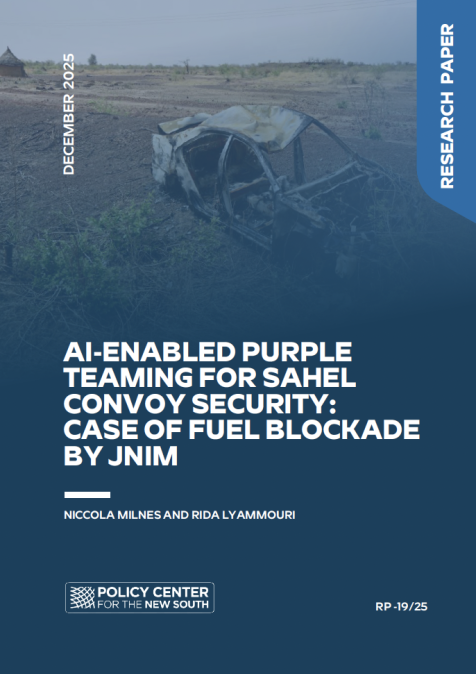
    Fuel access has become a strategic pressure point across Mali and its neighbors. In 2025, Jama’t Nusrat al Islam wal- Muslimeen (JNIM) shifted from sporadic interdictions to a deliberate fuel-blockade strategy intended to pressure Bamako without holding territory. By selectively constraining movement along the Sikasso–Kayes–Bamako corridor, the group turned fuel scarcity into a tool of coercion, governance, and narrative control—shaping behavior in the capital while remaining largel ...
  • Authors
    Nizar Messari
    December 19, 2025
    The U.S. military buildup in the Caribbean—the most significant since the Cuban Missile Crisis—comes at a moment when a new world order is taking shape, its contours still unclear, and in which the U.S. seeks to be more assertive in the Western Hemisphere. This disposition toward South America and the Caribbean was underscored by the recent publication of the new U.S. National Security Strategy, in which the Monroe Doctrine is explicitly invoked. This Policy Brief situates the devel ...
  • Authors
    Corinne Dufka
    Niccola Milnes
    December 8, 2025
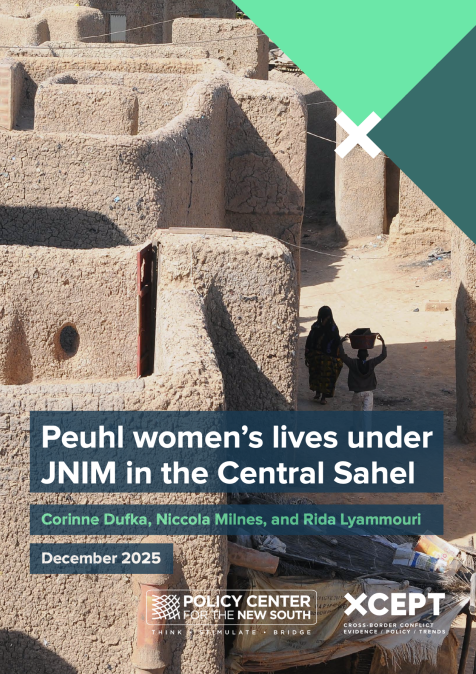
    Although the crises affecting the Sahel have been widely analysed through the lenses of armed groups, state fragility and geopolitics, much less is known about how women experience insurgent governance in their everyday lives. This is particularly pertinent to members of the pastoralist Peuhl ethnic group, which has been strategically targeted for recruitment by the Central Sahel’s dominant Islamist armed group, Jama’at Nusrat al-Islam wal-Muslimin (JNIM), as a means of facilitating ...
  • Authors
    December 1, 2025
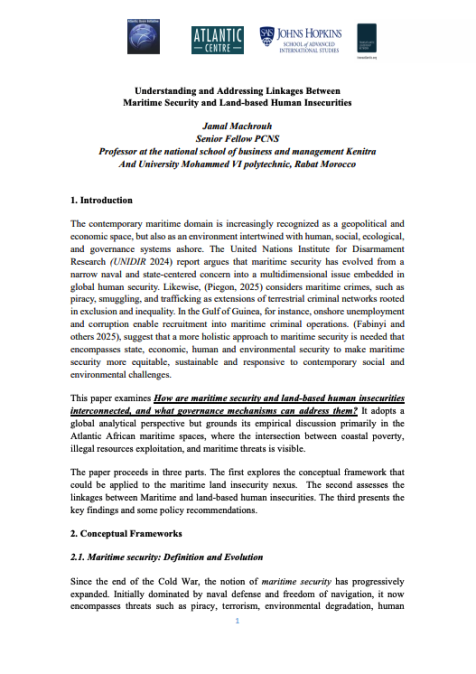
    This Paper was originally published on transatlantic.org The contemporary maritime domain is increasingly recognized as a geopolitical and economic space, but also as an environment intertwined with human, social, ecological, and governance systems ashore. The United Nations Institute for Disarmament Research (UNIDIR 2024) report argues that maritime security has evolved from a narrow naval and state-centered concern into a multidimensional issue embedded in global human s ...
  • Authors
    November 10, 2025
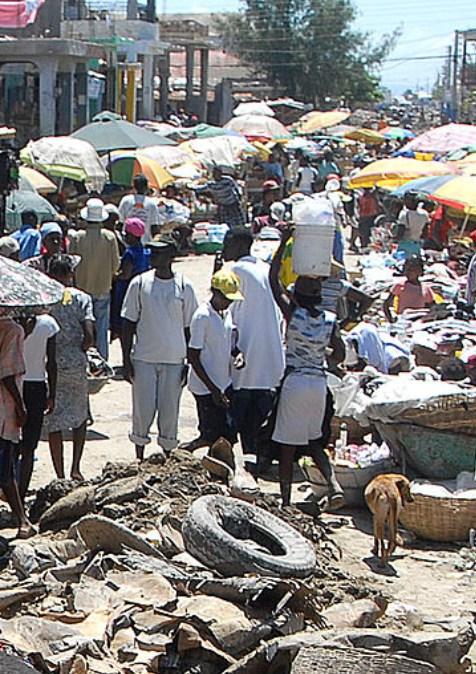
    An estimated 600,000 Haitians live legally on US soil, most of them in New York City and Florida. Another 500,000 are waiting—certainly in vain—for entry papers. In September, the Trump government ended a special “Temporary Protected Status” for an estimated 300,000 Haitian migrants, and possibly another 500,000 migrants temporarily settled in the U.S., including Afghans, Cubans, Nicaraguans, and Venezuelans. The Trump regime is claiming that the violence-plagued Caribbean nation of ...
  • October 21, 2025
    تعيش منطقة الساحل مرحلة غير مسبوقة من تصاعد العنف السياسي والإرهاب، إذ أصبحت منذ 2025 مسؤولة عن أكثر من نصف الوفيات المرتبطة بالإرهاب عالميًا. هذا التحول يعكس فشل الدول في استعادة ثقة المواطنين، وانهيار المؤسسات الأمنية، وتراجع الوجود الدولي، ما أفسح المجال لتوسع الجماعات المسلحة مثل “نصرة الإسلام والمسلمين” و”تنظيم الدولة في الصحراء الكبرى”. جاءت الانقلابات المتتالية في مالي وبوركينا فاسو والنيجر كنتيجة لأزمات داخلية بنيوية عمّقت هشاشة الحكمتشهد المنطقة تفاوتًا في أنماط العنف؛ فبور ...
  • Authors
    Fadoua Ammari
    March 13, 2025
    L’extrémisme violent au Sahel trouve ses racines dans une combinaison de facteurs historique, politique et socio-économique, tels que l’instabilité étatique, la marginalisation de certaines communautés et l’influence d’idéologies transnationales. Ce Papier retrace l’émergence et l’expansion de groupes comme Al-Qaïda au Maghreb Islamique (AQMI) et l’État islamique au Grand Sahara (EIGS), ainsi que leur fragmentation, illustrée par la création de nouveaux groupes, comme le ...
  • February 21, 2023
    طبقا لقرار من المجلس العام لمنظمة الأمم المتحدة يخصص يوم 12 فبراير للاحتفال بمكافحة التطرف العنيف. وبعد ان تصدر الموضوع قائمة جدول أعمال القوى العظمى بعد اعلان تنظيم الدولة بقيام خلافة اس ...
  • February 15, 2023
    طبقا لقرار من المجلس العام لمنظمة الأمم المتحدة يخصص يوم 12 فبراير للاحتفال بمكافحة التطرف العنيف. وبعد ان تصدر الموضوع قائمة جدول أعمال القوى العظمى بعد اعلان تنظيم الدولة بقيام خلافة اسلامية سنة 2014 وحتى انهياره وانهزامه في الاراضي التي كان قد سيطر عليها على خلفية الهجوم الذي شنه على...
  • Authors
    March 7, 2022
    More than two years ago I wrote in a report: “The current downward security trends in Mali, Niger, and Burkina Faso should serve as a wake-up call for the states in the Gulf of Guinea, mainly Ivory Coast, Ghana, Togo, and Benin.” Recent attacks in the northern Ivory Coast and Benin show that signs of earlier years now have taken on unique characteristics. Signs of the expansion of violent extremist organizations (VEOs) to coastal states have been there since at least since 2015. The ...