Publications /
Book / Report

Back
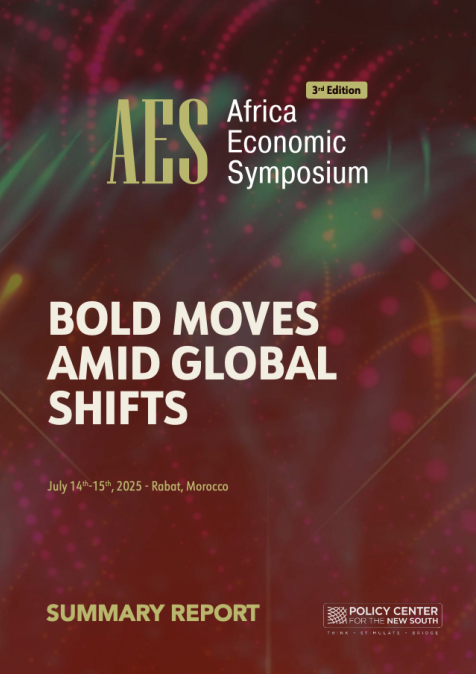
Africa Economic Symposium (AES) 3nd edition - SUMMARY REPORT
Authors
General rapporteur Mahmoud Arbouch
September 2, 2025

The Africa Economic Symposium (AES) has firmly established itself as one of the flagship annual events of the Policy Center for the New South, alongside the Atlantic Dialogues and the African Peace and Security Annual Conference (APSACO). Now in its third edition, AES continues to provide a unique platform for economists, policymakers, and academics from across the continent and beyond to exchange perspectives on the pressing macroeconomic and structural challenges facing Africa. Its mission remains to foster rigorous, evidence-based debates that inform policymaking and support long-term strategies for Africa’s development in an era of uncertainty. 

The 2025 edition, convened under the theme “Bold Moves amid Global Shifts,” explored the difficult policy trade-offs confronting African governments as they navigate a volatile global environment. The continent’s recovery from COVID-19 has been uneven, while debt pressures, supply chain disruptions, and geopolitical tensions weigh heavily on fiscal and economic resilience. Structural challenges such as persistent unemployment, low productivity, and the exclusion of Africa’s youth continue to hinder inclusive growth, even as policymakers are called upon to adapt to deep systemic uncertainty. 

The symposium underscored that many African states are increasingly resorting to short-term stabilization measures—such as accumulating reserves and postponing reforms—that may provide immediate security but risk delaying the structural transformation urgently needed. Against this backdrop, AES 2025 called for a careful balance between fiscal prudence, social investment, and the pursuit of sustainable growth, placing emphasis on reforming governance, improving macroeconomic management, and accelerating structural change. 

The discussions highlighted the urgent need to rethink Africa’s economic strategies in a shifting global order. From debt sustainability and the role of central banks to the promise of financial innovation, digital inclusion, and new instruments such as central bank digital currencies, the symposium emphasized that policy choices must align with long-term transformation goals. The debates also explored the opportunities and challenges of regional integration, trade connectivity, and development finance, all of which are essential levers for Africa’s resilience and prosperity. 

As in previous editions, the Annual Report on African Economies was launched alongside the symposium, offering an in-depth analysis of the continent’s macroeconomic dynamics and structural transformation pathways. More than just a publication, the report reflects the collective intellectual effort of leading scholars and practitioners, providing evidence-based insights to guide decision- makers. Together, the symposium and the report reinforced the Policy Center for the New South’s commitment to fostering forward-looking economic thinking that moves beyond short-term headlines to tackle Africa’s enduring challenges.
RELATED CONTENT

  • Authors
    Soukaina Raoui
    September 12, 2025
    This Paper was originally published on springer.com This paper provides an in-depth analysis of socio-economic convergence across communes in Morocco, focusing on monetary poverty and educational inequalities. This research investigates the impact of the well-known territorial and inclusive development policies of the National Initiative for Human Development on the catch-up process. We explore the data from the last two general population and housing censuses (2004 and 20 ...
  • Authors
    Fadoua Ammari
    September 12, 2025
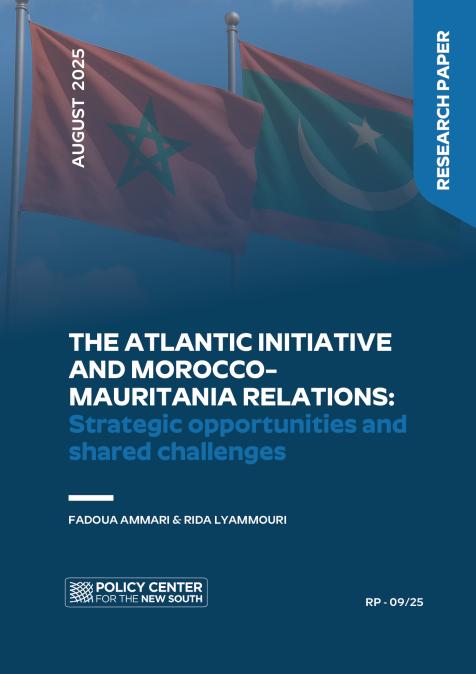
    The Atlantic Initiative, announced by King Mohammed VI in November 2023 to provide landlocked Sahelian countries with access to the Atlantic Ocean via Moroccan territory, promises to profoundly reshape the bilateral relationship between Rabat and Nouakchott. This research paper examines how this unprecedented project creates new strategic opportunities while raising shared challenges for Morocco and Mauritania. Diplomatically, the rapprochement around the Atlantic Initiative unfolds ...
  • September 11, 2025
    Ce travail apporte un éclairage critique sur l'alignement des dispositifs publics d'orientation des étudiants marocains à l'étranger avec les ambitions de développement du pays. Il interroge la capacité de ces mécanismes à transformer la mobilité étudiante d'une potentielle "fuite des cerveaux" en un véritable "gain de cerveaux". S'appuyant sur une étude de cas qualitative, nous avons mené une analyse de contenu systématique (cartographie) de 204 programmes promus par le ministère d ...
  • September 8, 2025
    In this episode, we explore how today’s trade regime shapes inequality through a Southern lens. The conversation sheds light on blind spots in mainstream debates, the resurgence of industrial policy in the North, and the tools Southern countries need to reclaim policy space within globa...
  • Authors
    September 4, 2025
    This policy brief analyzes the first 100 days in office of Chancellor Friedrich Merz, which have been marked by an assertive foreign policy, ambitious security reforms, and a shift toward economic pragmatism. Merz has sought to reestablish Germany as a ‘leading middle power’, emphasizing closer European coordination, renewed transatlantic engagement, and unwavering support for Ukraine. However, his approach to the Gaza conflict, characterized by alignment with U.S. positions and rel ...
  • Authors
    September 3, 2025
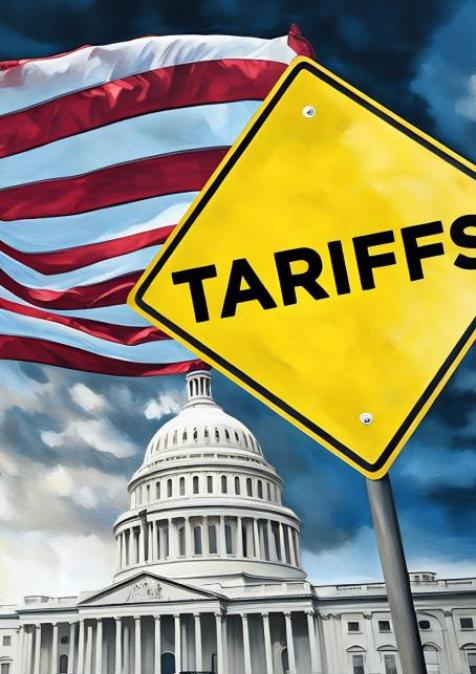
    Estimates based on last year’s U.S. imports, by Maia G. Crook (from JPMorgan) indicate that the average effective U.S. tariff rate is currently 16%, and is expected to rise to 20% by the end of 2025. This represents an increase from 13% mid-year and 2.3% in 2024 (Figure 1). Effective tariff rates are a measure of the degree of protection a tariff structure offers to the value added provided by each sector to a country’s final product, taking into account both the tax on final g ...
  • Authors
    September 2, 2025
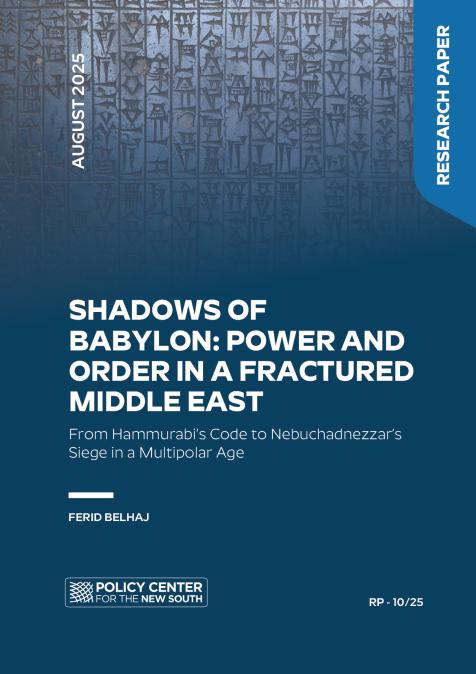
    This paper argues that the Middle East has become the crucible of twenty-first-century imperial politics, exposing the collapse of legal universality and the resurgence of coercive empire. Through the archetypes of Hammurabi and Nebuchadnezzar, it analyzes how states invoke law rhetorically while practicing domination through siege, spectacle, and exclusion.The United States, China, Türkiye, Israel, Iran, the European Union, and the Gulf monarchies all oscillate between Hammurabian ...
  • Authors
    General rapporteur Mahmoud Arbouch
    September 2, 2025
    The Africa Economic Symposium (AES) has firmly established itself as one of the flagship annual events of the Policy Center for the New South, alongside the Atlantic Dialogues and the African Peace and Security Annual Conference (APSACO). Now in its third edition, AES continues to provide a unique platform for economists, policymakers, and academics from across the continent and beyond to exchange perspectives on the pressing macroeconomic and structural challenges facing Africa. It ...