Publications /
Book / Report

Back
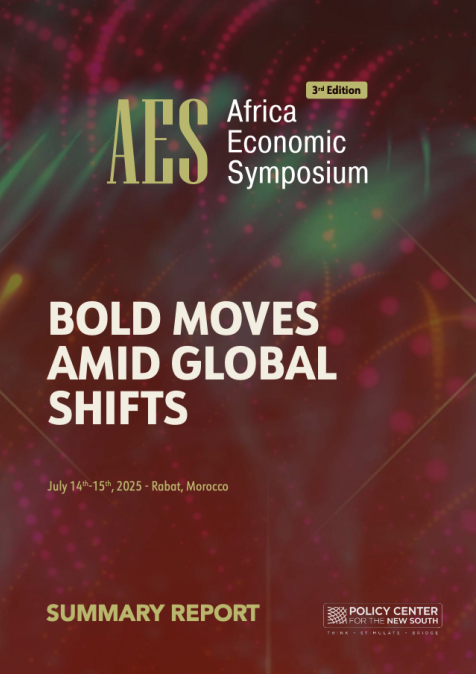
Africa Economic Symposium (AES) 3nd edition - SUMMARY REPORT
Authors
General rapporteur Mahmoud Arbouch
September 2, 2025

The Africa Economic Symposium (AES) has firmly established itself as one of the flagship annual events of the Policy Center for the New South, alongside the Atlantic Dialogues and the African Peace and Security Annual Conference (APSACO). Now in its third edition, AES continues to provide a unique platform for economists, policymakers, and academics from across the continent and beyond to exchange perspectives on the pressing macroeconomic and structural challenges facing Africa. Its mission remains to foster rigorous, evidence-based debates that inform policymaking and support long-term strategies for Africa’s development in an era of uncertainty. 

The 2025 edition, convened under the theme “Bold Moves amid Global Shifts,” explored the difficult policy trade-offs confronting African governments as they navigate a volatile global environment. The continent’s recovery from COVID-19 has been uneven, while debt pressures, supply chain disruptions, and geopolitical tensions weigh heavily on fiscal and economic resilience. Structural challenges such as persistent unemployment, low productivity, and the exclusion of Africa’s youth continue to hinder inclusive growth, even as policymakers are called upon to adapt to deep systemic uncertainty. 

The symposium underscored that many African states are increasingly resorting to short-term stabilization measures—such as accumulating reserves and postponing reforms—that may provide immediate security but risk delaying the structural transformation urgently needed. Against this backdrop, AES 2025 called for a careful balance between fiscal prudence, social investment, and the pursuit of sustainable growth, placing emphasis on reforming governance, improving macroeconomic management, and accelerating structural change. 

The discussions highlighted the urgent need to rethink Africa’s economic strategies in a shifting global order. From debt sustainability and the role of central banks to the promise of financial innovation, digital inclusion, and new instruments such as central bank digital currencies, the symposium emphasized that policy choices must align with long-term transformation goals. The debates also explored the opportunities and challenges of regional integration, trade connectivity, and development finance, all of which are essential levers for Africa’s resilience and prosperity. 

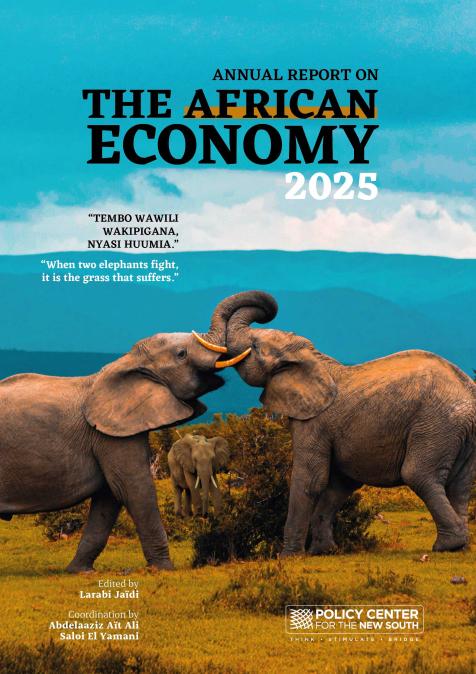
As in previous editions, the Annual Report on African Economies was launched alongside the symposium, offering an in-depth analysis of the continent’s macroeconomic dynamics and structural transformation pathways. More than just a publication, the report reflects the collective intellectual effort of leading scholars and practitioners, providing evidence-based insights to guide decision- makers. Together, the symposium and the report reinforced the Policy Center for the New South’s commitment to fostering forward-looking economic thinking that moves beyond short-term headlines to tackle Africa’s enduring challenges.


RELATED CONTENT

  • July 31, 2025
    This episode explores Africa's role amid a shifting global order marked by fragmentation and competing blocs. It examines whether African states are passive responders or active shapers of new strategic alignments like BRICS+ and South–South cooperation. The discussion also addresses Af...
  • Authors
    Laura Rubidge
    July 25, 2025
    This paper was originally published on The South African Institute of International Affairs (SAIIA) In the face of Africa’s development challenges and the mismatch between long-term needs and short-term pressures, ring-fencing development expenditures offers a viable solution to secure sustainable financing for growth. ...
  • Authors
    July 24, 2025
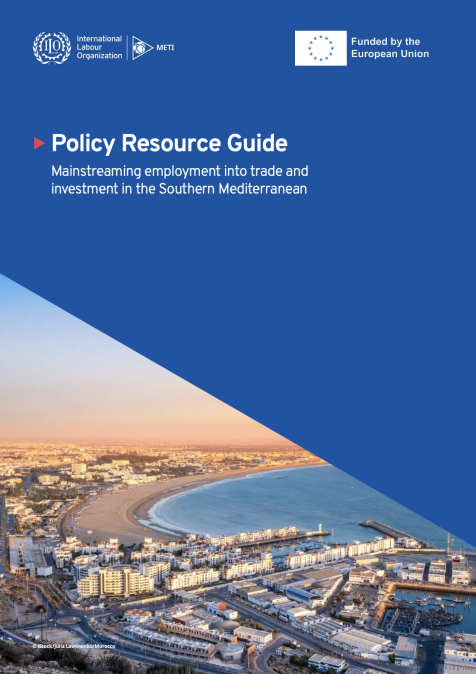
    This Paper was originally published on ilo.org A guide by the Mainstreaming Employment into Trade and Investment in the Southern Mediterranean (METI) Programme to advise policymakers on how to develop and implement trade, investment and employment.The PRG is a strategic framework designed to align trade and investment policies with employment goals in the Southern Mediterranean. The guide promotes practical solutions and supports policies that foster economic growth, empow ...
  • July 24, 2025
    This episode explores the potential of debt-for-climate swaps as a strategic tool to address climate challenges and fiscal constraints in developing countries. While implementation has often been slow and fragmented, the conversation examines practical experiences from regions like Lati...
  • Authors
    Bruno Saraiva
    July 21, 2025
    This article assesses the economic performance of the original BRICS economies, relative to the growth and currency appreciation projections presented in the papers that introduced the acronym, prior to the grouping becoming a diplomatic, political, and economic reality. It also discusses the BRICS agenda in the current challenging geopolitical context, in which economic fragmentation tends to raise costs for the global economy and presents considerable obstacles for emerging and de ...
  • Authors
    Bruno Saraiva
    July 14, 2025
    The BRICS+ group of countries met in Rio de Janeiro over the weekend of 6-7 July. The original group – Brazil, Russia, India, China and, soon after, South Africa – emerged as the materialization of a work of fiction. Jim O’Neill, then chief economist at Goldman Sachs, produced a report in 2001 drawing attention to the rise of these countries as emerging regional powers in global economic growth. ...
  • Authors
    Edited by
    July 14, 2025
    Available soon on livremoi. The 2025 edition of the African Economic Report continues in the spirit of previous versions. It presents a broad overview of the continent’s economic evolution and offers insights into Africa’s relationship with the rest of the world. In other words, it explores how Africa navigates the effects of global fragmentation within its regional spaces while pursuing its ambition of continental integration. ...