Publications /
Book / Report

Back
Africa Economic Symposium (AES) 3nd edition - SUMMARY REPORT
Authors
General rapporteur Mahmoud Arbouch
September 2, 2025

The Africa Economic Symposium (AES) has firmly established itself as one of the flagship annual events of the Policy Center for the New South, alongside the Atlantic Dialogues and the African Peace and Security Annual Conference (APSACO). Now in its third edition, AES continues to provide a unique platform for economists, policymakers, and academics from across the continent and beyond to exchange perspectives on the pressing macroeconomic and structural challenges facing Africa. Its mission remains to foster rigorous, evidence-based debates that inform policymaking and support long-term strategies for Africa’s development in an era of uncertainty. 

The 2025 edition, convened under the theme “Bold Moves amid Global Shifts,” explored the difficult policy trade-offs confronting African governments as they navigate a volatile global environment. The continent’s recovery from COVID-19 has been uneven, while debt pressures, supply chain disruptions, and geopolitical tensions weigh heavily on fiscal and economic resilience. Structural challenges such as persistent unemployment, low productivity, and the exclusion of Africa’s youth continue to hinder inclusive growth, even as policymakers are called upon to adapt to deep systemic uncertainty. 

The symposium underscored that many African states are increasingly resorting to short-term stabilization measures—such as accumulating reserves and postponing reforms—that may provide immediate security but risk delaying the structural transformation urgently needed. Against this backdrop, AES 2025 called for a careful balance between fiscal prudence, social investment, and the pursuit of sustainable growth, placing emphasis on reforming governance, improving macroeconomic management, and accelerating structural change. 

The discussions highlighted the urgent need to rethink Africa’s economic strategies in a shifting global order. From debt sustainability and the role of central banks to the promise of financial innovation, digital inclusion, and new instruments such as central bank digital currencies, the symposium emphasized that policy choices must align with long-term transformation goals. The debates also explored the opportunities and challenges of regional integration, trade connectivity, and development finance, all of which are essential levers for Africa’s resilience and prosperity. 

As in previous editions, the Annual Report on African Economies was launched alongside the symposium, offering an in-depth analysis of the continent’s macroeconomic dynamics and structural transformation pathways. More than just a publication, the report reflects the collective intellectual effort of leading scholars and practitioners, providing evidence-based insights to guide decision- makers. Together, the symposium and the report reinforced the Policy Center for the New South’s commitment to fostering forward-looking economic thinking that moves beyond short-term headlines to tackle Africa’s enduring challenges.


RELATED CONTENT

  • Authors
    December 2, 2025
    This paper assesses the economic and environmental implications of Morocco’s strategic transition from internal combustion engine vehicle (ICEV) manufacturing to electric vehicle (EV) production, with a particular focus on the regional impacts of localizing high-value battery manufacturing. Using an interregional input-output model, extended with environmental satellite accounts, the study simulates a structural shock related to the wholesale substitution of ICEV-specific inputs wit ...
  • December 2, 2025
    في هذه الحلقة، نحاول اكتشاف ما الذي يجعل المغرب يعيش اليوم تحولاً لافتاً في عالم المدفوعات الرقمية. كيف أصبحت التكنولوجيا المالية أحد مفاتيح الشمول المالي ومحركاً لنمو جديد؟ وكيف يغيّر الاعتماد المتزايد لوسائل الدفع الحديثة حياة التجار الصغار والمقاولات الصغيرة والمتوسطة ويخلق لهم فرصاً...
  • Authors
    November 28, 2025
    The adoption of United Nations Security Council Resolution 2803 on November 17, 2025, endorsing the “Comprehensive Plan to End the Gaza Conflict,” is a step in the right direction, but it must be accompanied by the implementation of a Gaza development and post-conflict reconstruction program. Paragraph 6 of Resolution 2803 “calls upon the World Bank and other financial institutions to facilitate and provide financial resources to support the reconstruction and development of Ga ...
  • November 27, 2025
    Digital payments are transforming global commerce and unlocking new opportunities for Morocco’s digital economy. But as innovation accelerates, so do security challenges and sophisticated fraud risks. In this episode, we explore how trust and protection must evolve to keep pace with a f...
  • November 25, 2025
    This Policy Paper analyses the Fourth Industrial Revolution (4IR) through the critical lens of technological colonialism. It argues that the fusion of physical, digital, and biological technologies is not merely a technical phenomenon but a civilizational shift reshaping the foundations of global power. The article traces a historical continuum from previous industrial revolutions, demonstrating how patterns of inequality and extraction persist, now transposed into the digital realm ...
  • Authors
    November 21, 2025
    This report addresses the business environment in Brazil as one of the determinants responsible for the weak evolution of productivity in recent decades. After addressing this productivity performance, we define what constitutes the business environment, using as a reference the three ways in which the World Bank has been addressing the subject.Next, we highlight how the business environment affects productivity in a country. Finally, we review some recent reforms in the country's b ...
  • Authors
    Lahcen Oulhaj
    November 19, 2025
    La modélisation classique de la croissance repose sur des outils – notamment la fonction de production agrégée et la comptabilité de la croissance – dont les incohérences logiques et les ambiguïtés épistémologiques sont connues depuis la Controverse de Cambridge et les travaux d’Anwar Shaikh. Pourtant, ces failles continuent d’alimenter des raisonnements fallacieux dans le débat économique et les discours institutionnels. Cet article montre que la nature tautologique de ces outils n ...
  • November 18, 2025
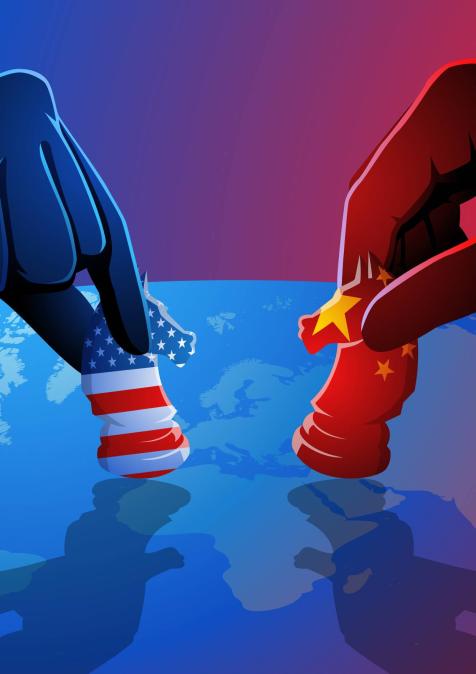
    The meeting between Donald Trump and Xi Jinping in Busan, South Korea, was more than an exercise in diplomacy. It was an emblematic performance of a world in transformation. Behind the formalities, the cameras, and the studied smiles lay an unspoken recognition: the world is no longer unipolar. The era of American supremacy, sustained for decades through its economic reach, military presence, and ideological projection, is giving way to a more diffuse, multipolar reality. ...
  • Authors
    Arkebe Oqubay
    November 17, 2025
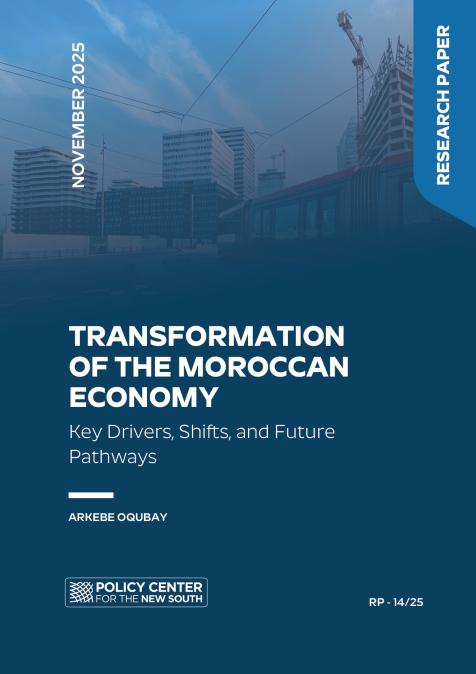
    Morocco has emerged as one of Africa's success stories, achieving significant progress in economic transformation and the green transition over the past 25 years. Continuing and deepening this transformation is essential to reach the country’s goal of becoming a high-income economy in the coming decades. Significant challenges include managing the risk of the middle-income trap, addressing demographic pressures, promoting inclusive growth, ensuring environmental sustainability, and ...