Podcasts

Back

The Future of Multilateralism in a Fragmented World

08
May 2026
By Helmut Sorge & Mark Malloch-Brown

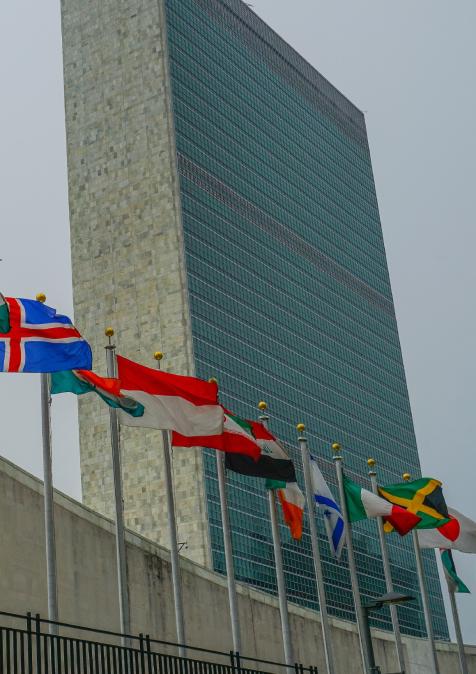
In this episode of the Policy Center for the New South podcast, Mark Malloch-Brown explores the crisis of multilateralism, emphasizing the Global South’s growing role in reshaping institutions through country-led development and mini-lateral coalitions. He argues for a more democratic, adaptive UN to address fragmentation and global challenges like climate and equity.

RELATED CONTENT

  • June 26, 2026
    Three years after the adoption of the first National Action Plan (NAP) on the Women, Peace and Security (WPS) Agenda, Morocco has made real institutional progress, but implementation is still inadequate. The extension of the NAP opens a window of opportunity to prepare a second, more ambitious and operational cycle.This Policy Brief identifies four persistent obstacles: a virtually stagnant female employment rate of 19.1%, less than 3% female representation in peacekeeping contingen ...
  • June 22, 2026
    What does it take for think tanks to stay trusted, relevant, and heard in a world that's increasingly sceptical of institutions? At the Policy Center for the New South we put that question to keynote speakers Erica Schoder and Héctor Cárdenas on the sidelines of the OTT Conference 2026 ...
  • June 15, 2026
    As part of the OECD Multilateral Development Finance Week 2026 (MDF Week), the Policy Center for the New South (PCNS) is organizing a webinar entitled “Rethinking Development Finance: African Agency and the Future of Multilateral Development Co-operation after ODA Retrenchment.” The dis...
  • May 08, 2026
    In this episode of the Policy Center for the New South podcast, Mark Malloch-Brown explores the crisis of multilateralism, emphasizing the Global South’s growing role in reshaping institu ...
  • April 24, 2026
    Pendant longtemps, la sécurité du Sahel reposait sur les dispositifs militaires occidentaux qui ne sont pas parvenus à juguler la menace jihadiste, démontrant ainsi les limites d’un modèle de coopération fondé sur la dépendance logistique et doctrinale envers les partenaires étrangers. Les trois États sahéliens ont décidé de rompre avec ce système et de construire « une souveraineté sécuritaire intégrée » Cette orientation s’est affirmée dans un contexte d’ouverture à de nouvea ...
  • Authors
    April 17, 2026
    The International Court of Justice’s (ICJ) 2025 advisory opinion on climate change marks a significant expansion of international law into the governance of global public goods. By framing climate inaction as a potential violation of international law and human rights, the Court advances a progressive legal agenda that extends beyond existing political consensus and enforcement capacity. This article develops a realist critique of the ruling that avoids both legal romanticism and ni ...
  • April 9, 2026
    Trois ans après l'adoption du premier Plan d'Action National (PAN) sur l'Agenda Femmes, Paix et Sécurité (FPS), le Maroc affiche des avancées institutionnelles réelles mais une mise en œuvre encore insuffisante. L'extension du PAN ouvre une fenêtre d'opportunité pour préparer un second cycle plus ambitieux et opérationnel.Ce Policy Brief identifie quatre obstacles persistants : un taux d'activité féminine de 19,1% en quasi-stagnation, une représentation des femmes inférieure à 3% da ...
  • Authors
    March 30, 2026
    This essay examines the establishment of the Board of Peace as a test case in contemporary peace governance and hegemonic experimentation. While the Board, politically activated in early 2026 and formally anchored in a resolution of the United Nations Security Council, benefits from derivative legality under the UN Charter, its legal foundation remains constitutionally fragile, its mandate ambiguously constrained, and its accountability architecture underdeveloped, notwithstand ...