Stability and Realignment in the Sahel: What Role for Global and Middle Powers and Atlantic Africa ?

February 12, 2026

The Sahel faces insurgencies, political instability, climate shocks, and humanitarian crises. How are global powers, middle powers, and Atlantic African nations shaping security, governance, and development in the region? Join us as we explore challenges, opportunities, and the path forward for a stable and integrated Sahel.

Speakers
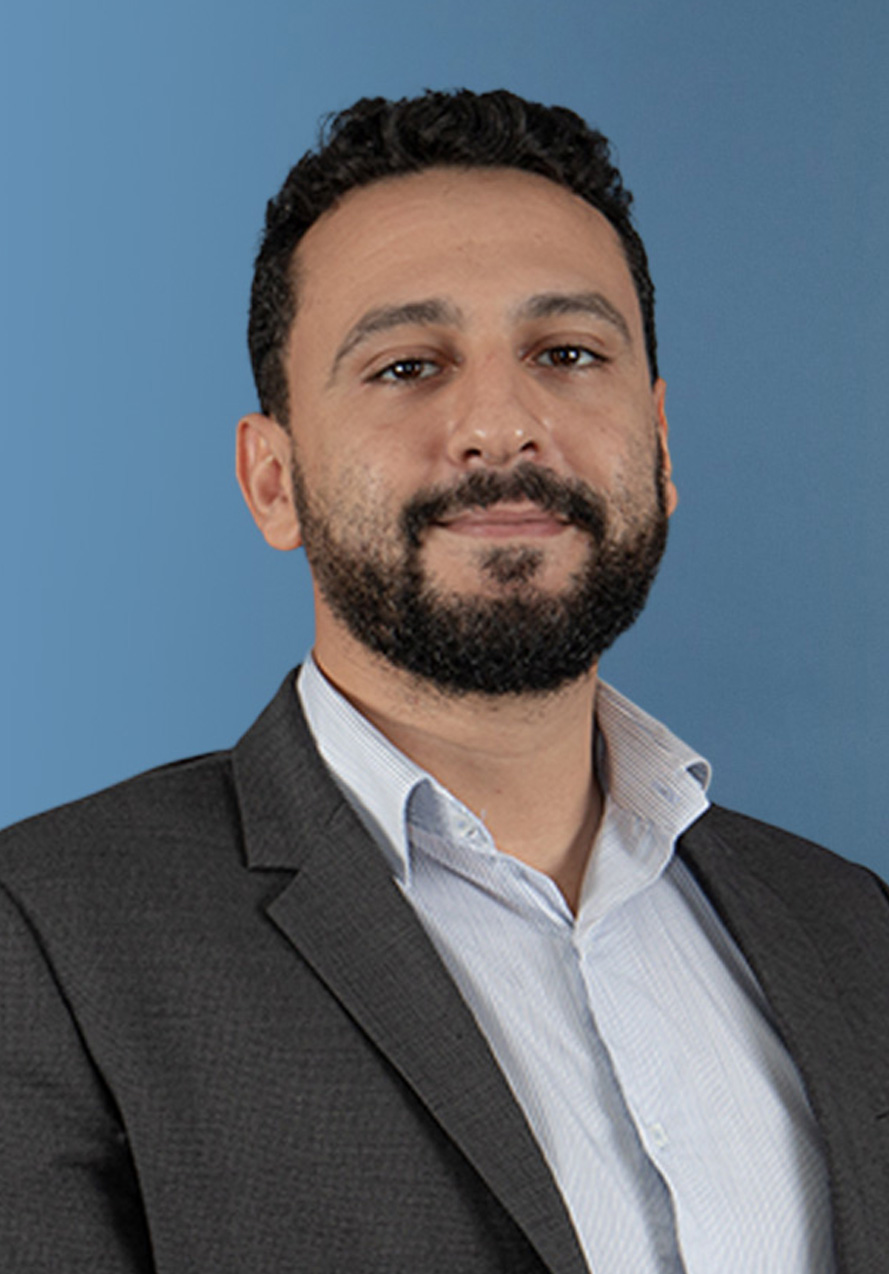
Akram Zaoui
Chargé de Mission to the Executive President
Akram Zaoui is a Senior International Relations Specialist and Chargé de Mission to the Executive President at the Policy Center for the New South (PCNS). Prior to this, he was Manager of Research Support and the Public Policy Lab at the PCNS. His main area of interest is the geopolitical economy of the Extended Middle East and North Africa (MENA) region. From 2018 to 2020, Zaoui was the coordinator of a network of 70+ civil society organizations (CSOs) across France, working with foundations, government, local communities, and the private sector. Zaoui holds a dual degree in corporate and public management from HEC Paris and Sciences Po, as well as a bachelor's degree (licence) in history from Université Paris 1 Panthéon-Sorbonne. He audited courses in Iranian and Shia Stud ...
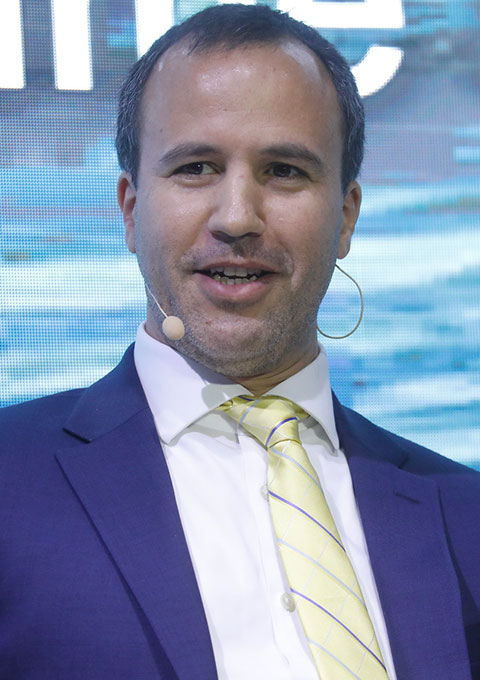
Rida Lyammouri
Senior Fellow
Rida Lyammouri is a senior fellow at the Policy Center for the New South (PCNS). He is also a senior West Africa and Lake Chad Basin researcher and advisor, with expertise in regional conflicts, violent extremism, climate change, migration, and trafficking. His research activities focus on geopolitics and international relations in the West African Sahel and Lake Chad Basin, regions he has worked on for 14 years, including in the field. He has extensive experience supporting both governmental and non-governmental organizations in the areas of international development, security, countering violent extremism and terrorism, preventing conflicts, ensuring humanitarian access, and migration. Mr. Lyammouri has contributed to in-depth research and analysis reports aiming at building ...

RELATED CONTENT

  • Authors
    Pascal Chaigneau
    Eugène Berg
    Rodolphe Monnet
    Jacques Gravereau
    Jérémy Ghez
    Olivier Tramond
    Niagalé Bagayoko
    Alain Oudot de Dainville
    Jérôme Evrard
    Coordination de l’ouvrage: Imane Lahrich
    Fatine Cherkaoui
    October 28, 2021
    Depuis l’accession au trône du Roi Mohammed VI, l’Afrique s’est transformée en priorité de la diplomatie marocaine. Sur le plan économique, l’Afrique est devenue le prolongement naturel du Maroc en termes d’investissements et d’implantations. Pascal Chaigneau s’attarde sur les relations affaiblies Europe-Afrique, l’ambitieuse relation Chine-Afrique ainsi que les relations entre la Russie, les Etats-Unis, la Turquie ou encore les pays du Golf et l’Afrique. Ce chapitre traite égalemen ...
  • Authors
    October 5, 2021
    Seconde nation la plus peuplée d’Afrique après le Nigeria, l’Éthiopie se distingue par un essor économique continu depuis trente ans. Des progrès notables sévèrement remis en question par le conflit avec la province du Tigré, qui dure depuis près d’un an. Pays phare de la Corne de l’Afrique, l’Éthiopie s’est distinguée par une croissance moyenne à deux chiffres (10 %) sur la période 2010-2019. Tombée à 6 % en 2020, celle-ci ne devrait pas dépasser 2 % en 2021 selon l ...
  • September 24, 2021
    In July 2021, the United Nations issued a condemnation against the “dramatic rise” in attacks against “descent-based slaves” in Mali, calling the violence “unacceptable”[i]. The statement was in response to a tragic episode in the eastern region of Kayes, where landowners using machetes and rifles assaulted a group of indentured laborers to prevent them working on the landowners’ fields. Tomoya Okobata, the UN's Special Rapporteur on Contemporary Forms ...
  • Authors
    August 11, 2021
    The ongoing war in the Tigray region of Ethiopia has resulted in the world’s worst humanitarian crisis in a decade. The escalating conflict has led to the death and displacement of thousands of civilians, raised ethnic tensions in Ethiopia, and caused a food crisis that could lead to widespread famine. Much can be said about this conflict—how it revolves around models of governance and conflicting visions of self-determination, and how its impact will be felt across the region. Here ...
  • May 20, 2021
    The fourth edition of the African Peace & Security Annual Conference (APSACO) was held on September 23-25, 2020 under the theme ‘COVID-19 & Security in Africa.’ The three-day event, organized by the Policy Center for the New South (PCNS), was composed of two panels and two workshops: - Panel 1: The Security Sector in Africa During and After the COVID-19 Health Crisis - Panel 2: The Privatization of Violence in Africa: Non-State Armed Groups and Private Security - Workshop ...
  • Authors
    Sabine Cessou
    January 4, 2021
    Mali, Niger, Burkina Faso… L’insécurité fait tache d’huile au Sahel, menaçant de s’étendre aux pays du Golfe de Guinée. Le terrorisme a entraîné la formation de milices d’auto-défense communautaires, et ainsi créé des « friches » sécuritaires dans tout le Sahel, du Bassin du lac Tchad à la région du Liptako-Gourma. Les budgets consacrés à la défense augmentent, contrairement à ceux qui soutiennent le capital humain, santé et éducation. Dans un contexte de croissance démogr ...