(FR) Urban Policy and Transformation in Morocco

July 6, 2026

Cette interview explore les grands enjeux de l’urbanisation au Maroc, en mettant l’accent sur les défis de gouvernance, de planification et de politiques publiques. Elle revient sur l’évolution des modèles de développement urbain, les effets du changement climatique sur les villes, ainsi que sur les opportunités offertes par la Coupe du Monde 2030 pour engager une transformation urbaine plus durable, inclusive et résiliente.
 

Speakers
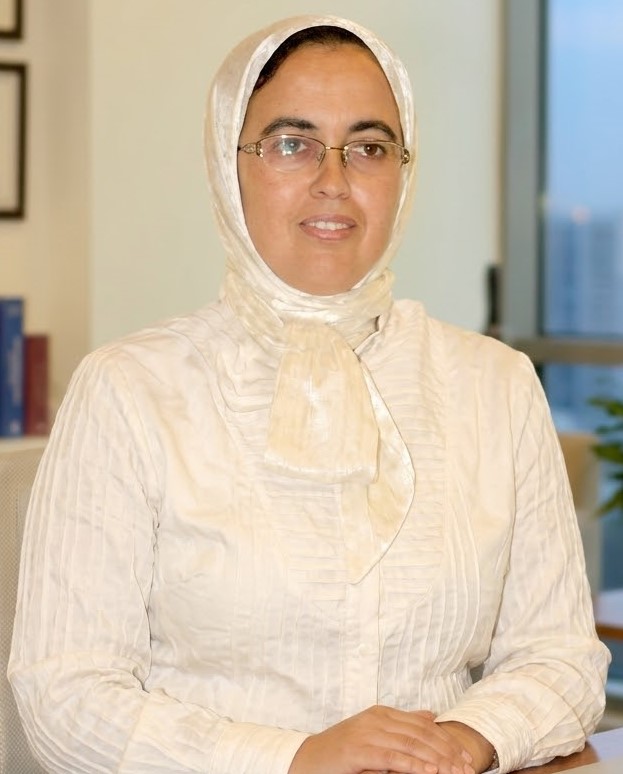
Khadija Karibi
Professor, National School of Architecture, Rabat
Khadija Karibi is an architect and urban planner with a doctorate in urban geography. She is a Full Professor at the National School of Architecture in Rabat, Morocco, and holds a habilitation to direct research. She heads a fifth-year architecture studio, teaches urban planning trends, and coordinates the ‘Architecture and Associated Disciplines’ doctoral course. She is co-editor of the African and Mediterranean Journal of Architecture and Urbanism (AMJAU), Institut Marocain de l'Information Scientifique et Technique (IMIST); Centre National pour la Recherche Scientifique et Technique (CNRST). She has contributed to several research projects and urban studies and has published a book, collective volumes, and academic articles. Her expertise focuses on urban planning and devel ...

Kharmich Hassane
Professor, National School of Architecture, Rabat
Hassane Kharmich, PhD in geography and planning, is a Full Professor of cities and urban planning at the National School of Architecture in Rabat, Morocco. He is the publishing assistant of the African and Mediterranean Journal of Architecture and Urbanism (AMJAU), IMIST CNRST. He leads the research laboratory “Housing, Architecture, and Urbanization of Territories” (LabHAUT), and oversees the hosting structure for doctoral students from the Doctoral Studies Center “Architecture and Associated Disciplines.” He has authored several publications and is involved in research programs on the medina, architectural heritage, metropolization, and urban planning. ...
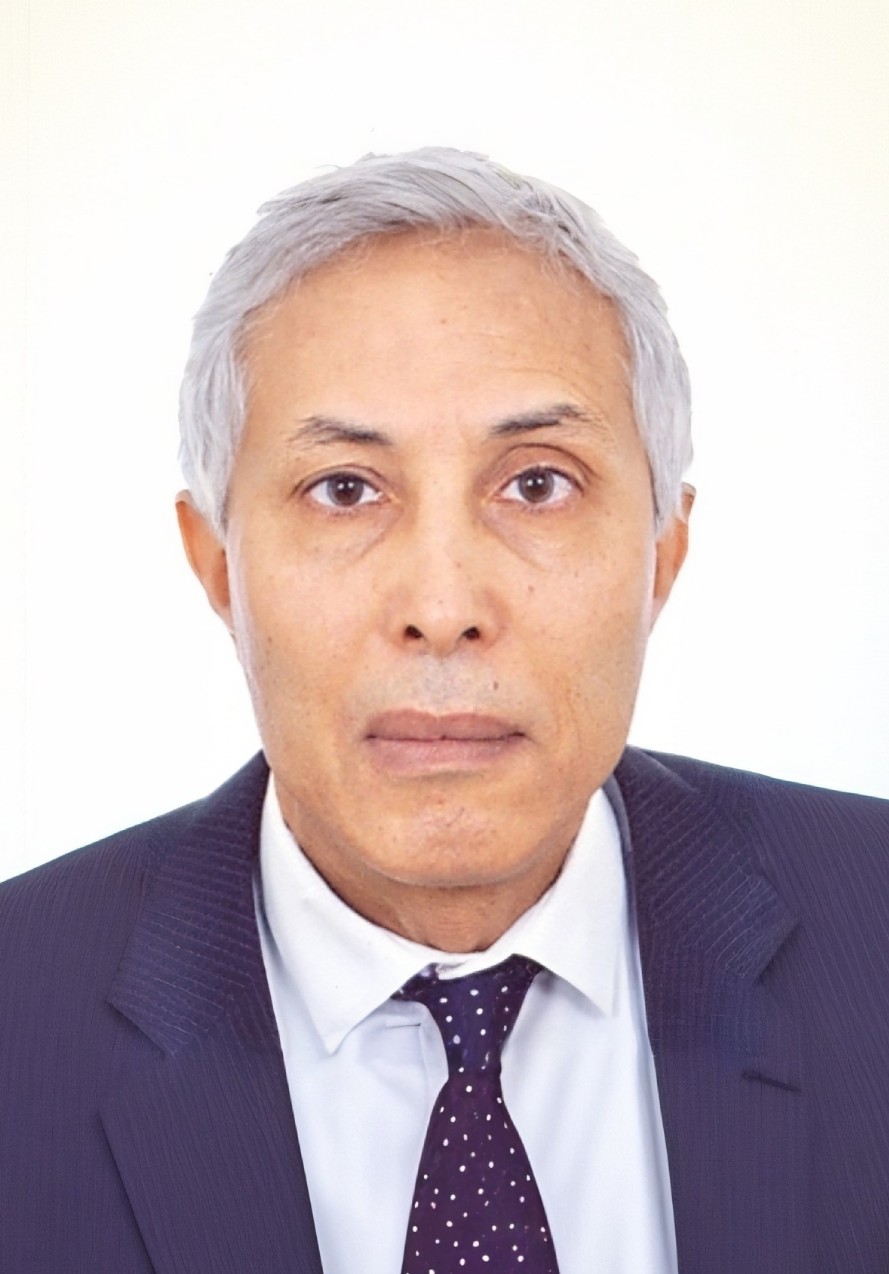
El Harrouni Khalid
Professor and Director of Research, National School of Architecture, Rabat
Khalid El Harrouni is a Full Professor of civil engineering and computational mechanics and Director of the UNESCO Chair “Education and Research on Sustainable and Bioclimatic Urban Planning and Architecture.” As Deputy Director of Research at the National School of Architecture in Rabat, he is responsible for the Doctoral Studies Centre, “Architecture and Related Disciplines,” and serves as scientific coordinator for the theme “Sustainability in Architecture and Urbanism.” He is the editor-in-chief of the African and Mediterranean Journal of Architecture and Urbanism (AMJAU) and an expert member of International Council on Monuments and Sites (ICOMOS), The International Scientific Committee on the Analysis and Restoration of Structures of Architectural Heritage (ISCARSAH), In ...

RELATED CONTENT

  • Authors
    November 22, 2019
    Le rêve d’un monde en développement qui voit ses inégalités se réduire, la condition de vie de ses populations s’améliorer significativement, tout en profitant du bonheur procuré par une population jeune, reste à portée de main. Les macro-économistes ne diront certainement pas le contraire quand on soutient que la plus grande invention de Robert Mundell a sans doute été l’idée du triangle d’incompatibilité. Le concept de Mundell consiste en l’impossibilité de voir coexister de faço ...
  • Authors
    Sabine Cessou
    May 17, 2019
    Sur quelles contraintes faut-il anticiper lorsqu’on évoque la croissance de l’Afrique? Comment guider les décideurs politiques dans les priorités à définir pour piloter l’économie et arriver à bon port dans le monde qui vient? Le séminaire organisé le 11 avril à Paris par le PCNS et le Centre de développement de l’OCDE a apporté des éléments de réponse. La discussion s’est ouverte en prenant appui sur le rapport de référence publié en 2018 par l’Union africaine et l’OCDE ...
  • Authors
    Ghita El Kasri
    April 25, 2019
    The author is an alumnus of the 2018 Atlantic Dialogues Emerging Leaders program Tech industries, despite leading the charge for change in many areas of modern life, have traditionally been one of the worst industries for gender equality. But now, it looks like technology itself could finally start to break down some of the barriers to entry and alter the socio-economic landscape beyond recognition. It could put women and under-represented minorities on the financial and ...
  • Authors
    Tiago Ribeiro dos Santos
    December 3, 2018
    Daron Acemoglu and James Robinson caught policymaker’s attention to the critical role of institutions for development. Their work gives too much emphasis to the prospects of revolution, however. A reading of the World Bank’s World Development Report of 2017 points to directions that all actors involved in the process, whether domestic or international, elite or non-elite, can take to improve societies. ...
  • Authors
    May 10, 2018
    The April issue of the IMF’s “World Economic Outlook (WEO)” included a chapter on how globalization has helped knowledge from technology leaders spread faster than before. Cross-border technological diffusion has not only contributed to rising domestic productivity levels in advanced and emerging economies, but also facilitated a partial reshaping of the technological innovation landscape, with some recipients becoming new significant sources of research and development (R&D) an ...
  • Authors
    March 7, 2018
    Brazilian conditional cash transfers are small amounts of money the government distributes directly to very poor households on condition that their children attend school and are vaccinated. The money goes to the women of the household, because research undertaken in the 1990s – and later confirmed in other countries – showed an increase in babies' height and weight when women have more control over household income. Greater control over household resources by women can strengthen a ...
  • Authors
    Michael L. Lahr
    Dina N. Elshahawany
    Moisés Vassallo
    October 13, 2016
    We develop an interregional computable general equilibrium model to help assess the ex ante impact of transportation infrastructure policies in Egypt. The model is integrated with a GIS network. We illustrate the analytical capabilities of the model by looking at the domestic integration of the country. Improvements of transportation costs among Egyptian governorates and of their links to the broader world economy are considered in stylized simulations. The results provide quantitat ...
  • From

    16
    5:30 pm June 2026
    تتناول هذه الحلقة واقع صناعة الألعاب الإلكترونية في المغرب، في ظل الاهتمام المتزايد بهذا القطاع الواعد وما يتيحه من فرص اقتصادية وإبداعية. كما تناقش التحديات التي تواجه المطورين والمقاولات الناشئة، من حيث التكوين والتمويل والولوج إلى الأسواق، مع تسليط الضوء على الإمكانات التي يمتلكها المغرب لتعزيز حضوره في هذه الصناعة العالمية وجعلها رافعة للابتكار وخلق فرص الشغل وجذب الاستثمارات الرقمية  ...