(FR) Urban Policy and Transformation in Morocco

July 6, 2026

Cette interview explore les grands enjeux de l’urbanisation au Maroc, en mettant l’accent sur les défis de gouvernance, de planification et de politiques publiques. Elle revient sur l’évolution des modèles de développement urbain, les effets du changement climatique sur les villes, ainsi que sur les opportunités offertes par la Coupe du Monde 2030 pour engager une transformation urbaine plus durable, inclusive et résiliente.
 

Speakers
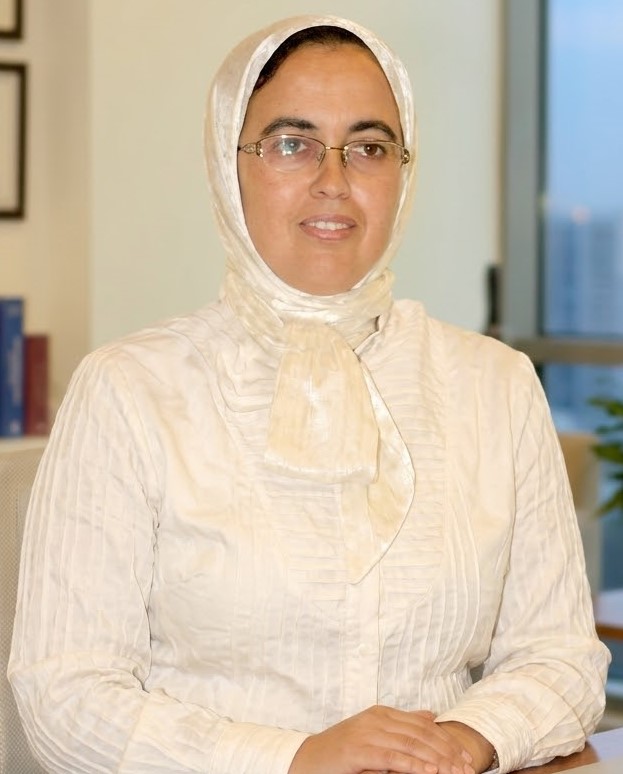
Khadija Karibi
Professor, National School of Architecture, Rabat
Khadija Karibi is an architect and urban planner with a doctorate in urban geography. She is a Full Professor at the National School of Architecture in Rabat, Morocco, and holds a habilitation to direct research. She heads a fifth-year architecture studio, teaches urban planning trends, and coordinates the ‘Architecture and Associated Disciplines’ doctoral course. She is co-editor of the African and Mediterranean Journal of Architecture and Urbanism (AMJAU), Institut Marocain de l'Information Scientifique et Technique (IMIST); Centre National pour la Recherche Scientifique et Technique (CNRST). She has contributed to several research projects and urban studies and has published a book, collective volumes, and academic articles. Her expertise focuses on urban planning and devel ...
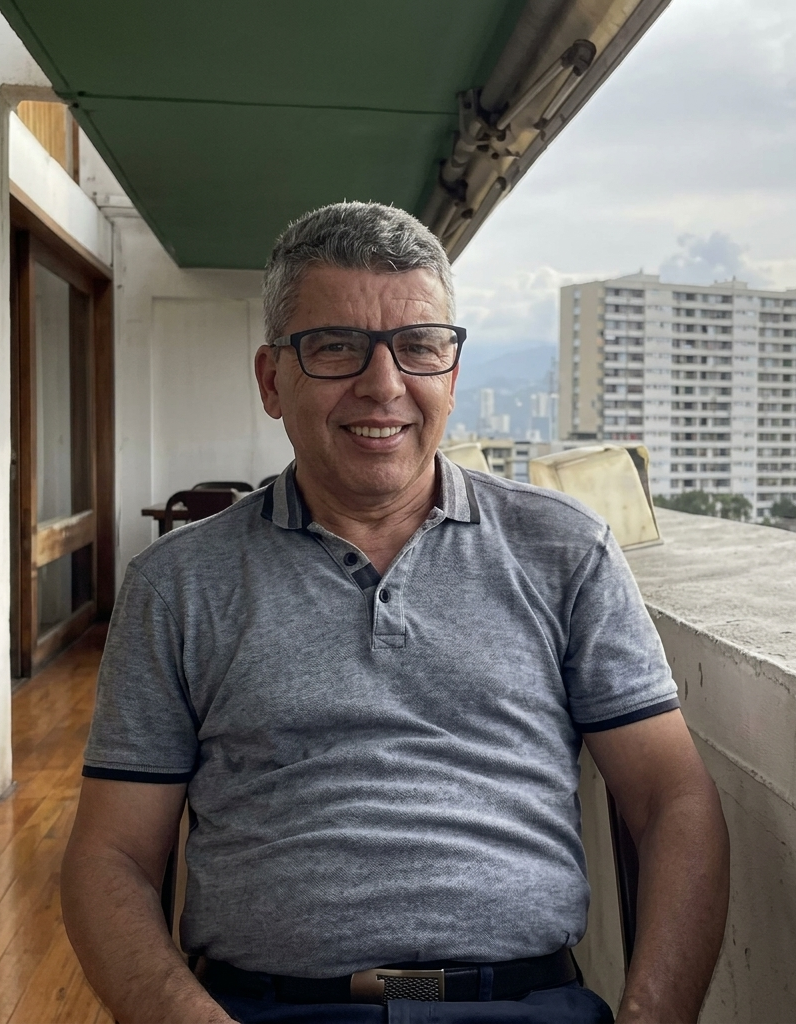
Kharmich Hassane
Professor, National School of Architecture, Rabat
Hassane Kharmich, PhD in geography and planning, is a Full Professor of cities and urban planning at the National School of Architecture in Rabat, Morocco. He is the publishing assistant of the African and Mediterranean Journal of Architecture and Urbanism (AMJAU), IMIST CNRST. He leads the research laboratory “Housing, Architecture, and Urbanization of Territories” (LabHAUT), and oversees the hosting structure for doctoral students from the Doctoral Studies Center “Architecture and Associated Disciplines.” He has authored several publications and is involved in research programs on the medina, architectural heritage, metropolization, and urban planning. ...
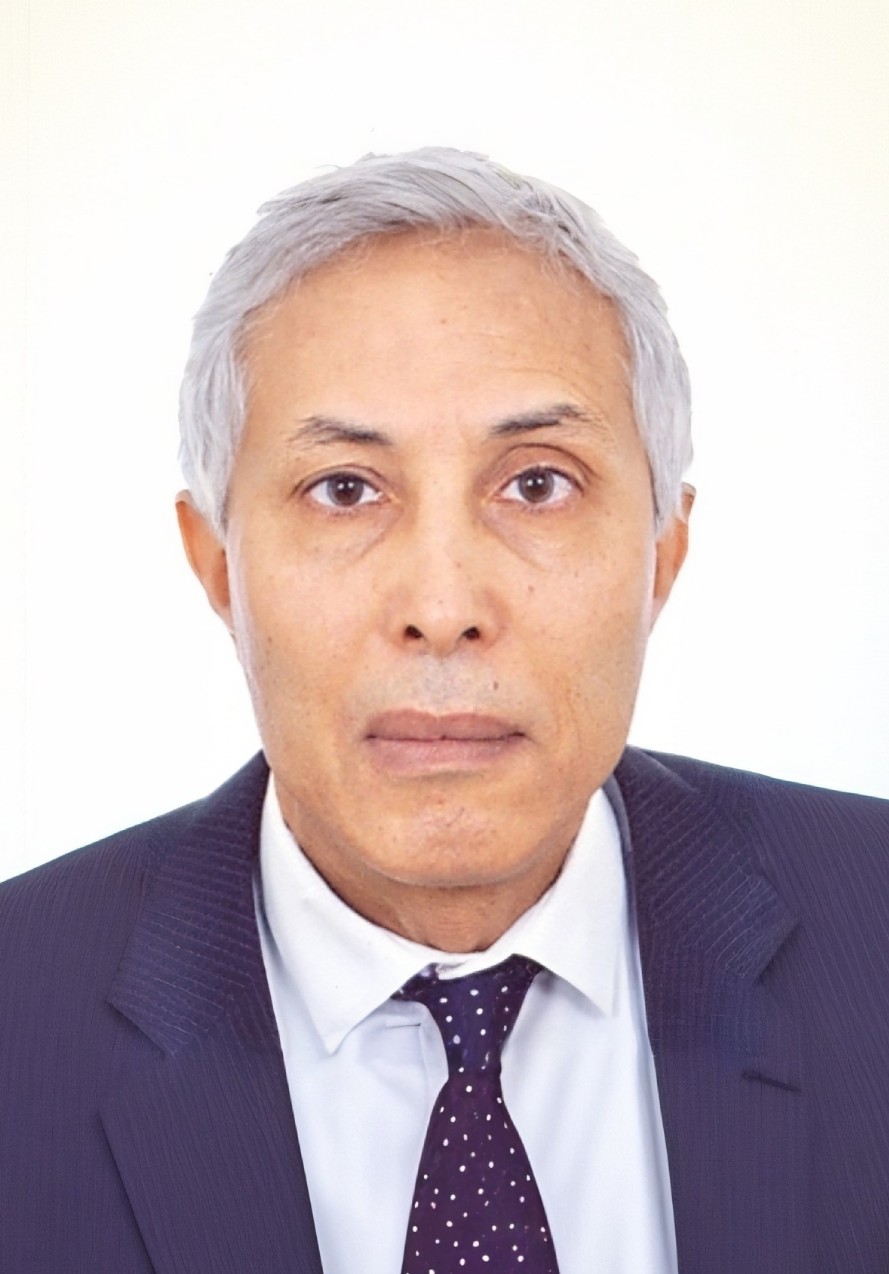
El Harrouni Khalid
Professor and Director of Research, National School of Architecture, Rabat
Khalid El Harrouni is a Full Professor of civil engineering and computational mechanics and Director of the UNESCO Chair “Education and Research on Sustainable and Bioclimatic Urban Planning and Architecture.” As Deputy Director of Research at the National School of Architecture in Rabat, he is responsible for the Doctoral Studies Centre, “Architecture and Related Disciplines,” and serves as scientific coordinator for the theme “Sustainability in Architecture and Urbanism.” He is the editor-in-chief of the African and Mediterranean Journal of Architecture and Urbanism (AMJAU) and an expert member of International Council on Monuments and Sites (ICOMOS), The International Scientific Committee on the Analysis and Restoration of Structures of Architectural Heritage (ISCARSAH), In ...

RELATED CONTENT

  • Authors
    Yonas Adeto
    Thomas Gomart
    Paolo Magri
    Greg Mills
    Karin Von Hippel
    Guntram Wolff
    April 9, 2020
    Alors que le coronavirus se propage à travers le monde, la capacité d’atténuer son impact est liée aux ressources disponibles et à l’efficacité des autorités publiques. Voilà pourquoi il nous paraît primordial que les dirigeants internationaux se concentrent sur les conséquences de la pandémie sur les plus vulnérables, en particulier en Afrique. Il y a trois mois, le 31 décembre, les autorités chinoises informaient le bureau de Pékin de l’Organisation mondiale de la santé (OMS) d’ ...
  • Authors
    Carolina Zuheill Rosales
    April 1, 2020
    The Multidimensional Poverty Index provided for the UNDP (United Nations Developed Program) looks beyond monetary income and shows how poverty is the experience of multiple and simultaneous deprivations. People can fall behind in terms of health, education, and living standards, with challenges including lack of access to drinking water, sanitation, adequate nutrition, or primary education. Those who are deprived of at least one third of the index’s components are classified as mult ...
  • February 21, 2020
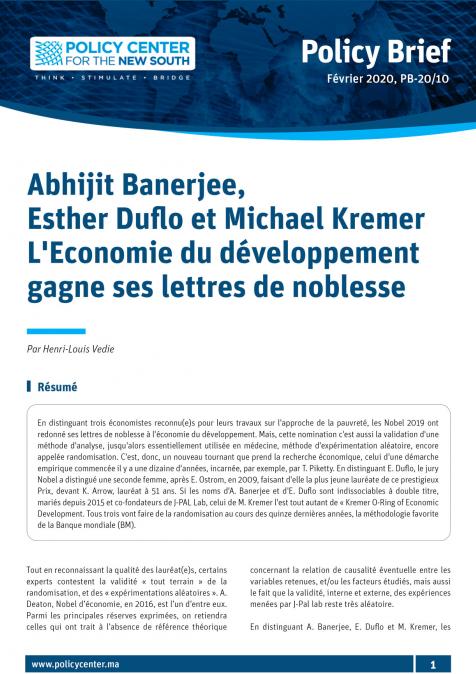
    En distinguant trois économistes reconnu(e)s pour leurs travaux sur l'approche de la pauvreté, les Nobel 2019 ont redonné ses lettres de noblesse à l'économie du développement. Mais, cette nomination c'est aussi la validation d'une méthode d'analyse, jusqu'alors essentiellement utilisée en médecine, méthode d'expérimentation aléatoire, encore appelée randomisation. C'est, donc, un nouveau tournant que prend la recherche économique, celui d'une démarche empirique commencée il y a une ...
  • Authors
    November 22, 2019
    Le rêve d’un monde en développement qui voit ses inégalités se réduire, la condition de vie de ses populations s’améliorer significativement, tout en profitant du bonheur procuré par une population jeune, reste à portée de main. Les macro-économistes ne diront certainement pas le contraire quand on soutient que la plus grande invention de Robert Mundell a sans doute été l’idée du triangle d’incompatibilité. Le concept de Mundell consiste en l’impossibilité de voir coexister de faço ...
  • Authors
    Sabine Cessou
    May 17, 2019
    Sur quelles contraintes faut-il anticiper lorsqu’on évoque la croissance de l’Afrique? Comment guider les décideurs politiques dans les priorités à définir pour piloter l’économie et arriver à bon port dans le monde qui vient? Le séminaire organisé le 11 avril à Paris par le PCNS et le Centre de développement de l’OCDE a apporté des éléments de réponse. La discussion s’est ouverte en prenant appui sur le rapport de référence publié en 2018 par l’Union africaine et l’OCDE ...
  • Authors
    Ghita El Kasri
    April 25, 2019
    The author is an alumnus of the 2018 Atlantic Dialogues Emerging Leaders program Tech industries, despite leading the charge for change in many areas of modern life, have traditionally been one of the worst industries for gender equality. But now, it looks like technology itself could finally start to break down some of the barriers to entry and alter the socio-economic landscape beyond recognition. It could put women and under-represented minorities on the financial and ...
  • Authors
    Tiago Ribeiro dos Santos
    December 3, 2018
    Daron Acemoglu and James Robinson caught policymaker’s attention to the critical role of institutions for development. Their work gives too much emphasis to the prospects of revolution, however. A reading of the World Bank’s World Development Report of 2017 points to directions that all actors involved in the process, whether domestic or international, elite or non-elite, can take to improve societies. ...
  • Authors
    May 10, 2018
    The April issue of the IMF’s “World Economic Outlook (WEO)” included a chapter on how globalization has helped knowledge from technology leaders spread faster than before. Cross-border technological diffusion has not only contributed to rising domestic productivity levels in advanced and emerging economies, but also facilitated a partial reshaping of the technological innovation landscape, with some recipients becoming new significant sources of research and development (R&D) an ...
  • Authors
    March 7, 2018
    Brazilian conditional cash transfers are small amounts of money the government distributes directly to very poor households on condition that their children attend school and are vaccinated. The money goes to the women of the household, because research undertaken in the 1990s – and later confirmed in other countries – showed an increase in babies' height and weight when women have more control over household income. Greater control over household resources by women can strengthen a ...