Assessing Inclusive Growth in the Middle East and North Africa

August 18, 2023

In this interview, Taline Koranchelian, the Deputy Director at the International Monetary Fund's (IMF) Middle East and Central Asia Department, shares her insights on the region's progress in achieving inclusive growth over the past decade. She discusses successful approaches, challenges encountered, and highlights the key remaining gaps that need to be adressed.

Speakers
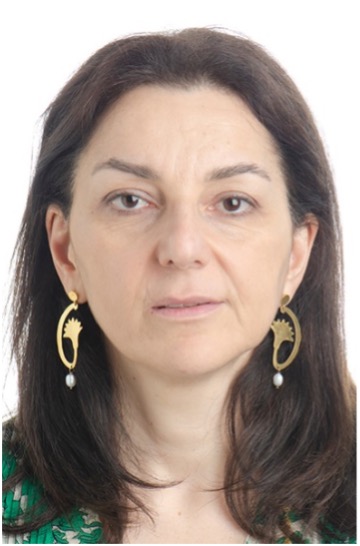
Taline Koranchelian
Deputy Director in the Middle East and Central Asia Department, the International Monetary Fund (IMF)
Taline Koranchelian is the Deputy Director in the Middle East and Central Asia Department of the International Monetary Fund (IMF), where she oversees the regional work of the department as well as the IMF’s work in Algeria, Djibouti, Iraq, Mauritania, Morocco, Tunisia, and Yemen.Prior to her appointment as Deputy Director in the Middle East and Central Asia Department, Koranchelian was Director of the IMF’s Middle East Regional Technical Assistance Center since June 2016. Between 2012 and 2016, Koranchelian was Assistant Director of the IMF’s Strategy, Policy, and Review, leading the IMF surveillance policy and reviewing the work of the IMF for around 30 countries across all regions.Throughout her more than 15 years of experience at the IMF, Koranchelian has held various posi ...

RELATED CONTENT

  • Authors
    Liel Maghen
    May 11, 2026
    This Paper was originally published on mitvim.org.il This paper argues that the reconstruction of Gaza will depend not only on the amount of funding mobilized, but on how financing is structured, governed, and anchored within a broader politi`cal context. In a setting shaped by movement restrictions and weak institutions, financial design is not neutral but shapes priorities, distributes power, and determines what can be implemented on the ground. The paper examines the key cha ...
  • Authors
    April 30, 2026
    This paper is the second in a series examining services-led development and global value chain (GVC) integration in the Global South. It applies a three-category analytical framework covering knowledge services (ICT and professional business services), enabling services (transport, logistics, and finance), and local services (retail, hospitality, health, and personal services), to OECD Trade in Value Added indicators. The paper thus  ...
  • Authors
    April 20, 2026
    This paper was published as a book chapter in “The Economic Potential of Islamic Countries, Part B: Sustainability, Governance, Energy and Digital Transformation,” released by Emerald Publishing. The COVID-19 pandemic exposed significant deficiencies within social protection systems worldwide, especially in Middle Eastern and North African (MENA) countries. This underscores the urgent need to fortify these social protection schemes to ensure resilience in the face of crises (Sa ...
  • Authors
    April 8, 2026
    This report was originally published on the website of the Middle East Institute ( mei.edu) The following study discusses the role of Lebanon’s gold reserves in the establishment of a currency board and evaluates four policy options: a true currency board, constrained central bank reform, full dollarization, and a unified managed float. Gold reserves are relevant under all four. The conclusion is consistent across them: no monetary framework, however carefully designed and howe ...
  • Authors
    April 1, 2026
    We are now in the fifth week since the U.S. airstrike that killed top leaders of the Iranian regime, initiating a war involving the United States and Israel against the country. More than a month of mutual bombardments between Iran and Israel has ensued, extending to other Persian Gulf nations, U.S. military installations—and even Cyprus. From a global perspective, the impact has stemmed primarily from disruptions to regional production of goods and the blockade of the Strait of Hor ...
  • Authors
    March 13, 2026
    While acknowledging the centrality of security tensions and potential conflict in the Gulf, this essay intentionally sets aside a detailed treatment of military and hard-power dynamics, concentrating instead on the geoeconomic logics of capital, infrastructure, energy, and connectivity, through which Gulf states now articulate power in a fragmented world order.It examines the emergence of a new tripartite or three-pillar power configuration in the Gulf, arguing that Saudi Arabi ...
  • Authors
    Inácio F. Araújo
    Geoffrey J.D. Hewings
    March 6, 2026
    By mapping Iraq’s economic structure in detail, the Multiregional Social Accounting Matrix (MRSAM) sheds light on regional interdependencies and distributional dynamics, offering a critical foundation for evidence-based policy design. Key MessagesIraq is dependent on oil, but this dependence is felt unevenly. In 2013, oil accounted for nearly half of GDP, over 90% of exports, and almost all fiscal revenues, but less than 2% of jobs; benefits from oil were concentrated in Basra ...
  • Authors
    February 13, 2026
    Le 27 janvier 2026, le gouvernement espagnol a adopté par décret royal une mesure de régularisation extraordinaire visant les personnes en situation administrative irrégulière ou engagées dans une procédure de protection internationale. Le choix du décret royal permet une mise en œuvre rapide de la mesure, sans passage par un débat parlementaire, dans un contexte politique fortement polarisé sur les questions migratoires.La régularisation concerne les personnes pouvant justifier d’u ...
  • Authors
    January 23, 2026
    Introduction: COP30 as a Test of Reality, Not AmbitionCOP30 in Belém was never going to be a breakthrough. In a world marked by fiscal exhaustion, geopolitical rivalry, and eroding trust in multilateralism, expecting transformational climate cooperation bordered on denial. The choice of the Amazon as host carried symbolic weight, but symbolism does not override power, interests, or institutional capacity.The outcome of COP30 confirms a deeper truth: the global climate regime has ent ...
  • Authors
    November 28, 2025
    The adoption of United Nations Security Council Resolution 2803 on November 17, 2025, endorsing the “Comprehensive Plan to End the Gaza Conflict,” is a step in the right direction, but it must be accompanied by the implementation of a Gaza development and post-conflict reconstruction program. Paragraph 6 of Resolution 2803 “calls upon the World Bank and other financial institutions to facilitate and provide financial resources to support the reconstruction and development of Ga ...