Africafé : Crise énergétique mondiale : quels risques pour les économies africaines ?

June 4, 2026

La guerre contre l’Iran et le blocage du détroit d’Hormuz ont déclenché une crise énergétique mondiale qui perturbe les marchés du pétrole et du gaz. Dans cet épisode d’Africafé, Francis Perrin analyse les conséquences de cette situation sur les économies africaines, en distinguant les défis des pays importateurs et les opportunités pour certains producteurs. Il revient également sur les enjeux du raffinage, de la sécurité énergétique et de la coopération régionale pour renforcer la résilience du continent face aux chocs futurs.

Speakers
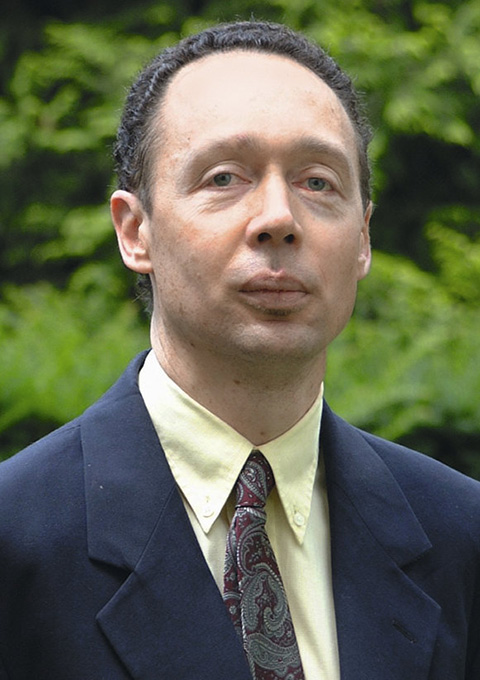
Francis Perrin
Senior Fellow
Francis Perrin is a Senior Fellow at the Policy Center for the New South who focuses on energy.  Following studies in economics and political science at the University Pierre Mendès France (UPMF – today University Grenoble Alpes) at Grenoble (France), Francis Perrin worked for several years as a journalist and freelance consultant on energy and mining resources before joining in 1991 the Paris-based Arab Petroleum Research Center (APRC). He was editor in chief of Arab Oil & Gas (AOG) and Pétrole et Gaz Arabes (PGA) between 1991 and 2000 and editorial manager of the publications of the APRC from 2001 to the end of 2011. Francis Perrin set up at the beginning of 2012 Stratégies et Politiques Energétiques (SPE) and later Energy Industries Strategies Information (EISI).& ...

Fatim Zohra Azouzou
Junior Analyst - International Relations - Policy Center for the New South
...

RELATED CONTENT

  • Authors
    December 7, 2020
    The pandemic is accelerating history, in the sense that it is leading to the speeding up of some recent trends. In the case of globalization, the pandemic will not reverse it, but it will reshape it. Here we take a bird’s eye view of global trade during the pandemic, relate it to previous trends, and guess how global value chain managers and government trade policymakers are likely to react. A Bird’s Eye View of Global Trade during the Pandemic World trade took a deep dive during ...
  • Authors
    Sang-Hyun Lee
    Amjad T. Assi
    Bassel Daher
    October 5, 2020
    Our Senior Fellow Rabi Mohtar has co-authored with our economist, Fatima Ezzahra Mengoub along other researchers a research paper entitled « A Water-Energy-Food Nexus approach for conducting trade-off analysis: Morocco’s phosphate industry in the Khouribga region » in Hydrology and Earth System Sciences Journal (Volume 24, Issue 10). The study objective was to develop and use the Water-Energy-Food Nexus Phosphate (WEF-P) Tool to evaluate the impact of Morocco’s phos ...
  • Authors
    Kwamboka Kiangoi
    May 22, 2020
    For Africa, this new decade began full of promise to achieve the 2030 deadline for the Sustainable Development Goals and on its way to realising the goals and priorities of Agenda 2063. With the entry of the intra-African trade from the African Continental Free Trade Area (AfCFTA) Agreement, which comes into effect on July 1st 2020, an estimated combined gross domestic product (GDP) of more than US$3.4 trillion expected to trickle in the Continent. This revenue e ...
  • Authors
    May 8, 2020
    Digital technological innovation, combined with new financing approaches, can make a significant contribution in the field of access to energy. This is the case in Kenya, where payas- you-go solutions, combined with solar home systems and an extensive mobile network, have enabled thousands of Kenyans to access clean and affordable off-grid electricity. This policy paper identifies the drivers of the development of pay-as-you-go solutions in off-grid systems in Kenya, assesses their ...
  • February 27, 2020
    The Kingdom of Morocco, which has no oil and gas, has shifted to renewable energy as early as 1960, giving priority to hydroelectricity and the construction of dams. However, most of the country’s power plants were and remain powered by diesel or gas, which has a heavy impact on its balance payments. Since then, the demand for electricity has continued to grow due to the country’s development on the one hand and, as a result of the use of desalination facilities on the other hand, w ...
  • February 27, 2020
    Le Royaume du Maroc, dépourvu de pétrole et de gaz, s'est tourné, dès 1960, vers les énergies renouvelables, privilégiant alors l'hydroélectricité et la construction de barrages. Pour autant, l'essentiel des centrales électriques du pays était et demeure alimenté en gazole ou en gaz, impactant lourdement sa balance des paiements. Depuis, la demande d'électricité n'a cessé de croitre, d'une part, du fait du développement du pays et, d'autre part, suite au recours à des désalinisateur ...
  • February 21, 2020
    To strengthen the role of youth as agents of community development, the Policy Center for the New South launched a year ago a call for projects grounded in new and innovative approaches to existing local problems. The iCAD is an environmental friendly business whose goal is to recycle h...
  • February 21, 2020
    To strengthen the role of youth as agents of community development, the Policy Center for the New South launched a year ago a call for projects grounded in new and innovative approaches to existing local problems. RENEWIT’s aim is to help with the socio-economic situation in Guyana thro...