Africafé : Crise énergétique mondiale : quels risques pour les économies africaines ?

June 4, 2026

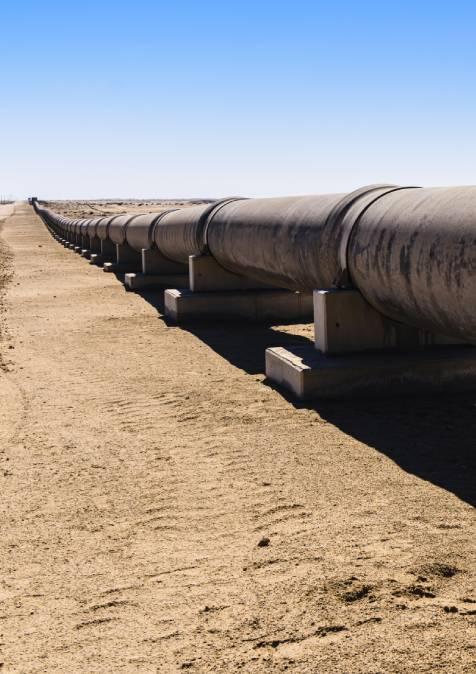
La guerre contre l’Iran et le blocage du détroit d’Hormuz ont déclenché une crise énergétique mondiale qui perturbe les marchés du pétrole et du gaz. Dans cet épisode d’Africafé, Francis Perrin analyse les conséquences de cette situation sur les économies africaines, en distinguant les défis des pays importateurs et les opportunités pour certains producteurs. Il revient également sur les enjeux du raffinage, de la sécurité énergétique et de la coopération régionale pour renforcer la résilience du continent face aux chocs futurs.

Speakers
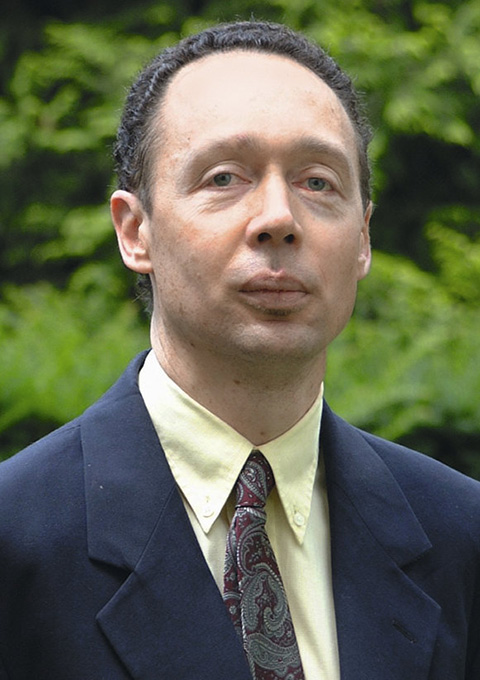
Francis Perrin
Senior Fellow
Francis Perrin is a Senior Fellow at the Policy Center for the New South who focuses on energy.  Following studies in economics and political science at the University Pierre Mendès France (UPMF – today University Grenoble Alpes) at Grenoble (France), Francis Perrin worked for several years as a journalist and freelance consultant on energy and mining resources before joining in 1991 the Paris-based Arab Petroleum Research Center (APRC). He was editor in chief of Arab Oil & Gas (AOG) and Pétrole et Gaz Arabes (PGA) between 1991 and 2000 and editorial manager of the publications of the APRC from 2001 to the end of 2011. Francis Perrin set up at the beginning of 2012 Stratégies et Politiques Energétiques (SPE) and later Energy Industries Strategies Information (EISI).& ...

Fatim Zohra Azouzou
Junior Analyst - International Relations - Policy Center for the New South
...

RELATED CONTENT

  • Authors
    August 17, 2022
    In May 2021, the International Energy Agency’s (IEA) report Net Zero by 2050 stated that there is no need for new investments in oil and gas fields in their net zero pathway[1]. The message was clear: place your next investments in clean energy sources and energy efficiency. However, the IEA’s Africa Energy Outlook 2022 stated that Africa’s industrialisation relies in expanding the use of natural gas[2]. Even the IEA executive director Fatih Birol said, “if we make a list of the top ...
  • Authors
    May 18, 2022
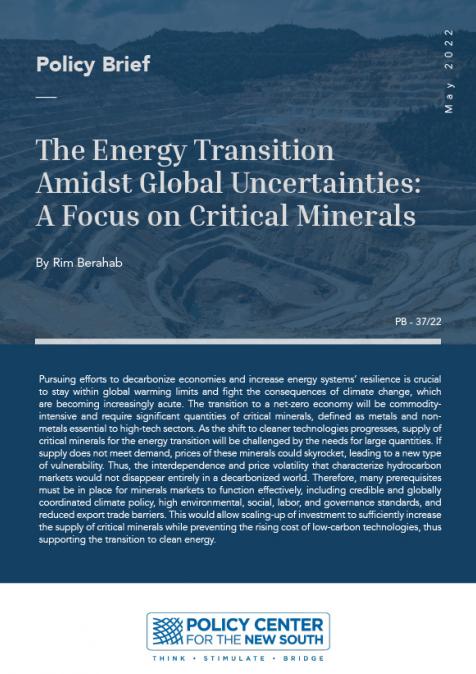
    Pursuing efforts to decarbonize economies and increase energy systems’ resilience is crucial to stay within global warming limits and fight the consequences of climate change, which are becoming increasingly acute. The transition to a net-zero economy will be commodityintensive and require significant quantities of critical minerals, defined as metals and nonmetals essential to high-tech sectors. As the shift to cleaner technologies progresses, supply of critical minerals for the en ...
  • March 18, 2022
    تم تقديم إطلاق مبادرة جماعية لتطوير شراكات جديدة من أجل انتقال عادل للطاقة في إفريقيا خلال القمة بين الاتحاد الأوروبي والاتحاد الإفريقي. فما هي المبادرات المبرمجة بين الاتحاد الأوروبي و إ ...
  • Authors
    March 16, 2022
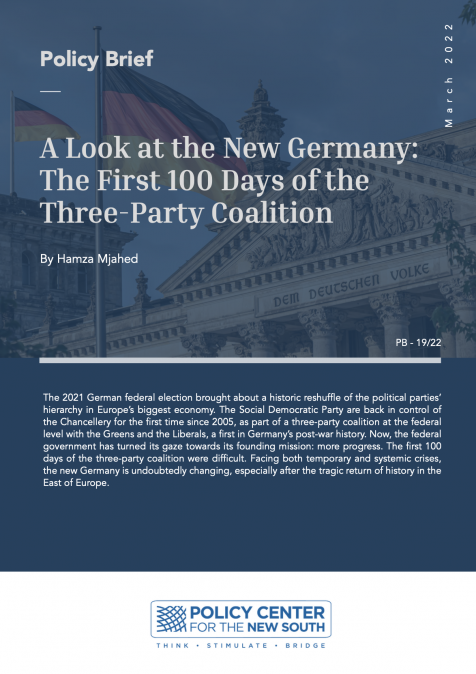
    The 2021 German federal election brought about a historic reshuffle of the political parties’ hierarchy in Europe’s biggest economy. The Social Democratic Party are back in control of the Chancellery for the first time since 2005, as part of a three-party coalition at the federal level with the Greens and the Liberals, a first in Germany’s post-war history. Now, the federal government has turned its gaze towards its founding mission: more progress. The first 100 days of the three-pa ...
  • March 1, 2022
    Known for being a climate change hotspot, Morocco is at the forefront of a climate disaster. Consequences are already being felt, whether in the form of increasing temperature or a downward trend in precipitations, which directly threaten the water security and, by extension, the social-ecological systems of the country. The systems by which food, energy, and water are produced, distributed, and consumed heavily depend on one another. Their implicit feedbacks and links are not linea ...
  • Authors
    February 9, 2022
    Energy markets have experienced significant disruptions since the outbreak of COVID-19. In late 2021, soaring natural gas prices triggered a new crisis, leading to risks of energy supply shortages worldwide and propelling the issue of energy security to the forefront. Africa will not be spared the repercussions of this crisis, which could further increase energy inequality, which is in turn linked to other forms of inequality. Indeed, in a context of persistent inflation, the lack o ...
  • Authors
    December 10, 2021
    Addressing the increasing demands for water, energy, and food requires a coherent methodology to ensure that  societies have access to them and that conflict over them is avoided. For example, agriculture and food production  require water and energy; energy production also requires water and, in some instances, agricultural products.  Water distribution and treatment can be very energy intensive. Therefore, the benefits of approaching the Water- Energy-Food (WEF) nex ...
  • November 19, 2021
    This Podcast is based on a Policy Brief by Rim Berahab and Uri Dadush. It examines how Morocco progresses on the mitigation component of its Nationally Determined Contribution (NDC) targe ...