Africafé : Crise énergétique mondiale : quels risques pour les économies africaines ?

June 4, 2026

La guerre contre l’Iran et le blocage du détroit d’Hormuz ont déclenché une crise énergétique mondiale qui perturbe les marchés du pétrole et du gaz. Dans cet épisode d’Africafé, Francis Perrin analyse les conséquences de cette situation sur les économies africaines, en distinguant les défis des pays importateurs et les opportunités pour certains producteurs. Il revient également sur les enjeux du raffinage, de la sécurité énergétique et de la coopération régionale pour renforcer la résilience du continent face aux chocs futurs.

Speakers
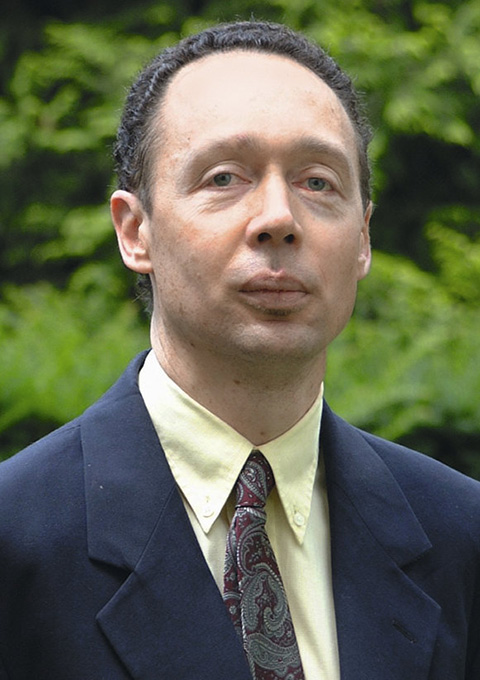
Francis Perrin
Senior Fellow
Francis Perrin is a Senior Fellow at the Policy Center for the New South who focuses on energy.  Following studies in economics and political science at the University Pierre Mendès France (UPMF – today University Grenoble Alpes) at Grenoble (France), Francis Perrin worked for several years as a journalist and freelance consultant on energy and mining resources before joining in 1991 the Paris-based Arab Petroleum Research Center (APRC). He was editor in chief of Arab Oil & Gas (AOG) and Pétrole et Gaz Arabes (PGA) between 1991 and 2000 and editorial manager of the publications of the APRC from 2001 to the end of 2011. Francis Perrin set up at the beginning of 2012 Stratégies et Politiques Energétiques (SPE) and later Energy Industries Strategies Information (EISI).& ...

Fatim Zohra Azouzou
Junior Analyst - International Relations - Policy Center for the New South
...

RELATED CONTENT

  • Authors
    Mehmet Öğütçü
    July 22, 2025
    During my mid-2025 visit to Morocco my second trip to the country that year I experienced a distinct and powerful shift in momentum. The Global Growth Congress, where I had the honour of speaking on “Africa’s Energy Future: From Potential to Power,” transcended the usual conference format; it felt like a turning point. The event reflected a growing acknowledgment that Africa’s role in the global energy landscape is no longer peripheral but central. The stakes have been raised, the c ...
  • Authors
    Mehmet Öğütçü
    July 10, 2025
    I have been traveling to Morocco regularly—at least twice a year—for many years. But this time, the atmosphere in Rabat felt markedly different. I had the honor of addressing the Global Growth Congress, where I spoke on a topic that is rapidly becoming one of the most consequential issues of our time: Africa’s Energy Future: From Potential to Power.We were not merely discussing electrons and megawatts. We were dissecting sovereignty, resilience, global competition, and the future of ...
  • April 14, 2025
    This paper (see pages: 165-198), included in the book 'Green intersections: the global embedding of climate change in policy' was originally published on bruegel.org   The demand for energy in Africa is growing rapidly, driven by population growth, urbanisation and industrialisation. Nevertheless, over 600 million Africans still lack access to electricity, which represents a significant energy gap for the continent. At the same time, Africa is endowed with vast renewable ...
  • Authors
    September 24, 2024
    Green industrial policies are essential to enable the structural transformations needed for a successful transition to a low-carbon economy. Because of the pressing need to decouple economic growth from environmental degradation, it is imperative to reallocate resources strategically from carbon-intensive sectors to sustainable, high-productivity industries. This transition is critical both to mitigate the impacts of climate change and to promote long-term economic growth and sustai ...
  • Authors
    September 10, 2024
    Over the next decade, the energy transition will transform the global economic landscape in terms of regulations, industrial and energy investments, and technological solutions. The African continent is set to play a significant role in this transition while addressing its own sustainable development needs. To fully capitalize on this emerging dynamic, African countries should pursue innovative paths tailored to their specific contexts and constraints. They should also identify stra ...
  • May 30, 2024
    L'Afrique, bien que jouant un rôle de plus en plus important, reste encore en marge sur la scène énergétique mondiale. Ce continent est riche en ressources énergétiques, qu'il s'agisse de pétrole, de gaz naturel, de charbon ou d'énergies renouvelables comme l'hydroélectricité, le solair...
  • Authors
    May 23, 2024
    Au cours de la prochaine décennie, la transition énergétique transformera le paysage économique mondial en termes de régulations, d’investissements industriels et énergétiques et de solutions technologiques développées. Le continent africain est appelé à jouer un rôle important dans cette transition, tout en répondant à ses propres besoins de développement durable. Pour tirer pleinement profit de cette dynamique naissante, les pays africains devraient s'engager sur de ...
  • Authors
    Sabrina Camélia Pagop
    Luc Savard
    April 29, 2024
    This study conducts an in-depth exploration of the increasing interest in voluntary carbon markets (VCMs) in Africa, shedding light on the potential opportunities and challenges associated with African participation in these markets. VCMs have gained prominence as promising means to address climate change, driven by substantial financial incentives and market expansion. Nonetheless, persistent debates revolve around the legitimacy of carbon credits and their tangible contributions t ...