Africafé : Crise énergétique mondiale : quels risques pour les économies africaines ?

June 4, 2026

La guerre contre l’Iran et le blocage du détroit d’Hormuz ont déclenché une crise énergétique mondiale qui perturbe les marchés du pétrole et du gaz. Dans cet épisode d’Africafé, Francis Perrin analyse les conséquences de cette situation sur les économies africaines, en distinguant les défis des pays importateurs et les opportunités pour certains producteurs. Il revient également sur les enjeux du raffinage, de la sécurité énergétique et de la coopération régionale pour renforcer la résilience du continent face aux chocs futurs.

Speakers
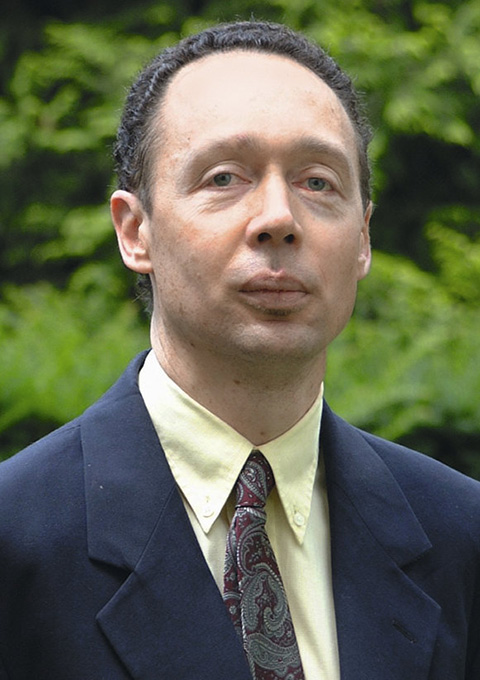
Francis Perrin
Senior Fellow
Francis Perrin is a Senior Fellow at the Policy Center for the New South who focuses on energy.  Following studies in economics and political science at the University Pierre Mendès France (UPMF – today University Grenoble Alpes) at Grenoble (France), Francis Perrin worked for several years as a journalist and freelance consultant on energy and mining resources before joining in 1991 the Paris-based Arab Petroleum Research Center (APRC). He was editor in chief of Arab Oil & Gas (AOG) and Pétrole et Gaz Arabes (PGA) between 1991 and 2000 and editorial manager of the publications of the APRC from 2001 to the end of 2011. Francis Perrin set up at the beginning of 2012 Stratégies et Politiques Energétiques (SPE) and later Energy Industries Strategies Information (EISI).& ...

Fatim Zohra Azouzou
Junior Analyst - International Relations - Policy Center for the New South
...

RELATED CONTENT

  • Authors
    Manfred Hafner
    Simone Tagliapietra
    Lucia de Strasser
    October 4, 2018
    This blog post summarizes the key findings of the new book Energy in Africa: Challenges and Opportunities, co-authored by Manfred Hafner, Simone Tagliapietra and Lucia de Strasser of the Italian think-tank, Fondazione Eni Enrico Mattei. The book, published by Springer, is freely available online. The book presents a picture of the current energy challenges on the African continent- the Sub-Saharan region in particular- and proposes pathways to an accelerated energy t ...
  • Authors
    May 11, 2018
    Awad Ibrahim, chairman of the Lybian Organisation of Policies and Strategies (LOPS), one of the few think tanks in this violence-torn country, has escaped to establish contacts with his African colleagues at the African Think Tank Summit held in Rabat from May 9th to 11th. For a few years he was Minister of Electricity and Renewable Energy in his country, and later appointed Deputy Prime minister. At times Awad Ibrahim fears for his life, but he believes a political soluti ...
  • Authors
    July 28, 2017
    Renewable energy technologies are projected to have substantial growth in the coming decades, especially given the environmental, social and economic drivers observed globally. The Middle East and North Africa (MENA) region encloses abundant alternative energy sources such as solar, wind and hydropower. The concern is more whether the Arab region will be able to respond to and manage the growth opportunities in this emerging sector. This Policy Brief explores opportunities and chall ...
  • Authors
    April 12, 2017
    We argue in this paper that electricity production needs to be multiplied by a large factor in the coming years for East Africa to reach the economic growth rate it deserves after the improvement of its socio-political situation. The rural electrification rate in North Africa as represented for instance by Morocco was higher than 99.50% in the first quarter of 2017 while it was barely 10% in some parts of Western Kenya. We also make the case for hydroelectricity as the adequate ren ...
  • Authors
    March 29, 2017
    Dans un contexte mondial de plus en plus préoccupé par les aléas climatiques, comprendre l’impact de la croissance économique sur l’environnement devient crucial, notamment pour les pays en voie de développement. Ce papier aborde cette problématique sous le prisme des émissions de dioxyde de carbone (CO2) et examine comment la croissance économique se répercute sur l’environnement. L’objectif de cette étude est de tester la validité de la courbe environnementale de Kuznets (CEK) pou ...
  • Authors
    Laura El Katiri
    December 30, 2016
    Le paysage énergétique du Maroc a connu une évolution rapide au cours des dernières décennies. La croissance démographique, l'industrialisation et la hausse du niveau de vie, qui se sont accompagnés d'une augmentation des taux d'accès à l'électricité, ainsi que de taux élevés d'exode rural, ont tous contribué à l'expansion des besoins énergétiques du Maroc. Étant voisin d'une Algérie riche en pétrole et en gaz à l'Est, et d'une Europe avide d'énergie au nord de la Méditerranée, le M ...
  • Authors
    Priscillia Andrieu
    October 24, 2016
    Africa is the new frontier of a global energy transition during a century in which people are rightfully preoccupied by climate change and sustainable development. Energy access in Africa can be reached through unity within and across the continent. Eliminating the obstacles of the historical divisions of the continent – whether linguistic, economic, or geographic – would foment investments and development aid. The African Union would be best equipped to reallocate and redistribute ...
  • Authors
    Laura El Katiri
    October 18, 2016
    Morocco’s energy landscape has been changing rapidly over the past decades. Alongside its own population growth, rising access rates to electricity as well as high rates of rural-urban migration and rising living standards, Morocco’s domestic energy needs have risen sharply since the early 1990s. This policy paper explores Morocco’s long-term energy options, focusing on “green” energy solutions that lie within Morocco’s natural competitive advantage. Using Morocco’s strategic assets ...