AFRICAFE: Bamako Under Blockade: Understanding Mali’s Growing Jihadi Threat

December 4, 2025

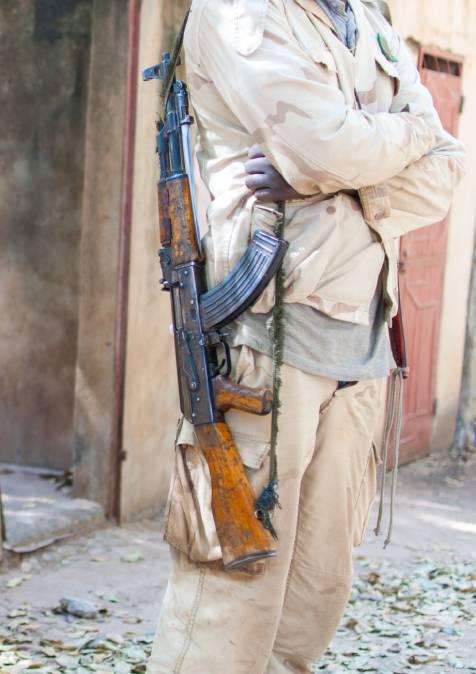
The episode examines the escalating instability in Mali as JNIM’s blockade on vital supplies tightens pressure on Bamako and exposes the Malian state’s vulnerabilities. Senior Fellow Rida Lyammouri explains why a full assault on the capital is unlikely, highlighting instead JNIM’s strategic use of asymmetrical warfare and adaptive local governance. He discusses the group’s regional expansion, the limits of foreign intervention, and outlines possible future scenarios ranging from negotiated settlements to rising civilian unrest.

Speakers
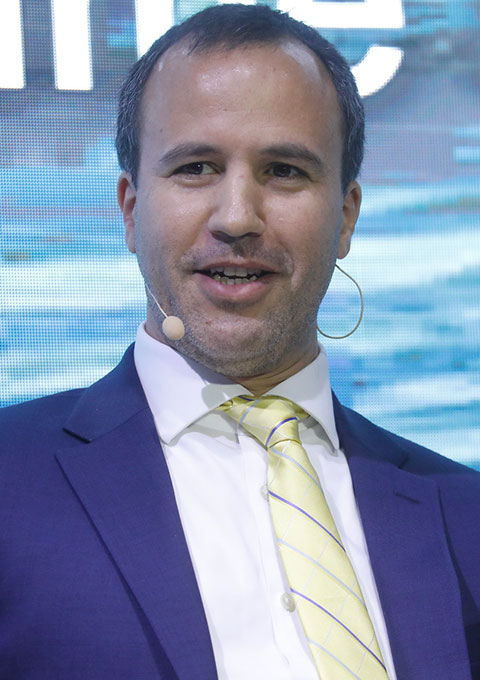
Rida Lyammouri
Senior Fellow
Rida Lyammouri is a senior fellow at the Policy Center for the New South (PCNS). He is also a senior West Africa and Lake Chad Basin researcher and advisor, with expertise in regional conflicts, violent extremism, climate change, migration, and trafficking. His research activities focus on geopolitics and international relations in the West African Sahel and Lake Chad Basin, regions he has worked on for 14 years, including in the field. He has extensive experience supporting both governmental and non-governmental organizations in the areas of international development, security, countering violent extremism and terrorism, preventing conflicts, ensuring humanitarian access, and migration. Mr. Lyammouri has contributed to in-depth research and analysis reports aiming at building ...
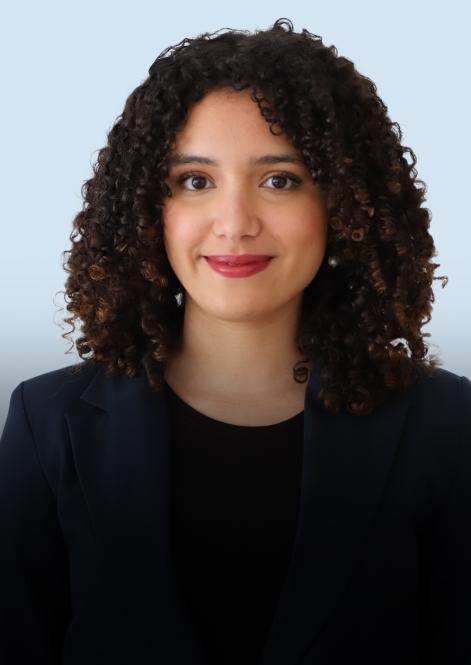
Khadija Mamouni
Junior Analyst - International Relations Research Department
...

RELATED CONTENT

  • Authors
    November 2, 2021
    In the Sahel, and Central Mali in particular, the proliferation of armed groups over the past decade has resulted in formal and informal non-state governance structures. This paper assesses the various definitions and typologies associated with rebel and jihadist governance in order to better understand the mechanisms of governance provision used by key non-state governance providers in Central Mali.   ...
  • Authors
    Pascal Chaigneau
    Eugène Berg
    Rodolphe Monnet
    Jacques Gravereau
    Jérémy Ghez
    Olivier Tramond
    Niagalé Bagayoko
    Alain Oudot de Dainville
    Jérôme Evrard
    Coordination de l’ouvrage: Imane Lahrich
    Fatine Cherkaoui
    October 28, 2021
    Depuis l’accession au trône du Roi Mohammed VI, l’Afrique s’est transformée en priorité de la diplomatie marocaine. Sur le plan économique, l’Afrique est devenue le prolongement naturel du Maroc en termes d’investissements et d’implantations. Pascal Chaigneau s’attarde sur les relations affaiblies Europe-Afrique, l’ambitieuse relation Chine-Afrique ainsi que les relations entre la Russie, les Etats-Unis, la Turquie ou encore les pays du Golf et l’Afrique. Ce chapitre traite égalemen ...
  • Authors
    October 5, 2021
    Seconde nation la plus peuplée d’Afrique après le Nigeria, l’Éthiopie se distingue par un essor économique continu depuis trente ans. Des progrès notables sévèrement remis en question par le conflit avec la province du Tigré, qui dure depuis près d’un an. Pays phare de la Corne de l’Afrique, l’Éthiopie s’est distinguée par une croissance moyenne à deux chiffres (10 %) sur la période 2010-2019. Tombée à 6 % en 2020, celle-ci ne devrait pas dépasser 2 % en 2021 selon l ...
  • Authors
    Johannes Claes
    Kars de Bruijne
    Sophie Mertens
    Eman Ragab
    Clara-Auguste Süß
    September 20, 2021
    The COVID-19 pandemic has had a cataclysmic impact on all aspects of the functioning of our world. The relevance of the possibility of the spread of a global virus with the spread of terrorism is not immediately obvious as it is difficult for a direct causal link to be scientifically established. However, taking into consideration how state responses and pre-existing socioeconomic grievances can be impacted by the COVID-19 pandemic can lead to innovative findings on how terrorist gr ...
  • Authors
    August 11, 2021
    The ongoing war in the Tigray region of Ethiopia has resulted in the world’s worst humanitarian crisis in a decade. The escalating conflict has led to the death and displacement of thousands of civilians, raised ethnic tensions in Ethiopia, and caused a food crisis that could lead to widespread famine. Much can be said about this conflict—how it revolves around models of governance and conflicting visions of self-determination, and how its impact will be felt across the region. Here ...
  • July 26, 2021
    La région nord-est du Mozambique, Cabo Delgado, est, depuis 2017, le théâtre d’une insurrection meurtrière, menée par un groupe, connu sous le nom de Ahlu Sunna Wal Jamaa et que la population locale dénomme « Al Shabab ». Considérée comme la plus pauvre du pays, cette région abrite une population à majorité musulmane et qui reste marginalisée dans les politiques publiques de développement du Gouvernement, malgré l’exploitation intensive des importantes ressources naturelles de son s ...
  • May 20, 2021
    The fourth edition of the African Peace & Security Annual Conference (APSACO) was held on September 23-25, 2020 under the theme ‘COVID-19 & Security in Africa.’ The three-day event, organized by the Policy Center for the New South (PCNS), was composed of two panels and two workshops: - Panel 1: The Security Sector in Africa During and After the COVID-19 Health Crisis - Panel 2: The Privatization of Violence in Africa: Non-State Armed Groups and Private Security - Workshop ...
  • May 4, 2021
    The Sahelian states of Niger, Mali, and Burkina Faso continue to face unprecedented violence arising from multidimensional conflicts. According to the Africa Center for Strategic Studies (2019), “the Sahel has experienced the most rapid increase in activity by militant groups of any region in Africa in recent years. Violent events involving extremist groups in the region have doubled every year since 2015”. In addition to the presence of multiple violent extremist organizations (VEO ...