AFRICAFE: Bamako Under Blockade: Understanding Mali’s Growing Jihadi Threat

December 4, 2025

The episode examines the escalating instability in Mali as JNIM’s blockade on vital supplies tightens pressure on Bamako and exposes the Malian state’s vulnerabilities. Senior Fellow Rida Lyammouri explains why a full assault on the capital is unlikely, highlighting instead JNIM’s strategic use of asymmetrical warfare and adaptive local governance. He discusses the group’s regional expansion, the limits of foreign intervention, and outlines possible future scenarios ranging from negotiated settlements to rising civilian unrest.

Speakers
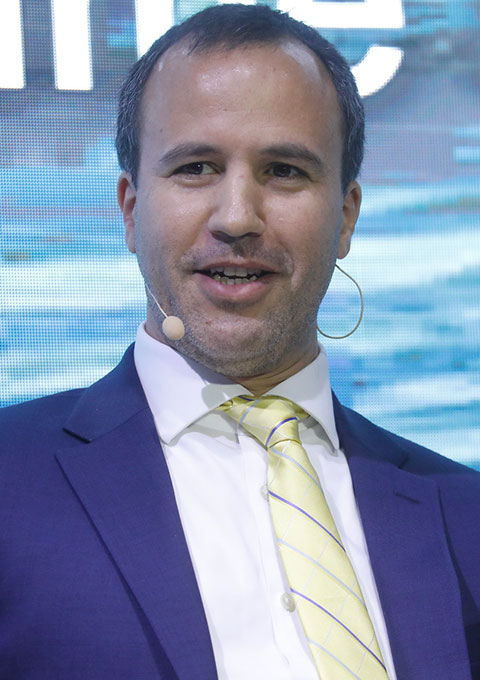
Rida Lyammouri
Senior Fellow
Rida Lyammouri is a senior fellow at the Policy Center for the New South (PCNS). He is also a senior West Africa and Lake Chad Basin researcher and advisor, with expertise in regional conflicts, violent extremism, climate change, migration, and trafficking. His research activities focus on geopolitics and international relations in the West African Sahel and Lake Chad Basin, regions he has worked on for 14 years, including in the field. He has extensive experience supporting both governmental and non-governmental organizations in the areas of international development, security, countering violent extremism and terrorism, preventing conflicts, ensuring humanitarian access, and migration. Mr. Lyammouri has contributed to in-depth research and analysis reports aiming at building ...
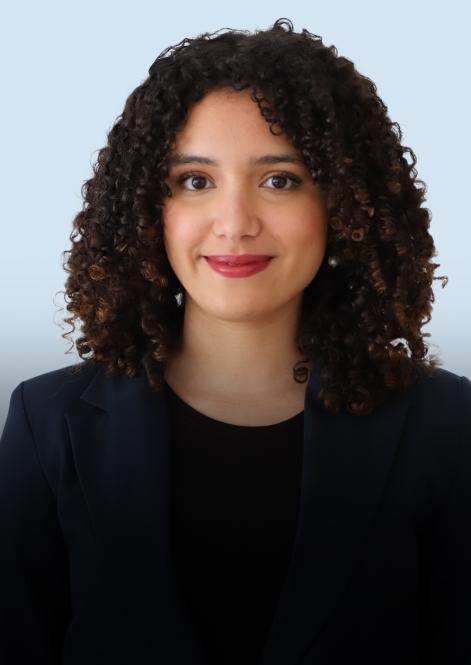
Khadija Mamouni
Research Assistant - International Relations Research Department
...

RELATED CONTENT

  • December 10, 2021
    The Cabo insurgency constitutes one of the most significant threats to peace and security in Southern Africa subregion. This podcast explores the various challenges the insurgency in this ...
  • December 9, 2021
    A summit on the African vision of Sahel’s future with a focus on development around the 5 Sahelian Ministers of Economy and the report “Sahel: Moving Beyond Military Containment” ...
  • Authors
    November 29, 2021
    The proliferation of community-based armed groups (CBAGs) in Mali’s Mopti and Ségou Regions has contributed to transforming Central Mali into a regional epicenter of conflict since 2016. Due to the lack of adequate presence of the state, certain vulnerable, conflict-affected communities resorted to embracing non-state armed groups as security umbrellas in the context of inter-communal violence. These local conflicts are the result of long-standing issues over increasing pressure on ...
  • November 12, 2021
    Près de trois ans après l’éviction d’el-Béchir du pouvoir et la formation d’un gouvernement de transition, composé de civils et de militaires, la situation politique et économique du Soudan est loin d’être stable. Bien que des progrès aient été enregistrés depuis décembre 2018, la transition démocratique a été interrompue brutalement suite à la prise du pouvoir par le général al-Burhan et sa décision de dissoudre le gouvernement civil. Malgré le climat d’instabilité et d’incertitude ...
  • Authors
    November 9, 2021
    Events in the Sahel, and Mali especially, are taking an uncertain and worrying turn. Mali witnessed two coups d’état in less than a year, while the West African Sahel went through its most violent year yet and there are no signs that the violence is slowing down. In the midst of this unprecedented instability, recent developments involving Mali’s transitional government and the international community, France in particular, provide no assurances that things are likely to improve any ...
  • Authors
    November 2, 2021
    In the Sahel, and Central Mali in particular, the proliferation of armed groups over the past decade has resulted in formal and informal non-state governance structures. This paper assesses the various definitions and typologies associated with rebel and jihadist governance in order to better understand the mechanisms of governance provision used by key non-state governance providers in Central Mali.   ...
  • Authors
    Pascal Chaigneau
    Eugène Berg
    Rodolphe Monnet
    Jacques Gravereau
    Jérémy Ghez
    Olivier Tramond
    Niagalé Bagayoko
    Alain Oudot de Dainville
    Jérôme Evrard
    Coordination de l’ouvrage: Imane Lahrich
    Fatine Cherkaoui
    October 28, 2021
    Depuis l’accession au trône du Roi Mohammed VI, l’Afrique s’est transformée en priorité de la diplomatie marocaine. Sur le plan économique, l’Afrique est devenue le prolongement naturel du Maroc en termes d’investissements et d’implantations. Pascal Chaigneau s’attarde sur les relations affaiblies Europe-Afrique, l’ambitieuse relation Chine-Afrique ainsi que les relations entre la Russie, les Etats-Unis, la Turquie ou encore les pays du Golf et l’Afrique. Ce chapitre traite égalemen ...
  • Authors
    October 5, 2021
    Seconde nation la plus peuplée d’Afrique après le Nigeria, l’Éthiopie se distingue par un essor économique continu depuis trente ans. Des progrès notables sévèrement remis en question par le conflit avec la province du Tigré, qui dure depuis près d’un an. Pays phare de la Corne de l’Afrique, l’Éthiopie s’est distinguée par une croissance moyenne à deux chiffres (10 %) sur la période 2010-2019. Tombée à 6 % en 2020, celle-ci ne devrait pas dépasser 2 % en 2021 selon l ...