Publications /
Book / Report

Back
Dialogues Stratégiques Volume VI: L’Amérique latine : crises et sorties de crises - L’Union Africaine face à de nouveaux défis
Authors
Carlos Antonio Carrasco
Pascal Chaigneau
Nicolas Desgrais
Thierry Garcin
Firmin Edouard Matoko
Bouchra Rahmouni
Michel Raimbaud
Olivier Tramond
April 10, 2019

À travers cette publication conjointe, le Centre HEC de Géopolitique et le Policy Center for the New South ont souhaité présenter seize papiers discutés et enrichis au cours de la sixième édition des Dialogues Stratégiques qui s’est tenue le 3 octobre 2018. Cette rencontre avait choisi d’analyser l’espace politique et les enjeux géostratégiques de notre monde contemporain en se focalisant sur deux sujets d’actualité internationale : les crises et sorties de crises en Amérique latine (première partie), et les nouveaux défis de l'Union africaine (deuxième partie).  

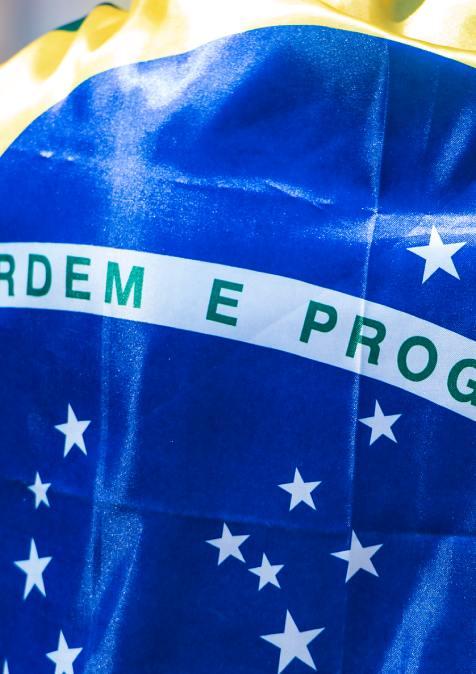
L’accent est tout d’abord mis sur les modèles de gouvernance existant dans plusieurs pays d’Amérique latine. Plombé par la chute du prix des matières premières, le continent reste confronté à de grands défis structurels, tels qu’un taux de chômage élevé, une économie informelle répandue, un dérapage inflationniste, et des dérives budgétaires. L’Amérique latine souffre également d’une polarisation idéologique, d’institutions faibles – sentiment exacerbé suite aux récents scandales de corruption – et de profondes inégalités. Les pays latino-américains sont ainsi secoués par de nombreuses crises, d’ordre à la fois politique et socio-économique. C’est dans un tel contexte que cet ouvrage se propose de favoriser la compréhension des enjeux caractérisant cette région traversant une zone de fortes turbulences.  

Dans une seconde partie, les ambitions de l’Union africaine sont rappelées ainsi que les difficultés inhérentes à leur mise en œuvre. En effet, dix-sept ans après l’adoption de l’Acte constitutif de l’Union africaine (UA), son bilan reste mitigé. Dans un contexte international caractérisé par une remise en question du multilatéralisme et régional marqué par de nombreuses crises – à la fois sécuritaires, de gouvernance, de développement et d’intégration –, que l'Union africaine doit répondre aux défis nombreux et complexes auxquels les pays africains sont confrontés. Cette publication vise à apporter un éclairage nouveau sur le rôle que peut jouer cette institution et sur les implications des différentes réformes initiées.  
RELATED CONTENT

  • January 23, 2026
    The post-1945 international order, an architecture born of war-weariness and colonial twilight, is now a majestic but empty shell. Its foundational promise—a universal system of rules administered impartially—has been hollowed out by decades of selective enforcement, instrumentalized law, and a chasm between the rhetorical ideals of its custodians and their geopolitical practice. This is not a temporary dysfunction, but a systemic failure of legitimacy. From the invasion of Iraq und ...
  • January 09, 2026
    This episode explores the Trump administration’s confrontational stance toward Venezuela, including sanctions and military posturing and evaluates their effectiveness in undermining Madur ...
  • September 01, 2023
    In this podcast, we are joined by Dr. Len Ishmael, editor and co-author of the book “Aftermath of War in Europe: The West VS. the Global South?”. Dr. Ishmael delves into the groundbreakin ...
  • August 02, 2021
    This podcast with Mr Marcus de Freitas, a Senior Fellow at Policy Center for the New South, discusses elements revolving around Brazil’s current strategy in Africa. It engages with histor ...
  • Authors
    May 29, 2020
    Brazil’s president Jair Bolsonaro is almost a mirror image of U.S. president Donald Trump. They have  considered COVID-19 a “hoax, ”, ( Trump), or a “fantasy” (Bolsonaro). They both believe a potentially toxic drug, hydroxychloroquine, which was developed to fight malaria, to be the miracle cure for the virus. They have refused to wear facemasks. They have both pushed back against lockdown rules. Bolsonaro even issued a presidential decree that exempted churches ...
  • Authors
    Osama El Mourabit
    November 29, 2019
    During the past few years, the different global ongoing events have left us baffled and astonished. Given the decreasing ability to understand and assimilate the amount of changes, mutations, and crises, one would wonder: what happened to the global order? How has -in this short period of time- the power of its values and institutions that much decreased? What are the causes for these protectionist and massive populist waves? Why are we witnessing an increasing settlement of conflic ...